


Neurologic Manifestations Associated with an Outbreak of Typhoid Fever, Malawi - Mozambique, 2009: An Epidemiologic Investigation
Supporting Files
Public Domain

-
Dec 03 2012
-
File Language:
English
Details
-
Alternative Title:PLoS One
-
Personal Author:Sejvar, James ; Lutterloh, Emily ; Naiene, Jeremias ; Likaka, Andrew ; Manda, Robert ; Nygren, Benjamin ; Monroe, Stephan ; Khaila, Tadala ; Lowther, Sara A. ; Capewell, Linda ; Date, Kashmira ; Townes, David ; Redwood, Yanique ; Schier, Joshua ; Barr, Beth Tippett ; Demby, Austin ; Mallewa, Macpherson ; Kampondeni, Sam ; Blount, Ben ; Humphrys, Michael ; Talkington, Deborah ; Armstrong, Gregory L. ; Mintz, Eric
-
Description:Background
The bacterium Salmonella enterica serovar Typhi causes typhoid fever, which is typically associated with fever and abdominal pain. An outbreak of typhoid fever in Malawi-Mozambique in 2009 was notable for a high proportion of neurologic illness.
Objective
Describe neurologic features complicating typhoid fever during an outbreak in Malawi-Mozambique
Methods
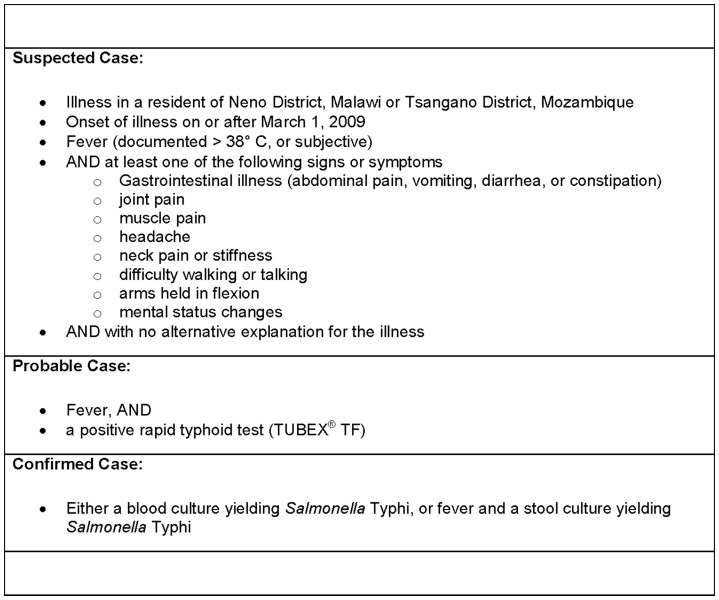
Persons meeting a clinical case definition were identified through surveillance, with laboratory confirmation of typhoid by antibody testing or blood/stool culture. We gathered demographic and clinical information, examined patients, and evaluated a subset of patients 11 months after onset. A sample of persons with and without neurologic signs was tested for vitamin B6 and B12 levels and urinary thiocyanate.
Results
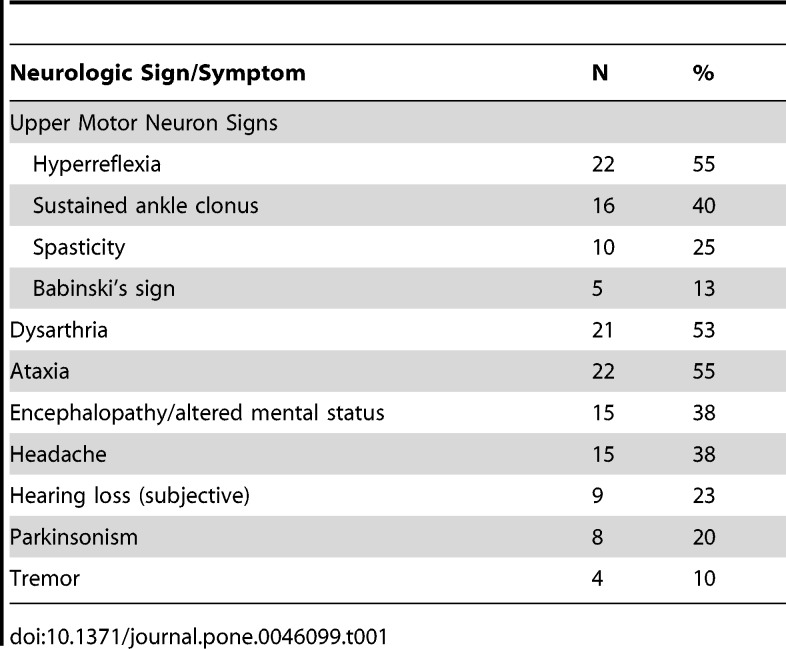
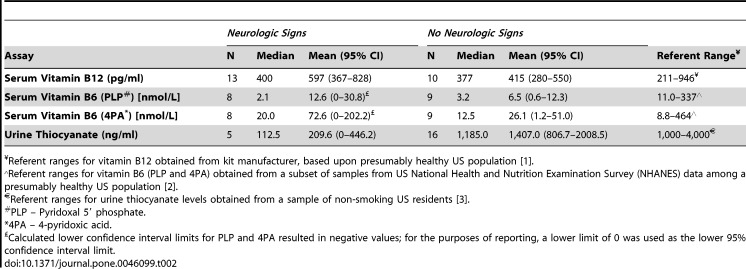
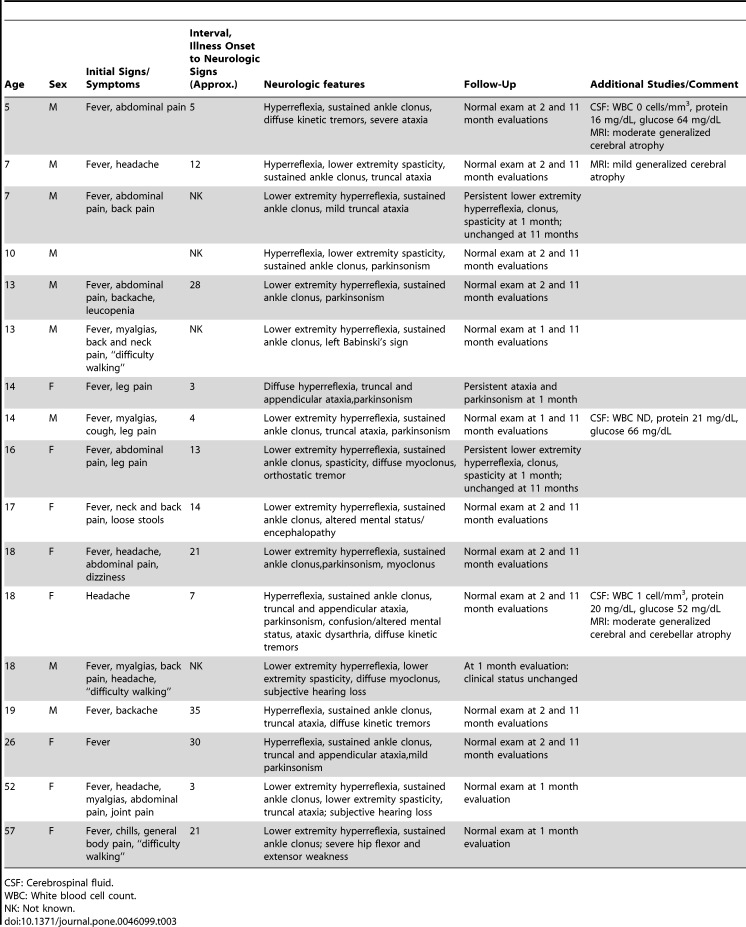
Between March – November 2009, 303 cases of typhoid fever were identified. Forty (13%) persons had objective neurologic findings, including 14 confirmed by culture/serology; 27 (68%) were hospitalized, and 5 (13%) died. Seventeen (43%) had a constellation of upper motor neuron findings, including hyperreflexia, spasticity, or sustained ankle clonus. Other neurologic features included ataxia (22, 55%), parkinsonism (8, 20%), and tremors (4, 10%). Brain MRI of 3 (ages 5, 7, and 18 years) demonstrated cerebral atrophy but no other abnormalities. Of 13 patients re-evaluated 11 months later, 11 recovered completely, and 2 had persistent hyperreflexia and ataxia. Vitamin B6 levels were markedly low in typhoid fever patients both with and without neurologic signs.
Conclusions
Neurologic signs may complicate typhoid fever, and the diagnosis should be considered in persons with acute febrile neurologic illness in endemic areas.
-
Subjects:
-
Source:PLoS One. 2012; 7(12).
-
Pubmed ID:23226492
-
Pubmed Central ID:PMC3513310
-
Document Type:
-
Place as Subject:
-
Volume:7
-
Issue:12
-
Collection(s):
-
Main Document Checksum:urn:sha256:a4ba64b45b7e5ebfcd6d39e1c43510bdd09c39e84c9939cb3c081e258989e532
-
Download URL:
-
File Type:
 [PDF
- 874.93 KB
]
[PDF
- 874.93 KB
]
Supporting Files


File Language:
English
ON THIS PAGE





CDC STACKS serves as an archival repository of CDC-published products including
scientific findings,
journal articles, guidelines, recommendations, or other public health information authored or
co-authored by CDC or funded partners.
As a repository, CDC STACKS retains documents in their original published format to ensure public access to scientific information.
As a repository, CDC STACKS retains documents in their original published format to ensure public access to scientific information.
You May Also Like
COLLECTION
CDC Public Access