



Etiology and Incidence of Viral and Bacterial Acute Respiratory Illness among Older Children and Adults in Rural Western Kenya, 2007–2010
Supporting Files
Public Domain

-
Aug 24 2012
File Language:
English
Details
-
Alternative Title:PLoS One
-
Personal Author:Feikin, Daniel R. ; Njenga, M. Kariuki ; Bigogo, Godfrey ; Aura, Barrack ; Aol, George ; Audi, Allan ; Jagero, Geoffrey ; Muluare, Peter Ochieng ; Gikunju, Stella ; Nderitu, Leonard ; Balish, Amanda ; Winchell, Jonas ; Schneider, Eileen ; Erdman, Dean ; Oberste, M. Steven ; Katz, Mark A. ; Breiman, Robert F.
-
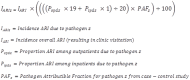
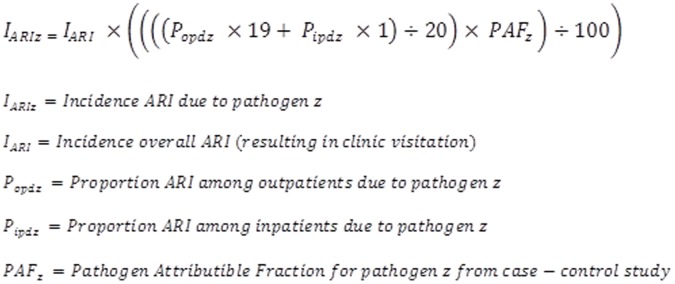
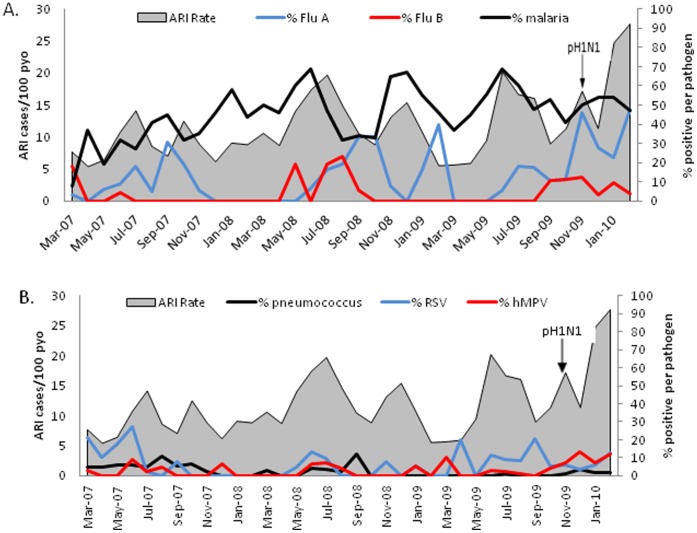
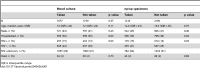
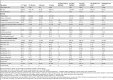
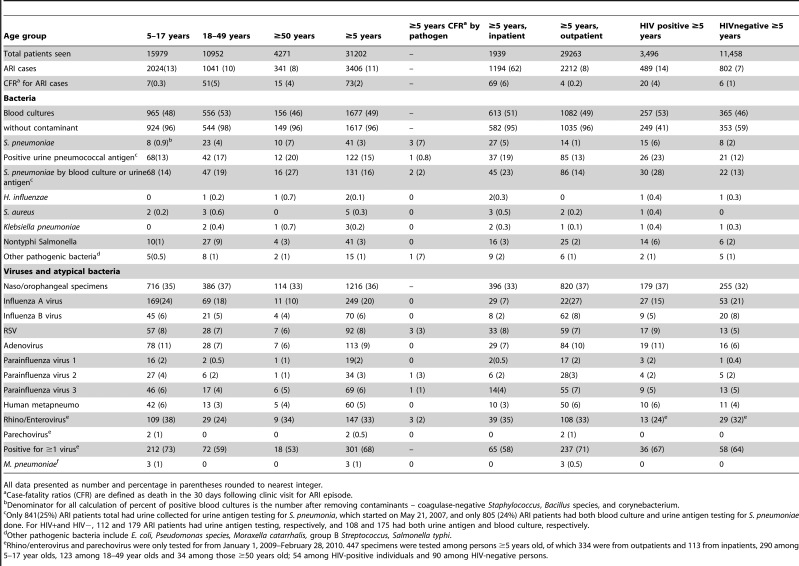
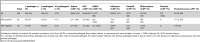
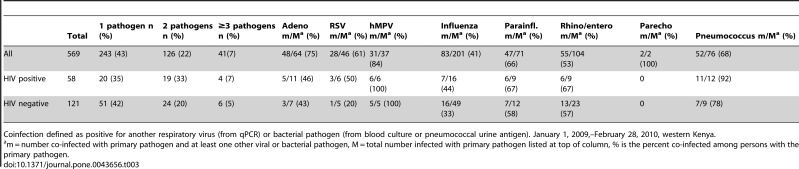
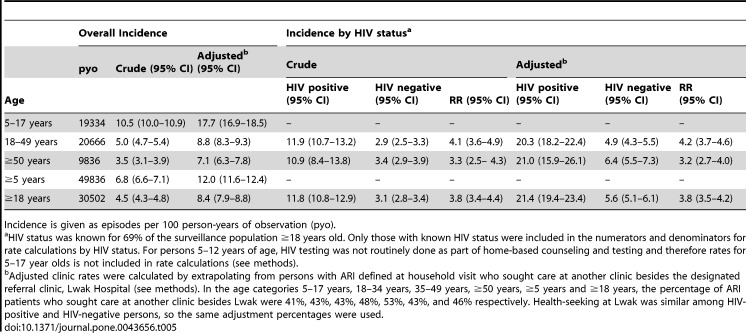
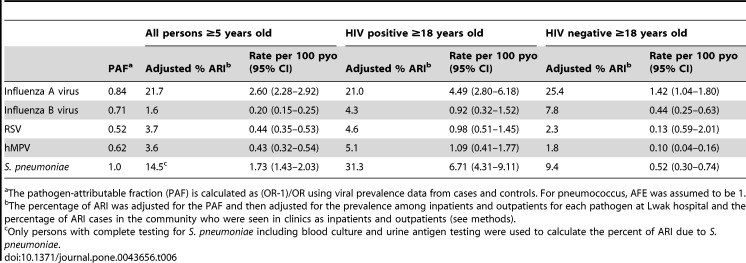
Description:Background ; Few comprehensive data exist on disease incidence for specific etiologies of acute respiratory illness (ARI) in older children and adults in Africa. ; Methodology/Principal Findings ; From March 1, 2007, to February 28, 2010, among a surveillance population of 21,420 persons >5 years old in rural western Kenya, we collected blood for culture and malaria smears, nasopharyngeal and oropharyngeal swabs for quantitative real-time PCR for ten viruses and three atypical bacteria, and urine for pneumococcal antigen testing on outpatients and inpatients meeting a ARI case definition (cough or difficulty breathing or chest pain and temperature >38.0°C or oxygen saturation <90% or hospitalization). We also collected swabs from asymptomatic controls, from which we calculated pathogen-attributable fractions, adjusting for age, season, and HIV-status, in logistic regression. We calculated incidence by pathogen, adjusting for health-seeking for ARI and pathogen-attributable fractions. Among 3,406 ARI patients >5 years old (adjusted annual incidence 12.0 per 100 person-years), influenza A virus was the most common virus (22% overall; 11% inpatients, 27% outpatients) and Streptococcus pneumoniae was the most common bacteria (16% overall; 23% inpatients, 14% outpatients), yielding annual incidences of 2.6 and 1.7 episodes per 100 person-years, respectively. Influenza A virus, influenza B virus, respiratory syncytial virus (RSV) and human metapneumovirus were more prevalent in swabs among cases (22%, 6%, 8% and 5%, respectively) than controls. Adenovirus, parainfluenza viruses, rhinovirus/enterovirus, parechovirus, and Mycoplasma pneumoniae were not more prevalent among cases than controls. Pneumococcus and non-typhi Salmonella were more prevalent among HIV-infected adults, but prevalence of viruses was similar among HIV-infected and HIV-negative individuals. ARI incidence was highest during peak malaria season. ; Conclusions/Signficance ; Vaccination against influenza and pneumococcus (by potential herd immunity from childhood vaccination or of HIV-infected adults) might prevent much of the substantial ARI incidence among persons >5 years old in similar rural African settings.
-
Subjects:
-
Source:PLoS One. 2012; 7(8).
-
Document Type:
-
Place as Subject:
-
Volume:7
-
Issue:8
-
Download URL:
-
File Type:
 [PDF - 698.26 KB]
 -
Collection(s):
-
Main Document Checksum:urn:sha256:4871794419f5b0bd07cff736316e1cd9773a83cc6722bf33a79b86cd871d6005
Supporting Files


File Language:
English
 Was this page helpful?
 Found an issue?




CDC STACKS serves as an archival repository of CDC-published products including
scientific findings, journal articles, guidelines, recommendations, or other public health information authored or
co-authored by CDC or funded partners.
As a repository, CDC STACKS retains documents in their original published format to ensure public access to scientific information.
As a repository, CDC STACKS retains documents in their original published format to ensure public access to scientific information.
You May Also Like
COLLECTION
CDC Public Access