



State-Specific Synthetic Estimates of Health Status Groups Among Inactive Older Adults With Self-Reported Diabetes, 2000-2009
Supporting Files
Public Domain

-
Apr 19 2012
File Language:
English
Details
-
Journal Article:Preventing Chronic Disease (PCD)
-
Personal Author:
-
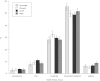
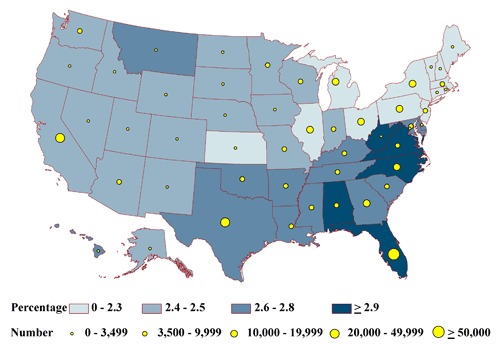
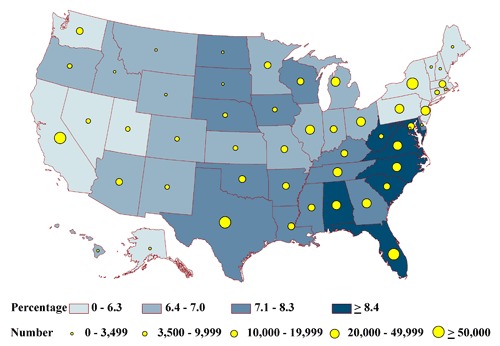
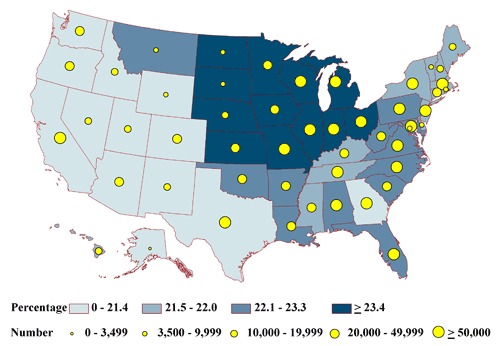
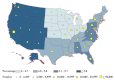
Description:Introduction ; Physical activity helps diabetic older adults who have physical impairments or comorbid conditions to control their disease. To enable state planners to select physical activity programs for these adults, we calculated synthetic state-specific estimates of inactive older adults with diabetes, categorized by defined health status groups. ; Methods ; Using data from the 2000 through 2009 National Health Interview Survey (NHIS) and the Behavioral Risk Factor Surveillance System (BRFSS), we calculated synthetic state-specific estimates of inactive adults with diabetes who were aged 50 years or older for 5 mutually exclusive health status groups: 1) homebound, 2) frail (functional difficulty in walking one-fourth mile, climbing 10 steps, standing for 2 hours, and stooping, bending, and kneeling), 3) functionally impaired (difficulty in 1 to 3 of these functions), 4) having 1 or more comorbid conditions (with no functional impairments), and 5) healthy (no impairments or comorbid conditions). We combined NHIS regional proportions for the health status groups of inactive, older diabetic adults with BRFSS data of older diabetic adults to estimate state-specific proportions and totals. ; Results ; State-specific estimates of health status groups among all older adults ranged from 2.2% to 3.0% for homebound, 5.8% to 8.8% for frail, 20.1% to 26.1% for impaired, 34.9% to 43.7% for having comorbid conditions, and 4.0% to 6.9% for healthy; the remainder were older active diabetic adults. Except for the homebound, the percentages in these health status groups varied significantly by region and state. ; Conclusion ; These state-specific estimates correspond to existing physical activity programs to match certain health status characteristics of groups and may be useful to program planners to meet the needs of inactive, older diabetic adults.
-
Subjects:
-
Source:Prev Chronic Dis. 2012; 9.
-
ISSN:1545-1151
-
Document Type:
-
Corporate as Subject:
-
Place as Subject:
-
Location:
-
Volume:9
-
Download URL:
-
File Type:
 [PDF - 383.91 KB]
 -
Collection(s):
-
Main Document Checksum:urn:sha-512:1258bd9405c6ad7bc9d87588d068948340f39c4d2c893d737f5cafac64d614524637b064c9c6f067a29d6463281a1912e3ab52aed995785829993c357b52e2be
Supporting Files


File Language:
English
 Was this page helpful?
 Found an issue?




CDC STACKS serves as an archival repository of CDC-published products including
scientific findings, journal articles, guidelines, recommendations, or other public health information authored or
co-authored by CDC or funded partners.
As a repository, CDC STACKS retains documents in their original published format to ensure public access to scientific information.
As a repository, CDC STACKS retains documents in their original published format to ensure public access to scientific information.
You May Also Like
COLLECTION
Preventing Chronic Disease