



Epidemiology and Spatial Emergence of Anaplasmosis, New York, USA, 2010‒2018
Supporting Files

-
August 2021
File Language:
English
Details
-
Alternative Title:Emerg Infect Dis
-
Personal Author:Russell, Alexis ; Prusinski, Melissa ; Sommer, Jamie ; O’Connor, Collin ; White, Jennifer ; Falco, Richard ; Kokas, John ; Vinci, Vanessa ; Gall, Wayne ; Tober, Keith ; Haight, Jamie ; Oliver, JoAnne ; Meehan, Lisa ; Sporn, Lee Ann ; Brisson, Dustin ; Backenson, P. Bryon
-
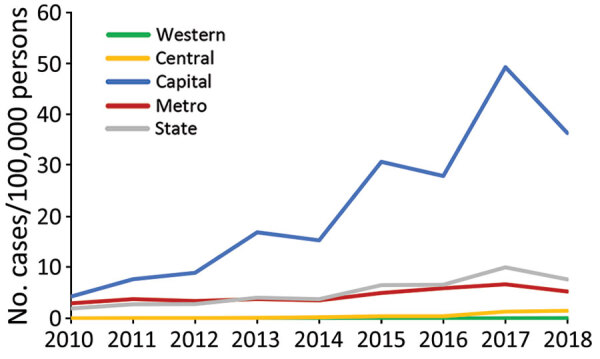
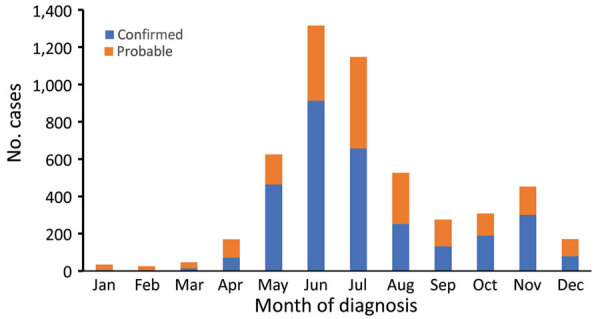
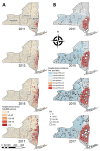
Description:Human granulocytic anaplasmosis, a tickborne disease caused by the bacterium Anaplasma phagocytophilum, was first identified during 1994 and is now an emerging public health threat in the United States. New York state (NYS) has experienced a recent increase in the incidence of anaplasmosis. We analyzed human case surveillance and tick surveillance data collected by the NYS Department of Health for spatiotemporal patterns of disease emergence. We describe the epidemiology and growing incidence of anaplasmosis cases reported during 2010-2018. Spatial analysis showed an expanding hot spot of anaplasmosis in the Capital Region, where incidence increased >8-fold. The prevalence of A. phagocytophilum increased greatly within tick populations in the Capital Region over the same period, and entomologic risk factors were correlated with disease incidence at a local level. These results indicate that anaplasmosis is rapidly emerging in a geographically focused area of NYS, likely driven by localized changes in exposure risk.
-
Subjects:
-
Source:Emerg Infect Dis. 27(8):2154-2162
-
Pubmed ID:34287128
-
Pubmed Central ID:PMC8314826
-
Document Type:
-
Funding:
-
Place as Subject:
-
Location:
-
Volume:27
-
Issue:8
-
Download URL:
-
File Type:
 [PDF - 2.69 MB]
 -
Collection(s):
-
Main Document Checksum:urn:sha256:7e92c41ee5d6b55ab66e1b9cb0db5558d1779308525fb9fe238af623bb28cca7
Supporting Files


File Language:
English
 Was this page helpful?
 Found an issue?


CDC STACKS serves as an archival repository of CDC-published products including
scientific findings, journal articles, guidelines, recommendations, or other public health information authored or
co-authored by CDC or funded partners.
As a repository, CDC STACKS retains documents in their original published format to ensure public access to scientific information.
As a repository, CDC STACKS retains documents in their original published format to ensure public access to scientific information.
You May Also Like
COLLECTION
Emerging Infectious Diseases