



Association between hourly wages and dietary intake after the first phase of implementation of the Minneapolis minimum wage ordinance
Supporting Files

-
8-2021
-
Available in CDC Stacks on 2022-08-01T00:00:00Z
File Language:
English
Details
-
Alternative Title:Public Health Nutr
-
Personal Author:
-
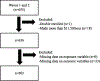
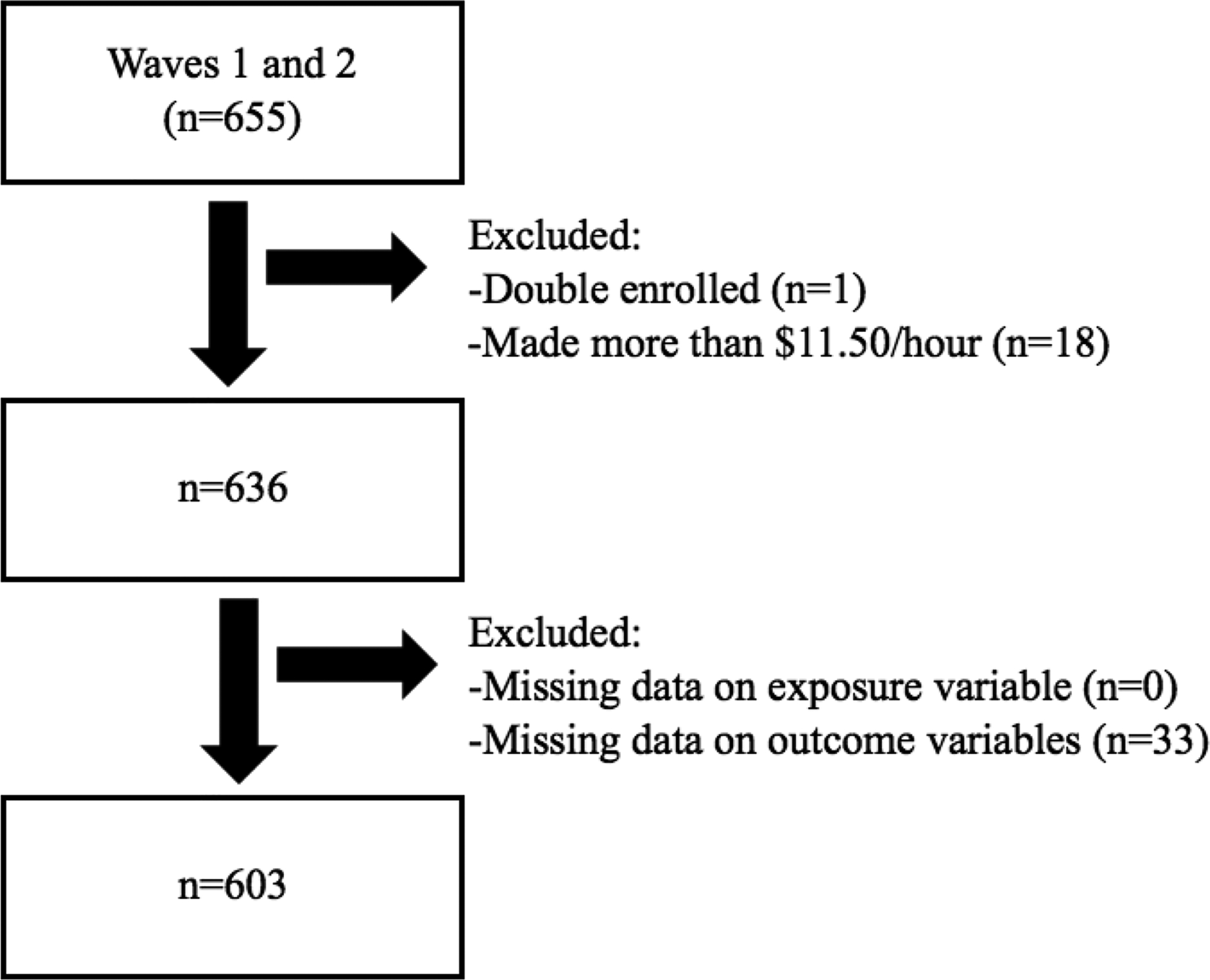
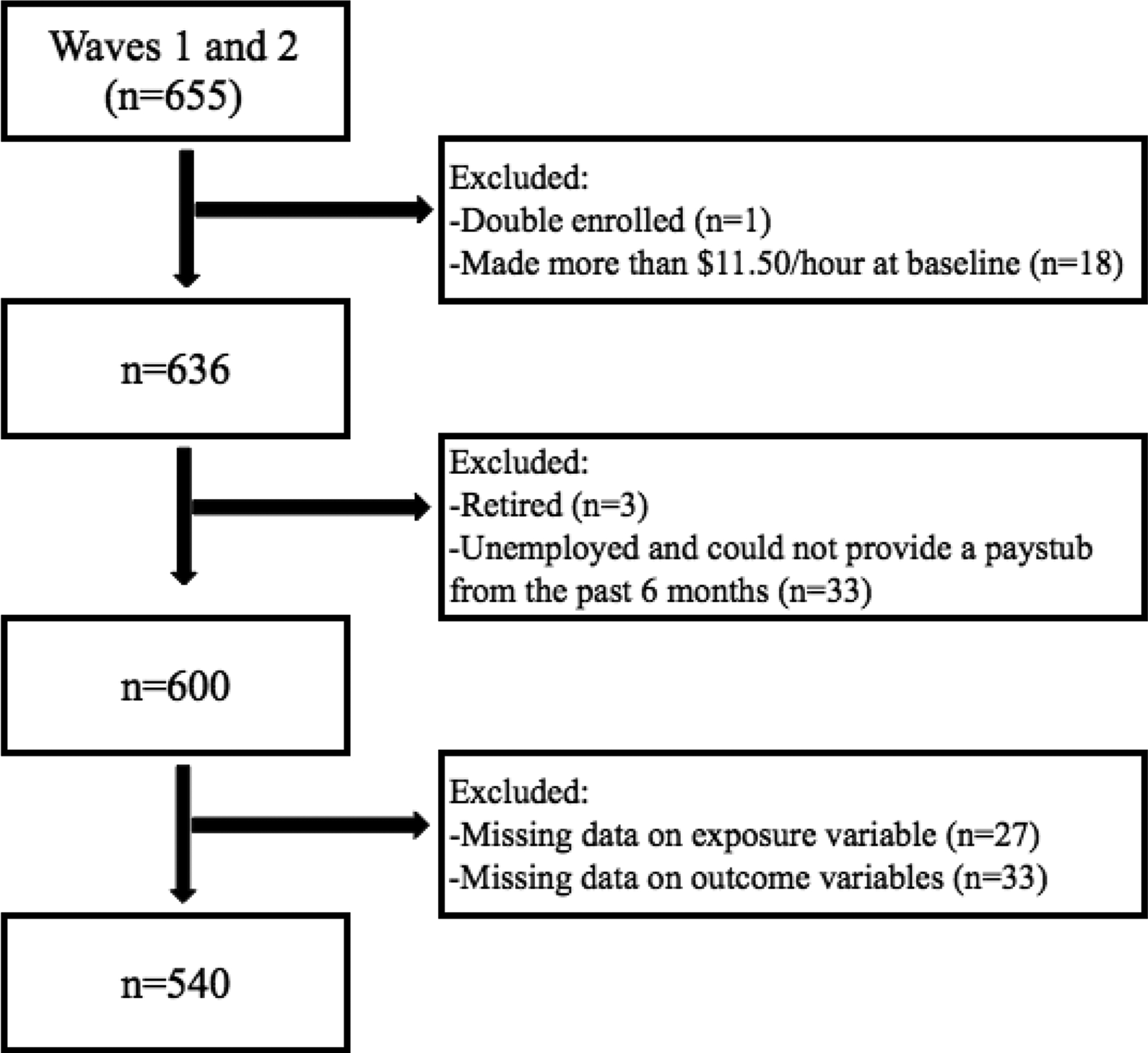
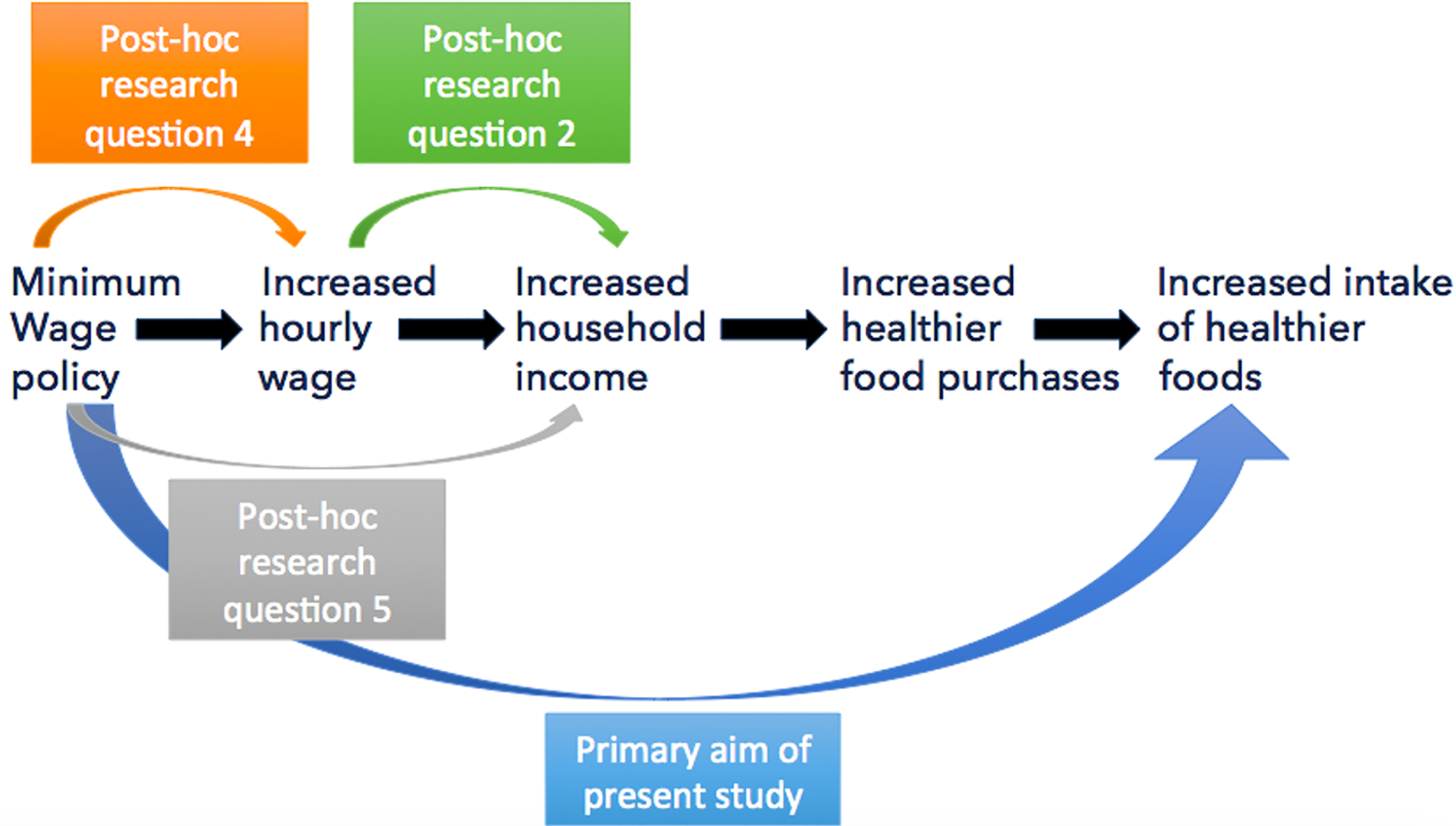
Description:Objective: ; In 2018, Minneapolis began phased implementation of an ordinance to increase the local minimum wage to $15/hour. We sought to determine whether the first phase of implementation was associated with changes in frequency of consumption of fruits and vegetables, whole grain-rich foods, and foods high in added sugars among low-wage workers. ; Design: ; Natural experiment. ; Setting: ; The Wages Study is a prospective cohort study of 974 low-wage workers followed throughout the phased implementation of the ordinance (2018–2022). We used difference-in-difference analysis to compare outcomes among workers in Minneapolis, Minnesota, to those in a comparison city (Raleigh, North Carolina). We assessed wages using participants’ pay stubs and dietary intake using the National Cancer Institute Dietary Screener Questionnaire. ; Participants: ; Analyses use the first two waves of Wages data (2018 baseline, 2019) and includes 267 and 336 low-wage workers in Minneapolis and Raleigh (respectively). ; Results: ; After the first phase of implementation, wages increased in both cities, but the increase was $0.82 greater in Minneapolis (p=0.02). However, the first phase of the policy’s implementation was not associated with changes in daily frequency of consumption of fruits and vegetables (IRR=1.03, 95% CI: 0.86–1.24, p=0.73), whole grain-rich foods (IRR=1.23, 95% CI: 0.89–1.70, p=0.20), or foods high in added sugars (IRR=1.13, 95% CI: 0.86–1.47, p=0.38) among workers in Minneapolis compared to Raleigh. ; Conclusions: ; The first phase of implementation of the Minneapolis minimum wage policy was associated with increased wages, but not with changes in dietary intake. Future research should examine whether full implementation is associated dietary changes.
-
Subjects:
-
Keywords:
-
Source:Public Health Nutr. 24(11):3552-3565
-
Pubmed ID:33634771
-
Pubmed Central ID:PMC8316265
-
Document Type:
-
Funding:P30 DK092926/DK/NIDDK NIH HHSUnited States/ ; UL1 TR000114/TR/NCATS NIH HHSUnited States/ ; U48 DP006400/DP/NCCDPHP CDC HHSUnited States/ ; U48DP006400/ACL/ACL HHSUnited States/ ; R01 DK118664/DK/NIDDK NIH HHSUnited States/ ; K23 DK109200/DK/NIDDK NIH HHSUnited States/ ; UL1 TR002494/TR/NCATS NIH HHSUnited States/
-
Volume:24
-
Issue:11
-
Download URL:
-
File Type:
 [PDF - 1.47 MB]
 -
Collection(s):
-
Main Document Checksum:urn:sha256:3603e5c1de31293354cd09d16834fd5007b57f29fb42b0ede393378f5c86a9c4
Supporting Files


File Language:
English
 Was this page helpful?
 Found an issue?





CDC STACKS serves as an archival repository of CDC-published products including
scientific findings, journal articles, guidelines, recommendations, or other public health information authored or
co-authored by CDC or funded partners.
As a repository, CDC STACKS retains documents in their original published format to ensure public access to scientific information.
As a repository, CDC STACKS retains documents in their original published format to ensure public access to scientific information.
You May Also Like
COLLECTION
CDC Public Access