


Conventional and High-Sensitivity Malaria Rapid Diagnostic Test Performance in 2 Transmission Settings: Haiti 2017
Supporting Files

-
February 18 2020
-
File Language:
English
Details
-
Alternative Title:J Infect Dis
-
Personal Author:Rogier, Eric ; Hamre, Karen E. S. ; Joseph, Vena ; Plucinski, Mateusz M. ; Presume, Jacquelin ; Romilus, Ithamare ; Mondelus, Gina ; Elisme, Tamara ; van den Hoogen, Lotus ; Lemoine, Jean Frantz ; Drakeley, Chris ; Ashton, Ruth A. ; Chang, Michelle A. ; Existe, Alexandre ; Boncy, Jacques ; Stresman, Gillian ; Druetz, Thomas ; Eisele, Thomas P.
-
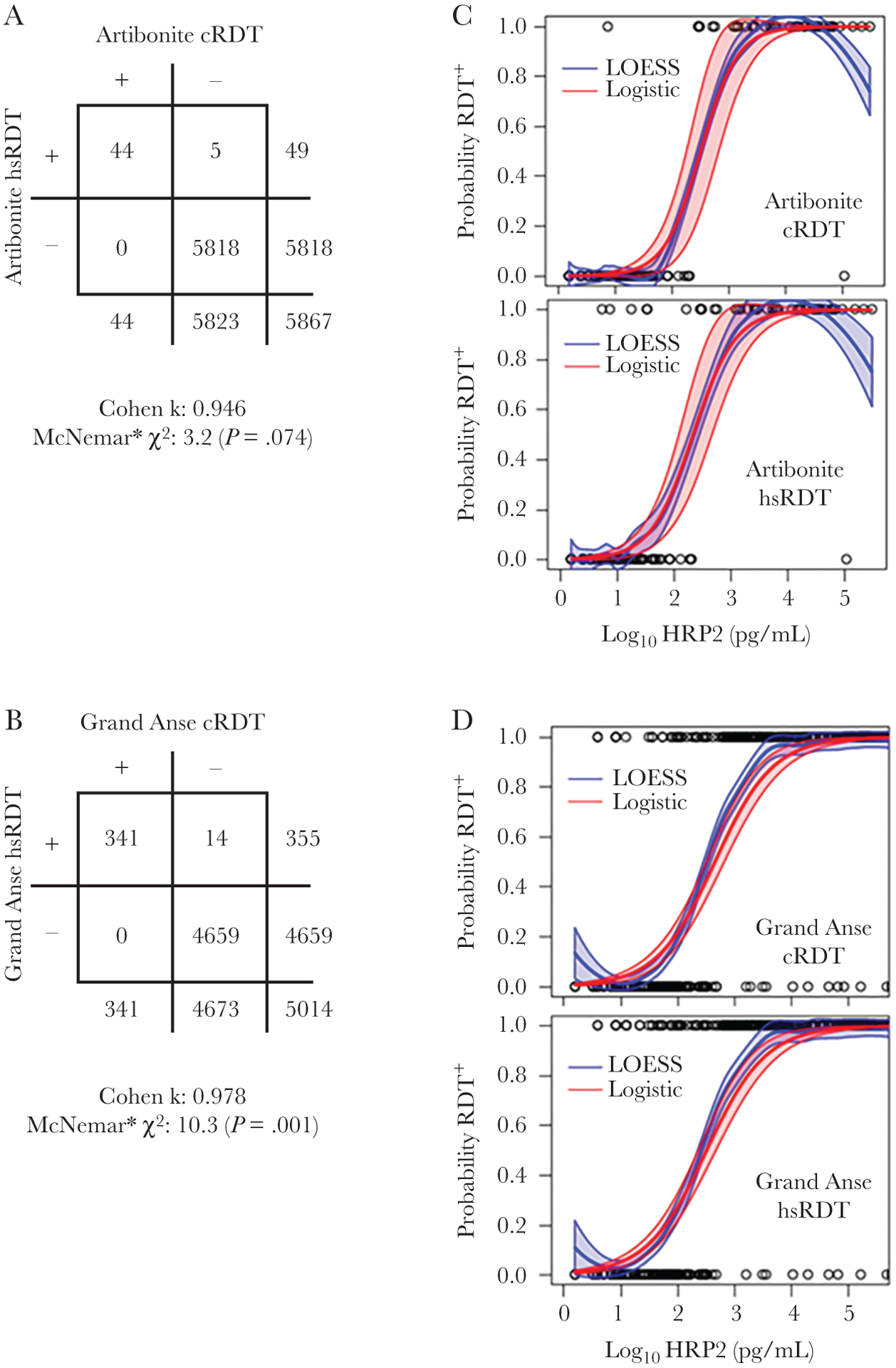
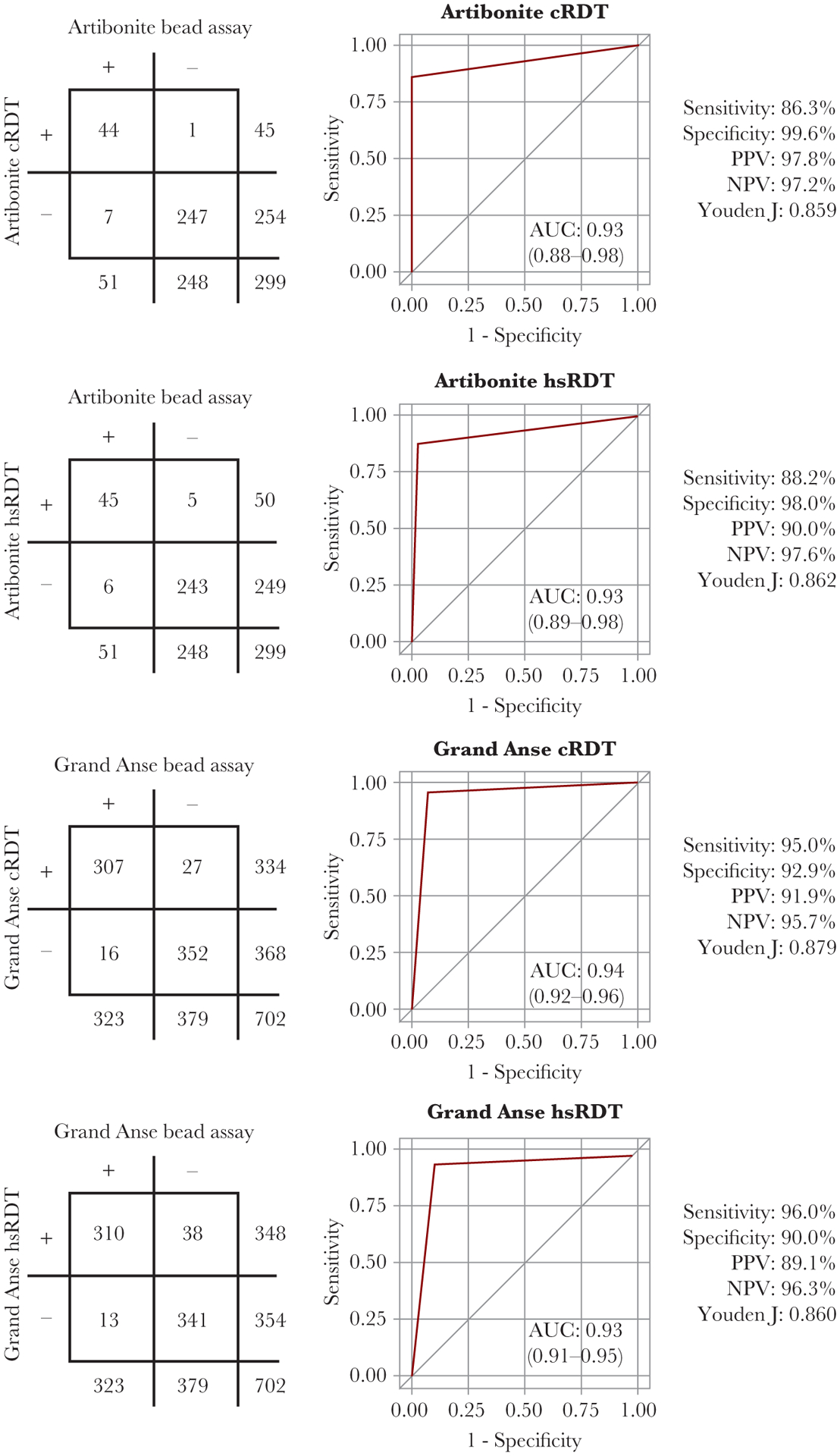
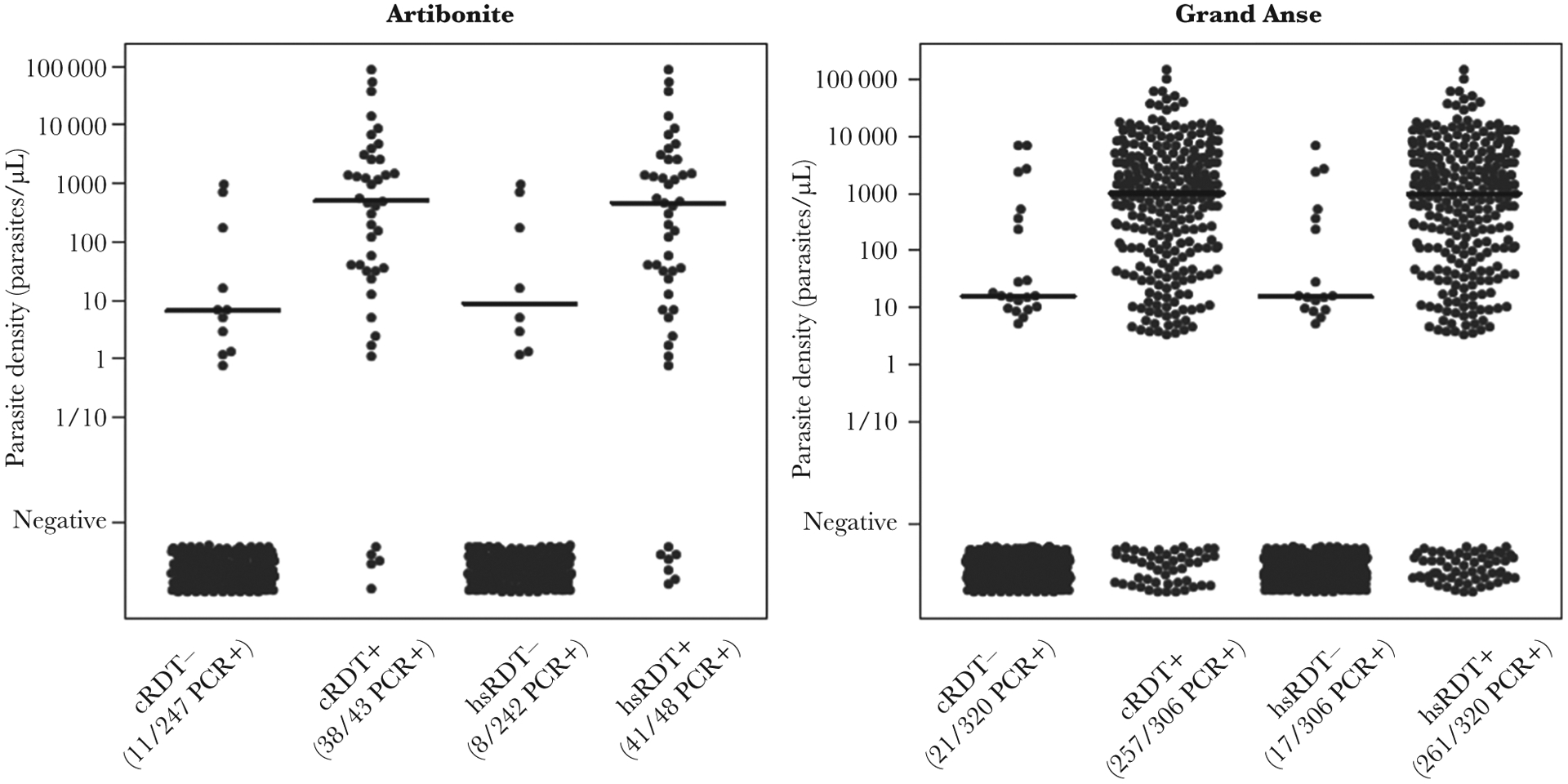
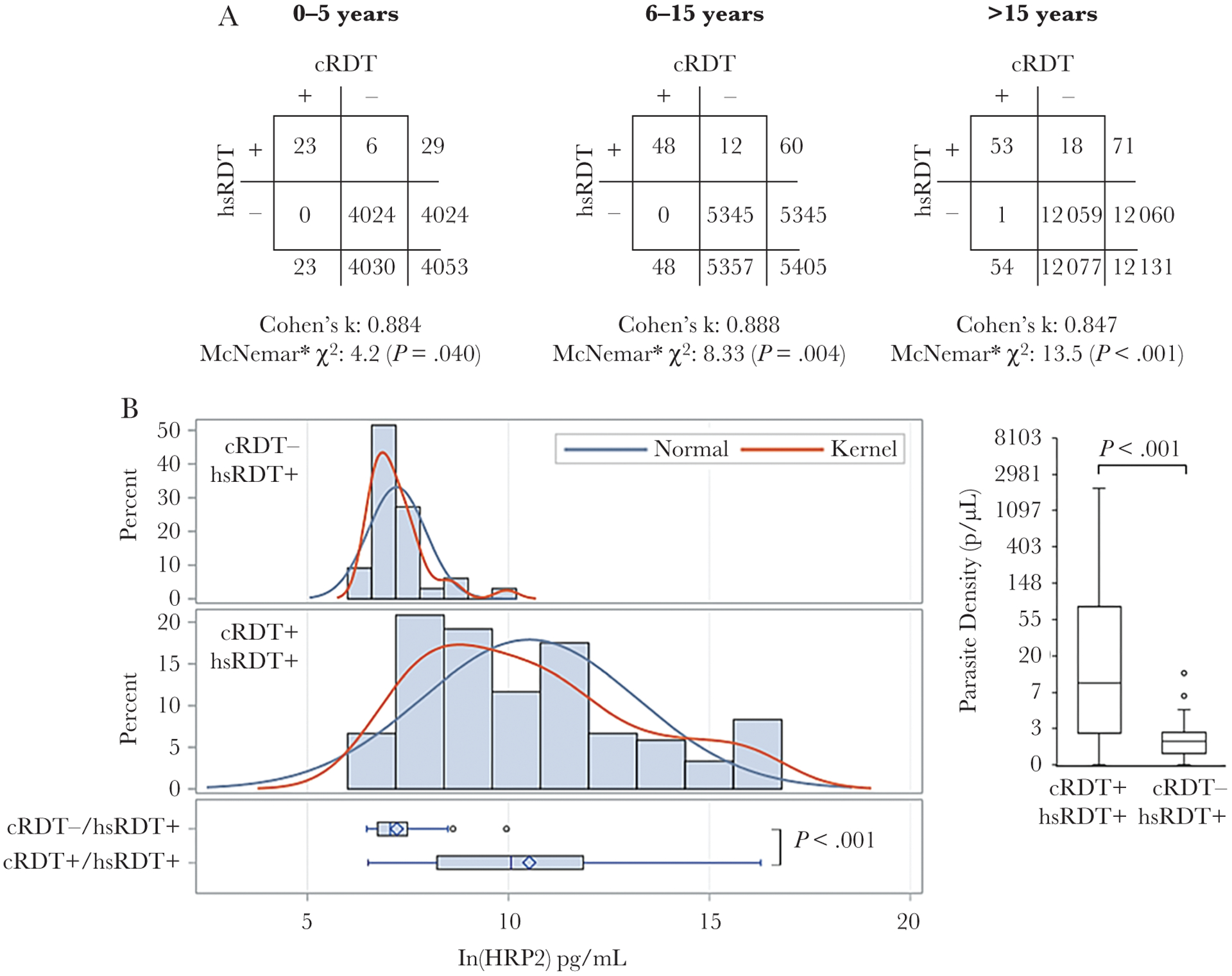
Description:Accurate malaria diagnosis is foundational for control and elimination, and Haiti relies on histidine-rich protein 2 (HRP2)-based rapid diagnostic tests (RDTs) identifying Plasmodium falciparum in clinical and community settings. In 2017, 1 household and 2 easy-access group surveys tested all participants (N = 32 506) by conventional and high-sensitivity RDTs. A subset of blood samples (n = 1154) was laboratory tested for HRP2 by bead-based immunoassay and for P. falciparum 18S rDNA by photo-induced electron transfer polymerase chain reaction. Both RDT types detected low concentrations of HRP2 with sensitivity estimates between 2.6 ng/mL and 14.6 ng/mL. Compared to the predicate HRP2 laboratory assay, RDT sensitivity ranged from 86.3% to 96.0% between tests and settings, and specificity from 90.0% to 99.6%. In the household survey, the high-sensitivity RDT provided a significantly higher number of positive tests, but this represented a very small proportion (<0.2%) of all participants. These data show that a high-sensitivity RDT may have limited utility in a malaria elimination setting like Haiti.
-
Subjects:
-
Source:J Infect Dis. 221(5):786-795
-
Pubmed ID:31630194
-
Pubmed Central ID:PMC8211410
-
Document Type:
-
Funding:
-
Place as Subject:
-
Volume:221
-
Issue:5
-
Collection(s):
-
Main Document Checksum:urn:sha256:2c061da73ec8715122e6bc91112339a1dd49398a9292da6154829fab1612e575
-
Download URL:
-
File Type:
 [PDF
- 1.18 MB
]
[PDF
- 1.18 MB
]
Supporting Files


File Language:
English
ON THIS PAGE


CDC STACKS serves as an archival repository of CDC-published products including
scientific findings,
journal articles, guidelines, recommendations, or other public health information authored or
co-authored by CDC or funded partners.
As a repository, CDC STACKS retains documents in their original published format to ensure public access to scientific information.
As a repository, CDC STACKS retains documents in their original published format to ensure public access to scientific information.
You May Also Like
COLLECTION
CDC Public Access