



Implementing respondent-driven sampling to recruit women who exchange sex in New York City: Factors associated with recruitment and lessons learned
Supporting Files

-
-
By Show All

-
Available in CDC Stacks on
File Language:
English
Details
-
Alternative Title:AIDS Behav
-
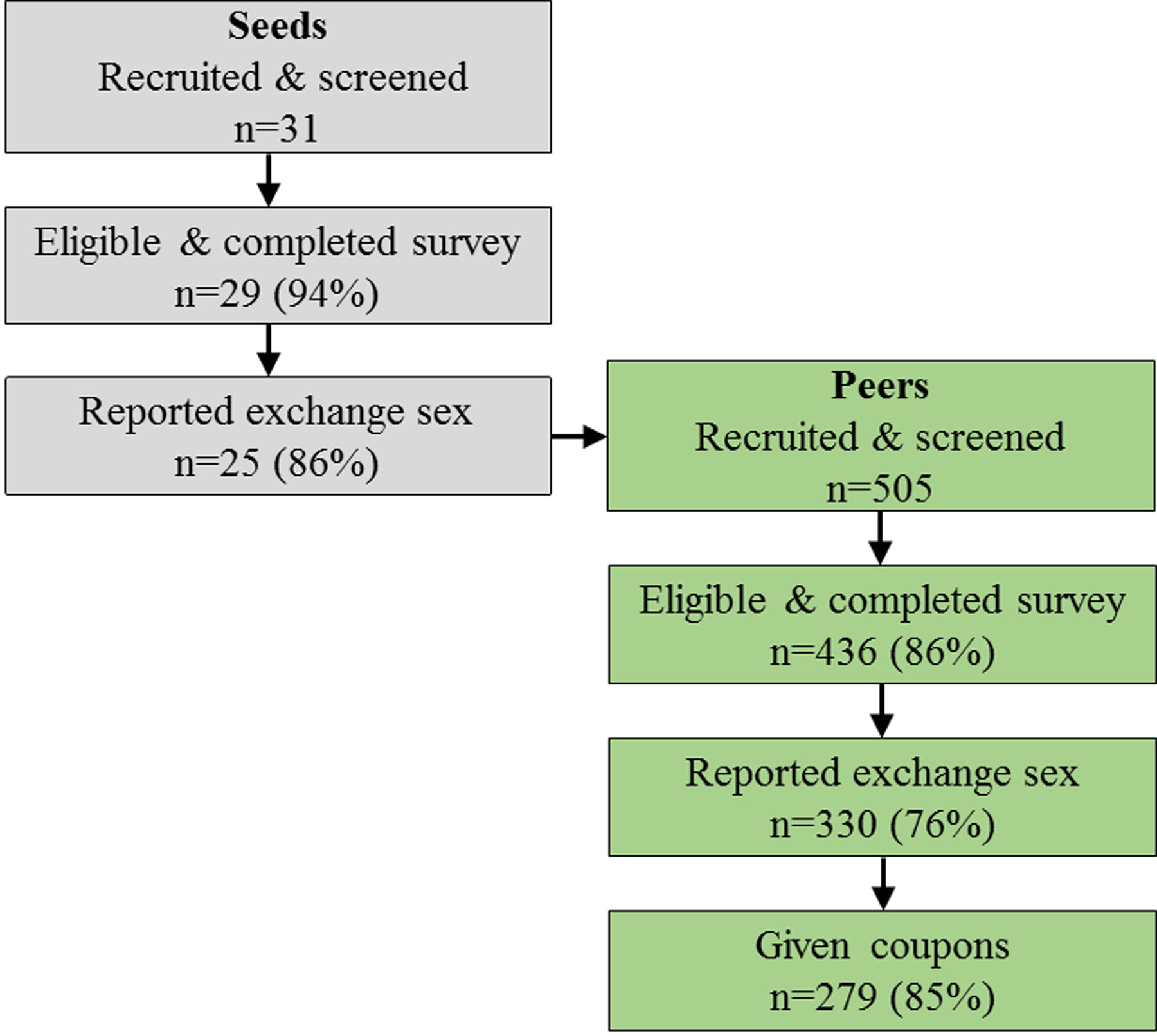
Description:Respondent-driven sampling (RDS) relies on productive peer recruitment to capture hidden populations. Domestic studies have identified characteristics of productive recruitment among RDS samples of men who have sex with men and persons who use drugs, but not of women who exchange sex, a group vulnerable to HIV infection. We examined sociodemographic-, behavioral-, exchange-sex-, and protocol-related factors associated with recruitment among seeds (n = 25) and peers (n = 297) in the 2016 New York City National HIV Behavioral Surveillance Study cycle focused on women who exchange sex. Recruiter productivity was significantly associated with not having been recently incarcerated, lower rate of HIV testing, and larger exchange sex networks among seeds, and with HIV-prevention services usage among peers. We describe challenges and lessons learned from implementing RDS in this population. Our study identifies seed characteristics and protocol improvements researchers can utilize when implementing future RDS studies among women who exchange sex.
-
Subjects:
-
Pubmed ID:30929151
-
Pubmed Central ID:PMC8201473
-
Document Type:
-
Funding:
-
Place as Subject:
-
Volume:24
-
Issue:2
-
Download URL:
-
File Type:
 [PDF - 843.66 KB]
-
Collection(s):
-
Main Document Checksum:urn:sha256:893699de068cb4272bd1bfa9c0c62b516d288208cb45d263101bc2f34d0c5d69
Supporting Files


File Language:
English
 Was this page helpful?
 Found an issue?




CDC STACKS serves as an archival repository of CDC-published products including
scientific findings, journal articles, guidelines, recommendations, or other public health information authored or
co-authored by CDC or funded partners.
As a repository, CDC STACKS retains documents in their original published format to ensure public access to scientific information.
As a repository, CDC STACKS retains documents in their original published format to ensure public access to scientific information.
You May Also Like
COLLECTION
CDC Public Access