



Proposal for Human Respiratory Syncytial Virus Nomenclature below the Species Level
Supporting Files
Public Domain

-
Jun 2021
File Language:
English
Details
-
Alternative Title:Emerg Infect Dis
-
Personal Author:Salimi, Vahid ; Viegas, Mariana ; Trento, Alfonsina ; Agoti, Charles N. ; Anderson, Larry J. ; Avadhanula, Vasanthi ; Bahl, Justin ; Bont, Louis ; Brister, J. Rodney ; Cane, Patricia A. ; Galiano, Mónica ; Graham, Barney S. ; Hatcher, Eneida L. ; Hellferscee, Orienka ; Henke, David M. ; Hirve, Siddhivinayak ; Jackson, Sandra ; Keyaerts, Els ; Kragten-Tabatabaie, Leyla ; Lindstrom, Stephen ; Nauwelaers, Inne ; Nokes, D. James ; Openshaw, Peter J. ; Peret, Teresa C. ; Piedra, Pedro A. ; Ramaekers, Kaat ; Rector, Annabel ; Trovão, Nídia Sequeira ; von Gottberg, Anne ; Zambon, Maria ; Zhang, Wenqing ; Williams, Thomas C. ; Barr, Ian G. ; Buchholz, Ursula J.
-
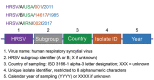
Description:Human respiratory syncytial virus (HRSV) is the leading viral cause of serious pediatric respiratory disease, and lifelong reinfections are common. Its 2 major subgroups, A and B, exhibit some antigenic variability, enabling HRSV to circulate annually. Globally, research has increased the number of HRSV genomic sequences available. To ensure accurate molecular epidemiology analyses, we propose a uniform nomenclature for HRSV-positive samples and isolates, and HRSV sequences, namely: HRSV/subgroup identifier/geographic identifier/unique sequence identifier/year of sampling. We also propose a template for submitting associated metadata. Universal nomenclature would help researchers retrieve and analyze sequence data to better understand the evolution of this virus.
-
Subjects:
-
Source:Emerg Infect Dis. 27(6)
-
Pubmed ID:34013862
-
Pubmed Central ID:PMC8153853
-
Document Type:
-
Volume:27
-
Issue:6
-
Download URL:
-
File Type:
 [PDF - 2.13 MB]
 -
Collection(s):
-
Main Document Checksum:urn:sha256:09cdcc5f07f0008805fa12c0da2d593d9fdb1304cb21450ce95f7ae721666816
Supporting Files


File Language:
English
 Was this page helpful?
 Found an issue?




CDC STACKS serves as an archival repository of CDC-published products including
scientific findings, journal articles, guidelines, recommendations, or other public health information authored or
co-authored by CDC or funded partners.
As a repository, CDC STACKS retains documents in their original published format to ensure public access to scientific information.
As a repository, CDC STACKS retains documents in their original published format to ensure public access to scientific information.
You May Also Like
COLLECTION
Emerging Infectious Diseases