


Case–Control Study of Risk Factors for Acquired Hepatitis E Virus Infections in Blood Donors, United Kingdom, 2018–2019
Supporting Files
Public Domain

-
Apr 2021
-
File Language:
English
Details
-
Alternative Title:Emerg Infect Dis
-
Personal Author:
-
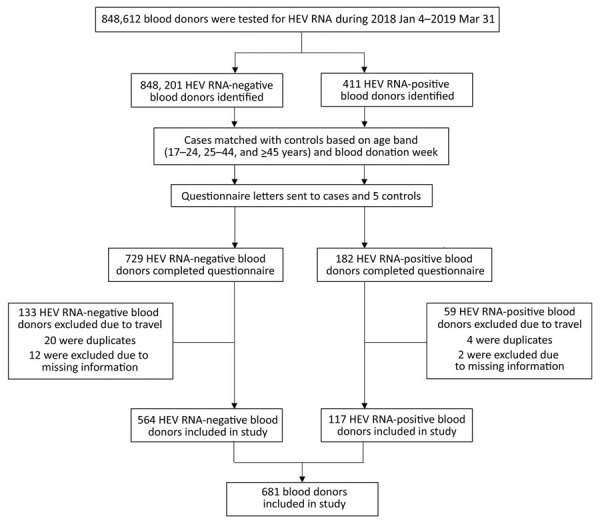
Description:Hepatitis E virus (HEV) is the most common cause of acute viral hepatitis in England. Substantial yearly increases of autochthonous infections were observed during 2003-2016 and again during 2017-2019. Previous studies associated acute HEV cases with consumption of processed pork products, we investigated risk factors for autochthonous HEV infections in the blood donor population in England. Study participants were 117 HEV RNA-positive blood donors and 564 HEV RNA-negative blood donors. No persons with positive results were vegetarian; 97.4% of persons with positive results reported eating pork products. Consuming bacon (OR 3.0, 95% CI 1.7-5.5; p<0.0001), cured pork meats (OR 3.5, 95% CI 2.2-5.4; p<0.0001), and pigs' liver (OR 2.9, 95% CI 1.0-8.3; p = 0.04) were significantly associated with HEV infection. Our findings confirm previous links to pork products and suggest that appropriate animal husbandry is essential to reduce the risk for HEV infection.
-
Subjects:
-
Source:Emerg Infect Dis. 27(6):1654-1661
-
Pubmed ID:34013866
-
Pubmed Central ID:PMC8153866
-
Document Type:
-
Place as Subject:
-
Volume:27
-
Issue:6
-
Collection(s):
-
Main Document Checksum:urn:sha256:3c300e21f7b8abcc6662b35461b8dd8c934b13703c4e0096ce28d81f6e20097f
-
Download URL:
-
File Type:
 [PDF
- 917.64 KB
]
[PDF
- 917.64 KB
]
Supporting Files


File Language:
English
ON THIS PAGE

CDC STACKS serves as an archival repository of CDC-published products including
scientific findings,
journal articles, guidelines, recommendations, or other public health information authored or
co-authored by CDC or funded partners.
As a repository, CDC STACKS retains documents in their original published format to ensure public access to scientific information.
As a repository, CDC STACKS retains documents in their original published format to ensure public access to scientific information.
You May Also Like
COLLECTION
Emerging Infectious Diseases