


Circuit Selectivity in Drug Versus Natural Reward Seeking Behaviors
Supporting Files

-
6-2021
-
File Language:
English
Details
-
Alternative Title:J Neurochem
-
Personal Author:
-
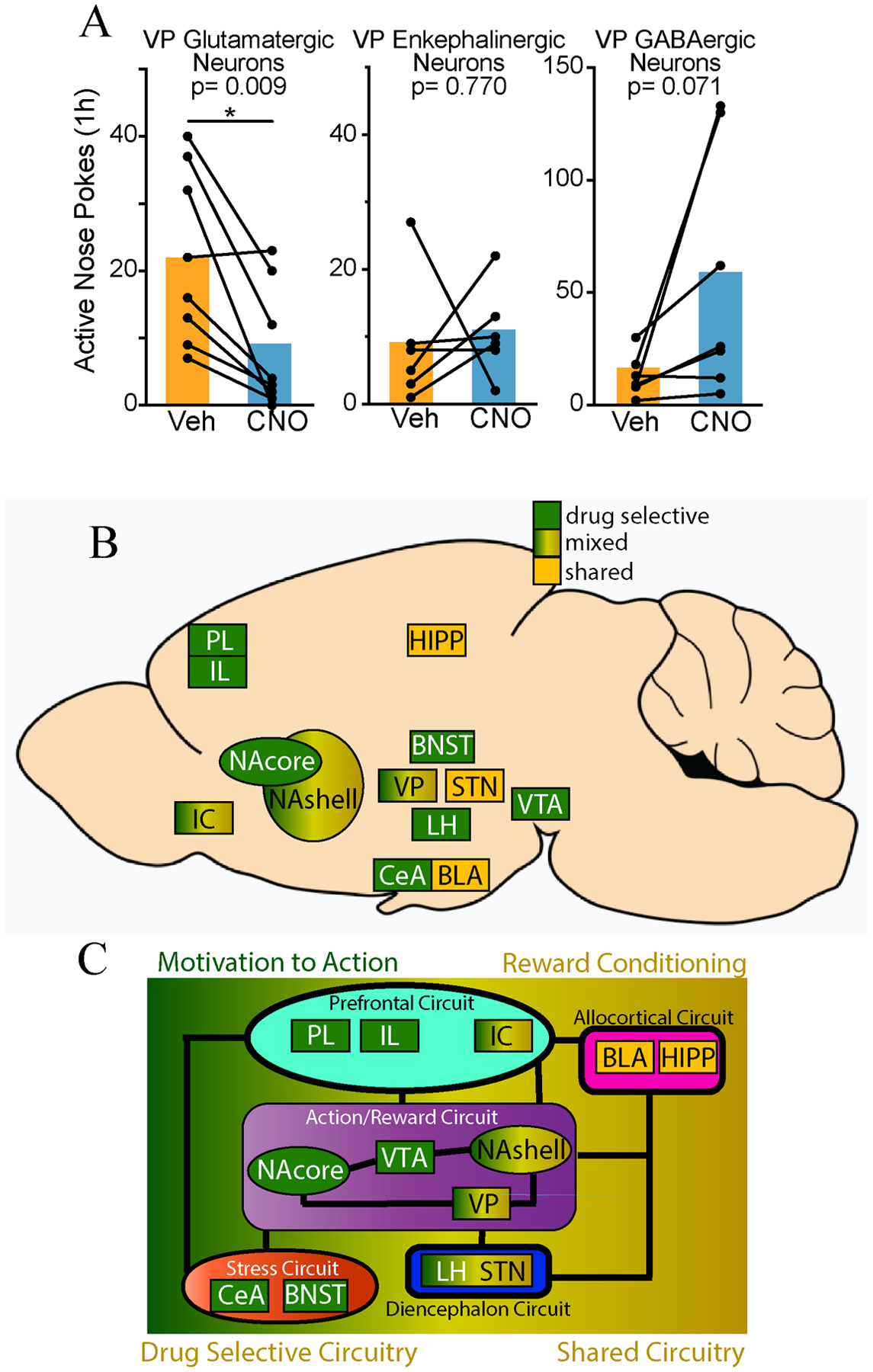
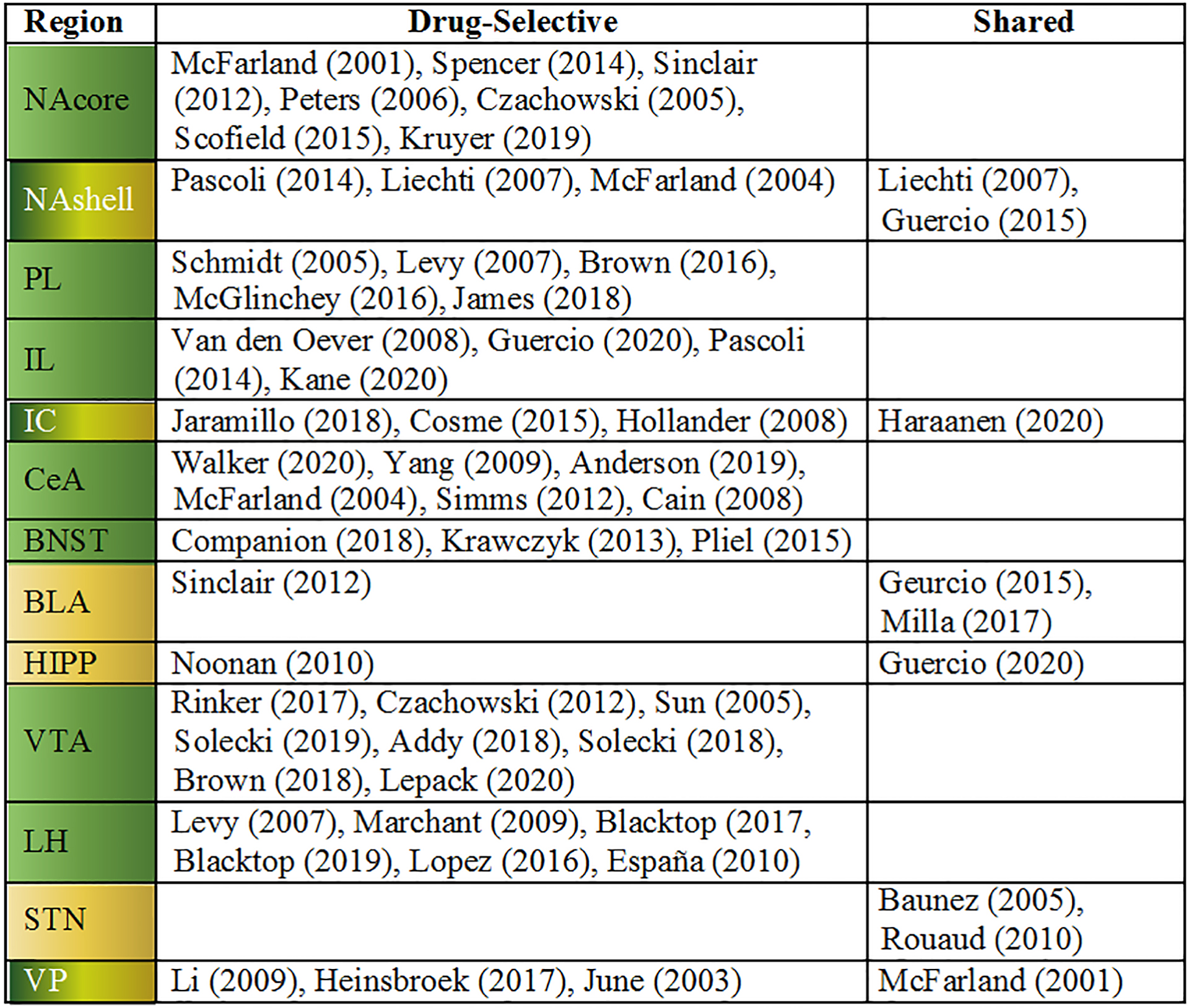
Description:Substance use disorder (SUD) is characterized, in part by behavior biased toward drug use and away from natural sources of reward (e.g., social interaction, food, sex). The neurobiological underpinnings of SUDs reveal distinct brain regions where neuronal activity is necessary for the manifestation of SUD-characteristic behaviors. Studies that specifically examine how these regions are involved in behaviors motivated by drug versus natural reward allow determinations of which regions are necessary for regulating seeking of both reward types, and appraisals of novel SUD therapies for off-target effects on behaviors motivated by natural reward. Here, we evaluate studies directly comparing regulatory roles for specific brain regions in drug versus natural reward. While it is clear that many regions drive behaviors motivated by all reward types, based on the literature reviewed we propose a set of interconnected regions that become necessary for behaviors motivated by drug, but not natural rewards. The circuitry is selectively necessary for drug seeking includes an Action/Reward subcircuit, comprising nucleus accumbens, ventral pallidum, and ventral tegmental area, a Prefrontal subcircuit comprising prelimbic, infralimbic, and insular cortices, a Stress subcircuit comprising the central nucleus of the amygdala and the bed nucleus of the stria terminalis, and a Diencephalon circuit including lateral hypothalamus. Evidence was mixed for nucleus accumbens shell, insular cortex, and ventral pallidum. Studies for all other brain nuclei reviewed supported a necessary role in regulating both drug and natural reward seeking. Finally, we discuss emerging strategies to further disambiguate the necessity of brain regions in drug- versus natural reward-associated behaviors.
-
Subjects:
-
Source:J Neurochem. 157(5):1450-1472
-
Pubmed ID:33420731
-
Pubmed Central ID:PMC8178159
-
Document Type:
-
Funding:I01 BX004727/BX/BLRD VAUnited States/ ; P20GM121310/University of Wyoming/ ; DA012513/DA/NIDA NIH HHSUnited States/ ; DP5 OD026407/OD/NIH HHSUnited States/ ; DA003906/DA/NIDA NIH HHSUnited States/ ; BX004727/U.S. Department of Veterans Affairs/ ; DA046373/DA/NIDA NIH HHSUnited States/ ; U01 DA045300/DA/NIDA NIH HHSUnited States/ ; P20 GM121310/GM/NIGMS NIH HHSUnited States/ ; R00 DA046522/DA/NIDA NIH HHSUnited States/ ; R37 DA003906/DA/NIDA NIH HHSUnited States/ ; P50 DA046373/DA/NIDA NIH HHSUnited States/ ; R01 DA012513/DA/NIDA NIH HHSUnited States/ ; K99 DA046522/DA/NIDA NIH HHSUnited States/ ; R01 DA003906/DA/NIDA NIH HHSUnited States/ ; DP5 OD026407/CD/ODCDC CDC HHSUnited States/ ; DA046522/DA/NIDA NIH HHSUnited States/
-
Volume:157
-
Issue:5
-
Collection(s):
-
Main Document Checksum:urn:sha256:75ced88e6cb680f5f48198ef295418e4b334e96df4d07bafc73350f23c7bc580
-
Download URL:
-
File Type:
 [PDF
- 1.40 MB
]
[PDF
- 1.40 MB
]
Supporting Files


File Language:
English
ON THIS PAGE



CDC STACKS serves as an archival repository of CDC-published products including
scientific findings,
journal articles, guidelines, recommendations, or other public health information authored or
co-authored by CDC or funded partners.
As a repository, CDC STACKS retains documents in their original published format to ensure public access to scientific information.
As a repository, CDC STACKS retains documents in their original published format to ensure public access to scientific information.
You May Also Like
COLLECTION
CDC Public Access