



Preliminary Findings of mRNA Covid-19 Vaccine Safety in Pregnant Persons
Supporting Files
Public Domain

-
2021/06/17
File Language:
English
Details
-
Alternative Title:N Engl J Med
-
Personal Author:Shimabukuro, Tom T. ; Kim, Shin Y. ; Myers, Tanya R. ; Moro, Pedro L. ; Oduyebo, Titilope ; Panagiotakopoulos, Lakshmi ; Marquez, Paige L. ; Olson, Christine K. ; Liu, Ruiling ; Chang, Karen T. ; Ellington, Sascha R. ; Burkel, Veronica K. ; Smoots, Ashley N. ; Green, Caitlin J. ; Licata, Charles ; Zhang, Bicheng C. ; Alimchandani, Meghna ; Mba-Jonas, Adamma ; Martin, Stacey W. ; Gee, Julianne M. ; Meaney-Delman, Dana M.
-
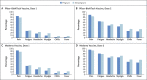
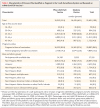
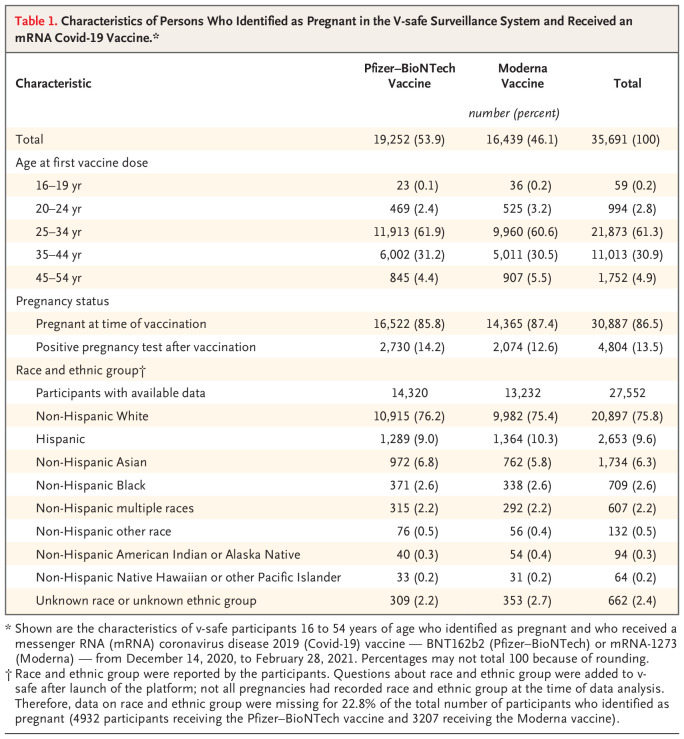
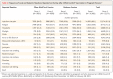
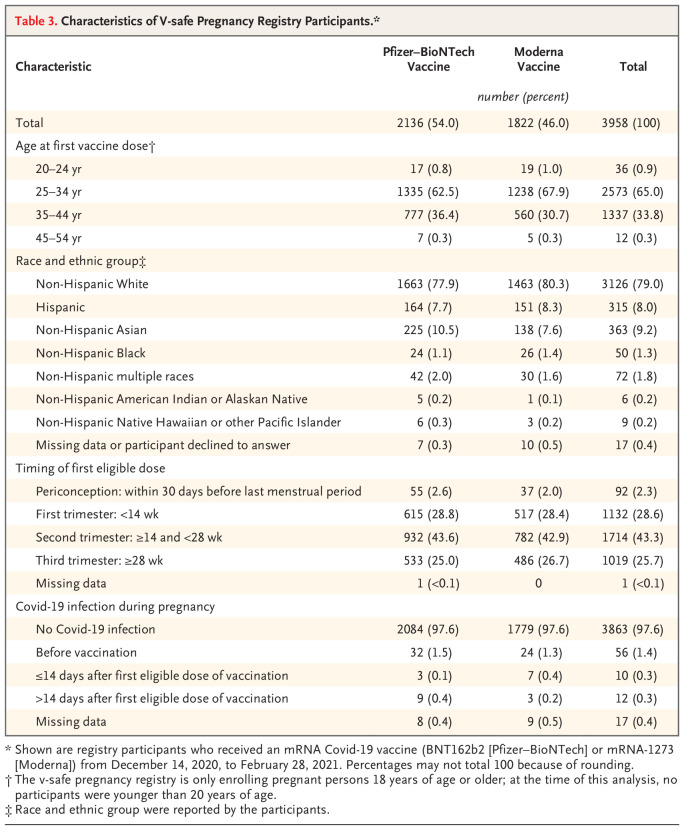
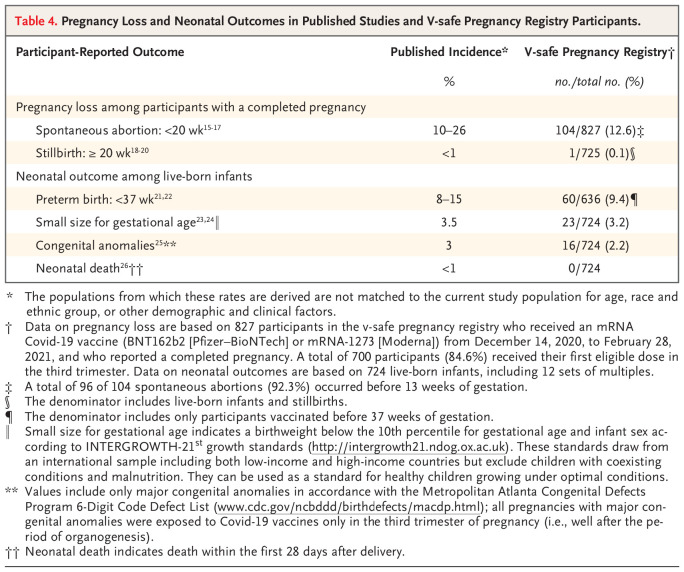
Description:Background ; Many pregnant persons in the United States are receiving messenger RNA (mRNA) coronavirus disease 2019 (Covid-19) vaccines, but data are limited on their safety in pregnancy. ; Methods ; From December 14, 2020, to February 28, 2021, we used data from the "v-safe after vaccination health checker" surveillance system, the v-safe pregnancy registry, and the Vaccine Adverse Event Reporting System (VAERS) to characterize the initial safety of mRNA Covid-19 vaccines in pregnant persons. ; Results ; A total of 35,691 v-safe participants 16 to 54 years of age identified as pregnant. Injection-site pain was reported more frequently among pregnant persons than among nonpregnant women, whereas headache, myalgia, chills, and fever were reported less frequently. Among 3958 participants enrolled in the v-safe pregnancy registry, 827 had a completed pregnancy, of which 115 (13.9%) resulted in a pregnancy loss and 712 (86.1%) resulted in a live birth (mostly among participants with vaccination in the third trimester). Adverse neonatal outcomes included preterm birth (in 9.4%) and small size for gestational age (in 3.2%); no neonatal deaths were reported. Although not directly comparable, calculated proportions of adverse pregnancy and neonatal outcomes in persons vaccinated against Covid-19 who had a completed pregnancy were similar to incidences reported in studies involving pregnant women that were conducted before the Covid-19 pandemic. Among 221 pregnancy-related adverse events reported to the VAERS, the most frequently reported event was spontaneous abortion (46 cases). ; Conclusions ; Preliminary findings did not show obvious safety signals among pregnant persons who received mRNA Covid-19 vaccines. However, more longitudinal follow-up, including follow-up of large numbers of women vaccinated earlier in pregnancy, is necessary to inform maternal, pregnancy, and infant outcomes.
-
Subjects:
- Abortion, Spontaneous
- Adolescent
- Adult
- Adverse Drug Reaction Reporting Systems
- COVID-19 Vaccines
- Female
- Humans
- Infant, Newborn
- Infant, Small for Gestational Age
- Middle Aged
- Pregnancy
- Premature Birth
- Public Health Surveillance
- Registries
- Vaccines, Synthetic
- Vaccines, Synthetic / adverse effects
- Young Adult
-
Source:N Engl J Med. 2021;
-
Pubmed ID:33882218
-
Pubmed Central ID:PMC8117969
-
Document Type:
-
Genre:
-
Place as Subject:
-
Download URL:
-
File Type:
 [PDF - 487.59 KB]
 -
Collection(s):
-
Main Document Checksum:urn:sha-512:157fa82cd64c894121d2196caa2d3c8b9acf4ea162f1768ed85e51e9536197864921d6949248a07c0e457cab6f0f6a5814f0b5aa145333b4af3ff3d0b63327e2
Supporting Files


File Language:
English
 Was this page helpful?
 Found an issue?



CDC STACKS serves as an archival repository of CDC-published products including
scientific findings, journal articles, guidelines, recommendations, or other public health information authored or
co-authored by CDC or funded partners.
As a repository, CDC STACKS retains documents in their original published format to ensure public access to scientific information.
As a repository, CDC STACKS retains documents in their original published format to ensure public access to scientific information.
You May Also Like
COLLECTION
CDC Public Access