



Post-Mastectomy Breast Reconstruction: Exploring Plastic Surgeon Practice Patterns and Perspectives
Supporting Files

-
April 2020
-
Available in CDC Stacks on May 05, 2021, 12:00 AM
File Language:
English
Details
-
Alternative Title:Plast Reconstr Surg
-
Personal Author:
-
Description:Background:
Within the multidisciplinary management of breast cancer, variations exist in the reconstructive options offered and care provided. This study aimed to evaluate plastic surgeon perspectives on important issues related to breast cancer management and reconstruction and provide some insight into factors that influence these perspectives.
Methods:
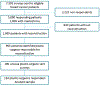
Women diagnosed with early stage breast cancer (stages 0-II) between July 2013 and September 2014 were identified through the Georgia and Los Angeles SEER registries. These women were surveyed and identified their treating plastic surgeons. Surveys were sent to the identified plastic surgeons to collect data on specific reconstruction practices.
Results:
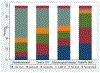
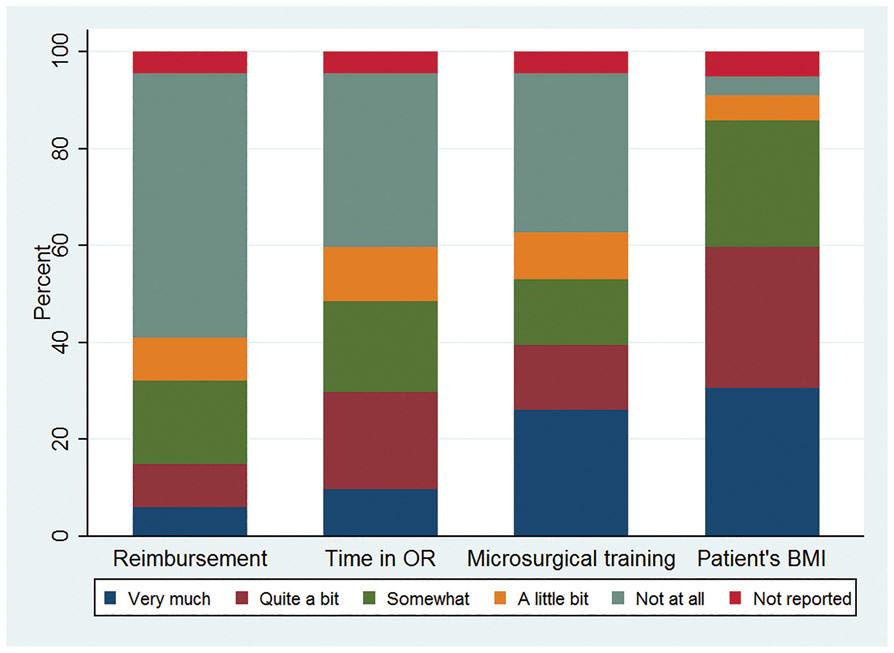
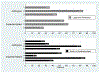
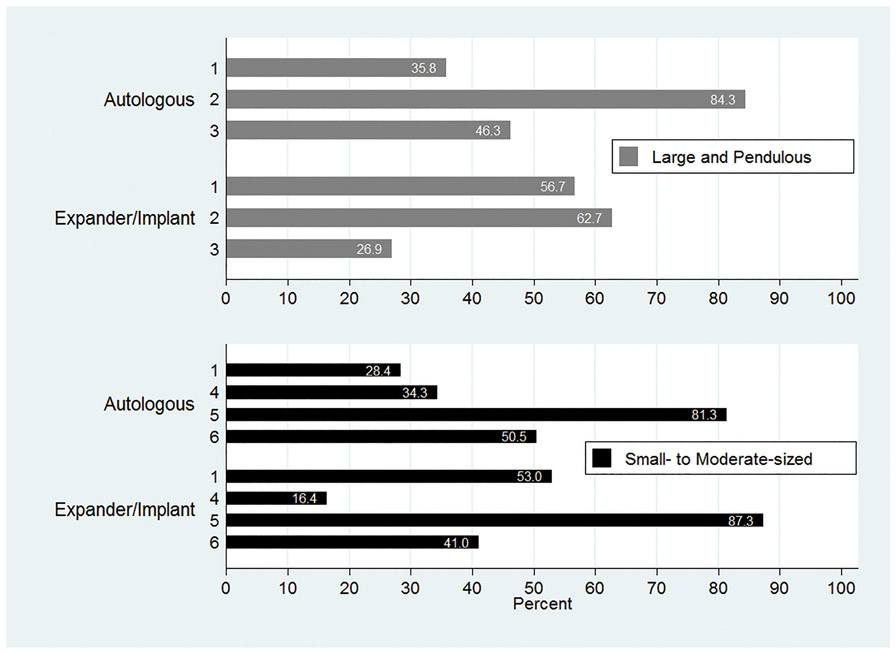
Responses from 134 plastic surgeons (74.4% response rate) were received. Immediate reconstructions (79.7%) was the most common approach to timing, and expander/implant reconstructions (72.6%) was the most common technique reported. Nearly a third (32.1%) of respondents reported that reimbursement influenced the proportion of autologous reconstructions performed. Most (82.8%) reported that discussions about contralateral prophylactic mastectomy were initiated by patients. Most surgeons (81.3%-84.3%) felt that good symmetry is achieved with unilateral autologous reconstruction with contralateral symmetry procedures in patients with small or large breasts; a less pronounced majority (62.7%) favored unilateral implant reconstructions in patients with large breasts. In patients requiring post-mastectomy radiation, a quarter of the surgeons (27.6%) reported that they seldom recommend delayed reconstruction, and 64.9% reported recommending immediate expander/implant reconstructions.
Conclusions:
Reconstructive practices in a modern cohort of plastic surgeons suggests that immediate and implant reconstructions are performed preferentially. Respondents perceived a number of factors, including surgeon training, time spent in the operating room and insurance reimbursement, to negatively influence the performance of autologous reconstruction. -
Subjects:
-
Source:Plast Reconstr Surg. 145(4):865-876
-
Pubmed ID:32221191
-
Pubmed Central ID:PMC8099170
-
Document Type:
-
Funding:HHSN261201000140C/CA/NCI NIH HHS/United States ; HHSN261201000035I/CA/NCI NIH HHS/United States ; HHSN261201300015C/CA/NCI NIH HHS/United States ; U58 DP003862/DP/NCCDPHP CDC HHS/United States ; P01 CA163233/CA/NCI NIH HHS/United States ; U58 DP003875/DP/NCCDPHP CDC HHS/United States ; HHSN261201000035C/PC/NCI NIH HHS/United States ; HHSN261201000034C/CA/NCI NIH HHS/United States
-
Place as Subject:
-
Volume:145
-
Issue:4
-
Download URL:
-
File Type:
 [PDF - 940.16 KB]
 -
Collection(s):
-
Main Document Checksum:urn:sha256:a71a0fa3af202fddb2af3661ef8eeab777daaa86b293a5b6fdecce9942da65af
Supporting Files


File Language:
English
 Was this page helpful?
 Found an issue?



CDC STACKS serves as an archival repository of CDC-published products including
scientific findings, journal articles, guidelines, recommendations, or other public health information authored or
co-authored by CDC or funded partners.
As a repository, CDC STACKS retains documents in their original published format to ensure public access to scientific information.
As a repository, CDC STACKS retains documents in their original published format to ensure public access to scientific information.
You May Also Like
COLLECTION
CDC Public Access