



Surgeon Attitudes and Use of MRI in Patients Newly Diagnosed With Breast Cancer
Supporting Files

-
7 2017 ; 7-2017
-
Available in CDC Stacks on 2018-07-01T00:00:00Z
File Language:
English
Details
-
Alternative Title:Ann Surg Oncol
-
Personal Author:
-
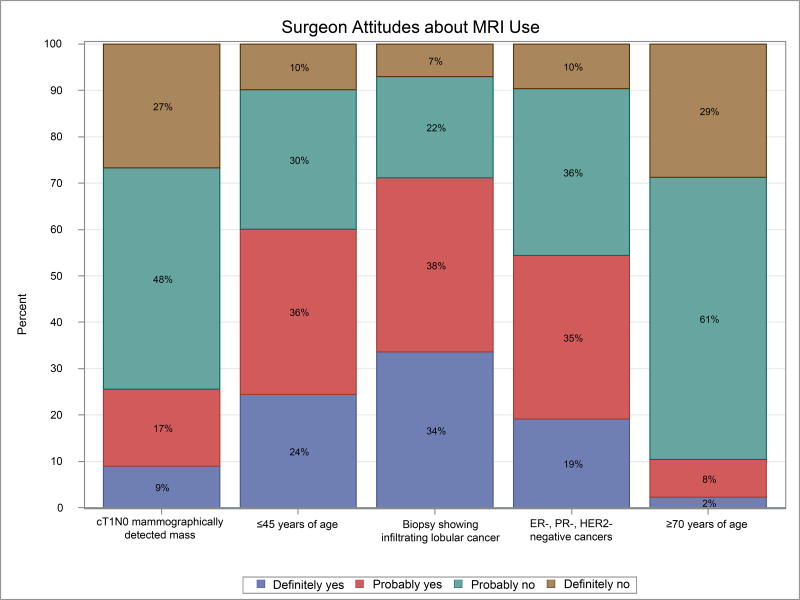
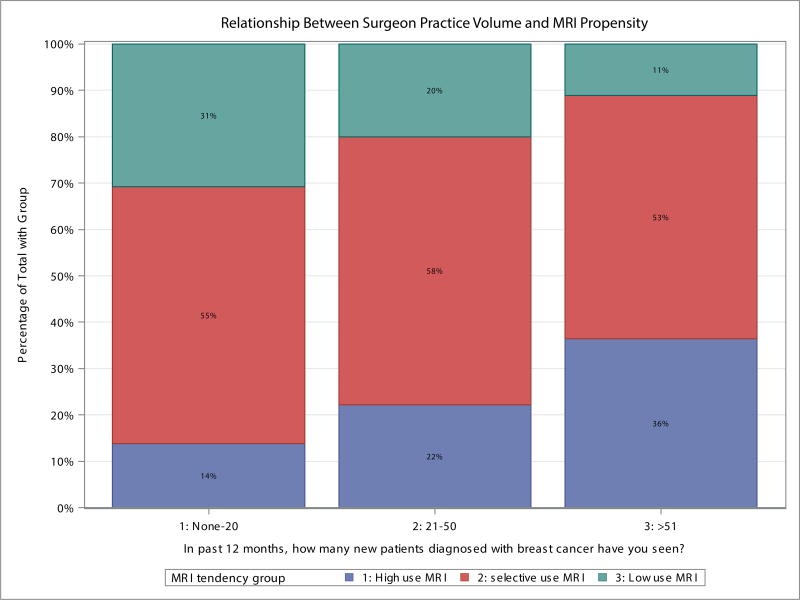
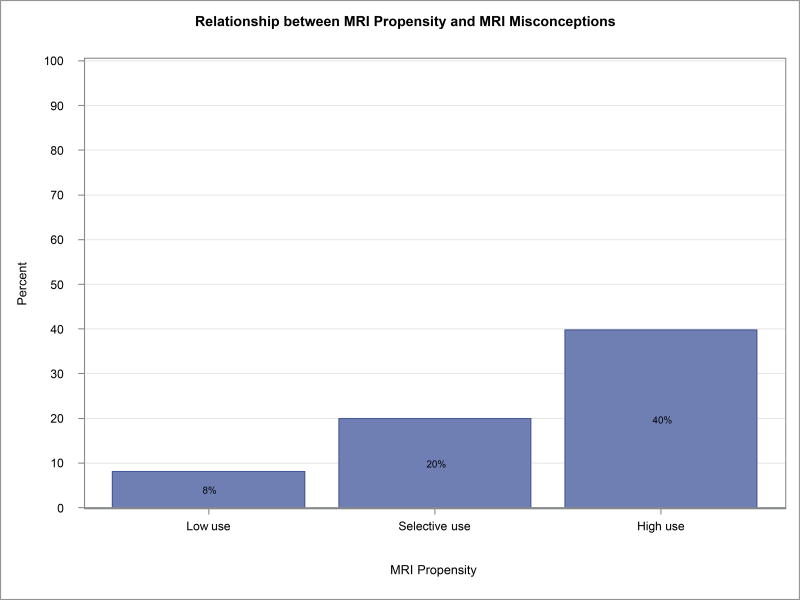
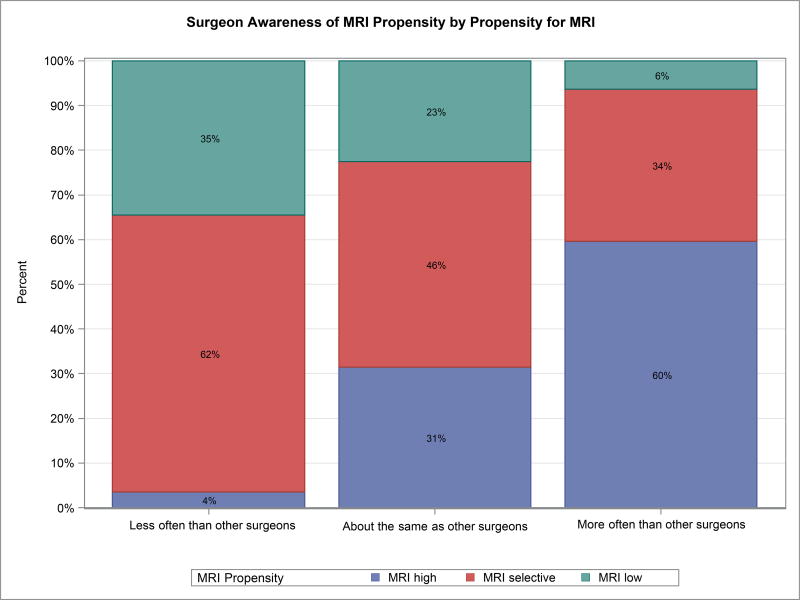
Description:Background ; Usage of magnetic resonance imaging (MRI) in newly diagnosed breast cancer patients is increasing, despite scant evidence that it improves outcomes. Little is known about the knowledge, perspectives, and clinical characteristics of surgeons associated with MRI use. ; Methods ; Women with early-stage breast cancer undergoing definitive surgery between 7/2013–8/2015 were identified from the Los Angeles and Georgia Surveillance, Epidemiology and End Results (SEER) registries, and asked to name their attending surgeons. The 489 surgeons were sent a questionnaire; 77% (n=377) responded. Questions addressing the likelihood of ordering an MRI in different scenarios were used to create a scale measuring surgeon propensity for MRI use. Knowledge and practice characteristics were also assessed. ; Results ; Mean surgeon age was 54 years, 25% were female, and median number of years in practice was 21. Wide MRI use variation was observed, with 26% obtaining MRI for a clinical stage I screen-detected breast cancer and 72% for infiltrating lobular cancer. High users of MRI were significantly more likely to be higher-volume surgeons (p<.001) and to have misconceptions about MRI benefits (p<.001). Of surgeons who felt they used MRI more often, 60% were high MRI users; only 6% were low MRI users. ; Conclusions ; Our findings suggest relatively frequent use of MRI, even in uncomplicated clinical scenarios, in the absence of evidence of benefit, and use was more common among high-volume surgeons. A substantial number of surgeons who are high MRI users harbor misconceptions about MRI benefit, suggesting an opportunity for education and consensus building regarding appropriate use.
-
Keywords:
- magnetic resonance imaging
- surgeons
- breast cancer
- Adult
- Aged
- Aged, 80 and over
- Attitude of Health Personnel
- Breast Neoplasms
- Carcinoma, Intraductal, Noninfiltrating
- Clinical Decision-Making
- Female
- Follow-Up Studies
- Humans
- Magnetic Resonance Imaging
- Male
- Middle Aged
- Patient Selection
- Practice Patterns, Physicians'
- Prognosis
- SEER Program
- Surgeons
- Surveys and Questionnaires
-
Source:Ann Surg Oncol. 24(7):1889-1896
-
Pubmed ID:28332033
-
Pubmed Central ID:PMC5784437
-
Document Type:
-
Funding:HHSN261201000140C/CA/NCI NIH HHSUnited States/ ; HHSN261201000035C/CA/NCI NIH HHSUnited States/ ; P30 CA008748/CA/NCI NIH HHSUnited States/ ; HHSN261201000035I/CA/NCI NIH HHSUnited States/ ; HHSN261201300015C/CA/NCI NIH HHSUnited States/ ; HHSN261201000034C/CA/NCI NIH HHSUnited States/ ; U58 DP003862/DP/NCCDPHP CDC HHSUnited States/ ; P01 CA163233/CA/NCI NIH HHSUnited States/ ; U58 DP003875/DP/NCCDPHP CDC HHSUnited States/
-
Volume:24
-
Issue:7
-
Download URL:
-
File Type:
 [PDF - 635.58 KB]
 -
Collection(s):
-
Main Document Checksum:urn:sha256:cf70e569043dd19459d5db5a7c5a3aecbb30de29d771ad9cf35017fe7730860e
Supporting Files


File Language:
English
 Was this page helpful?
 Found an issue?

CDC STACKS serves as an archival repository of CDC-published products including
scientific findings, journal articles, guidelines, recommendations, or other public health information authored or
co-authored by CDC or funded partners.
As a repository, CDC STACKS retains documents in their original published format to ensure public access to scientific information.
As a repository, CDC STACKS retains documents in their original published format to ensure public access to scientific information.
You May Also Like
COLLECTION
CDC Public Access