


The environment-sensing aryl-hydrocarbon receptor inhibits the chondrogenic fate of modulated smooth muscle cells in atherosclerotic lesions
Supporting Files

-
Aug 11 2020
-
File Language:
English
Details
-
Alternative Title:Circulation
-
Personal Author:
-
Description:Background
Smooth muscle cells (SMC) play a critical role in atherosclerosis. The Aryl hydrocarbon receptor (AHR) is an environment-sensing transcription factor that contributes to vascular development, and has been implicated in coronary artery disease (CAD) risk. We hypothesized that AHR can affect atherosclerosis by regulating phenotypic modulation of SMC.
Methods
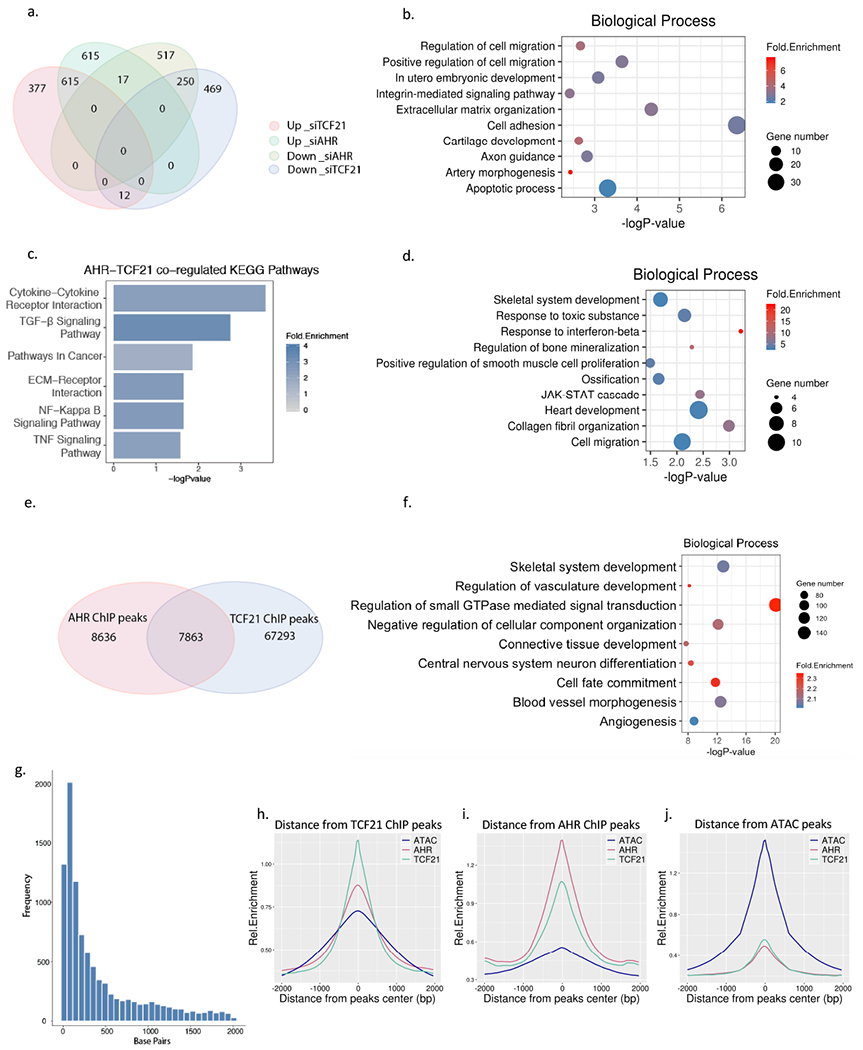
We combined RNA-Seq, ChIP-Seq, ATAC-Seq and in-vitro assays in human coronary artery SMC (HCASMC), with single-cell RNA-Seq (scRNA-Seq), histology, and RNAscope in an SMC-specific lineage-tracing Ahr knockout mouse model of atherosclerosis to better understand the role of AHR in vascular disease.
Results
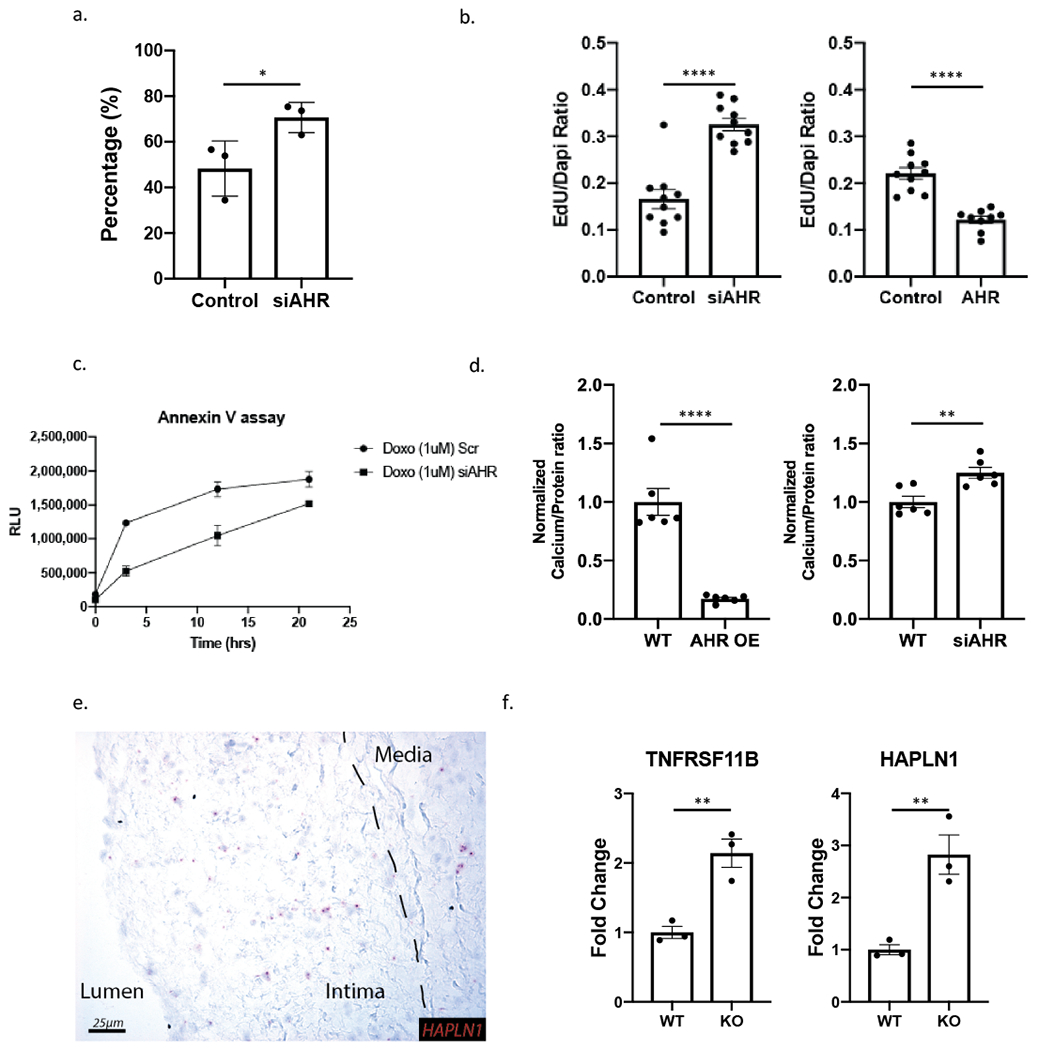
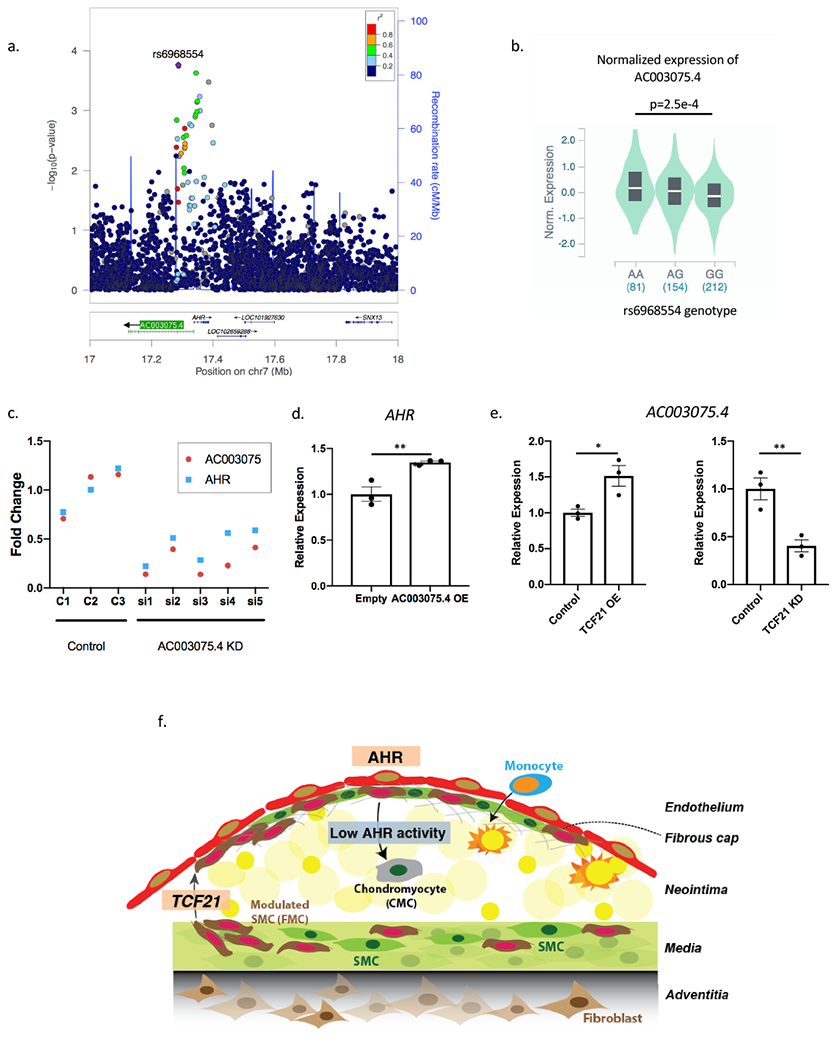
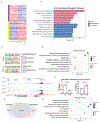
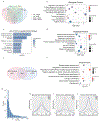
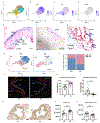
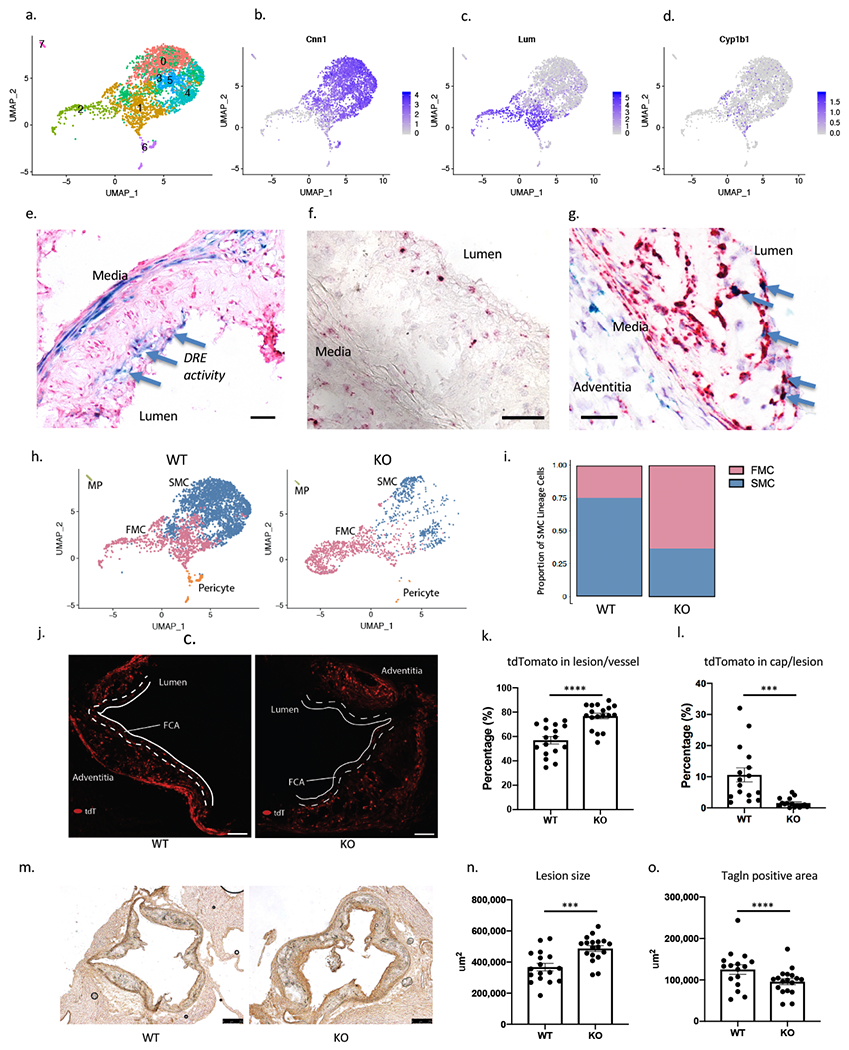
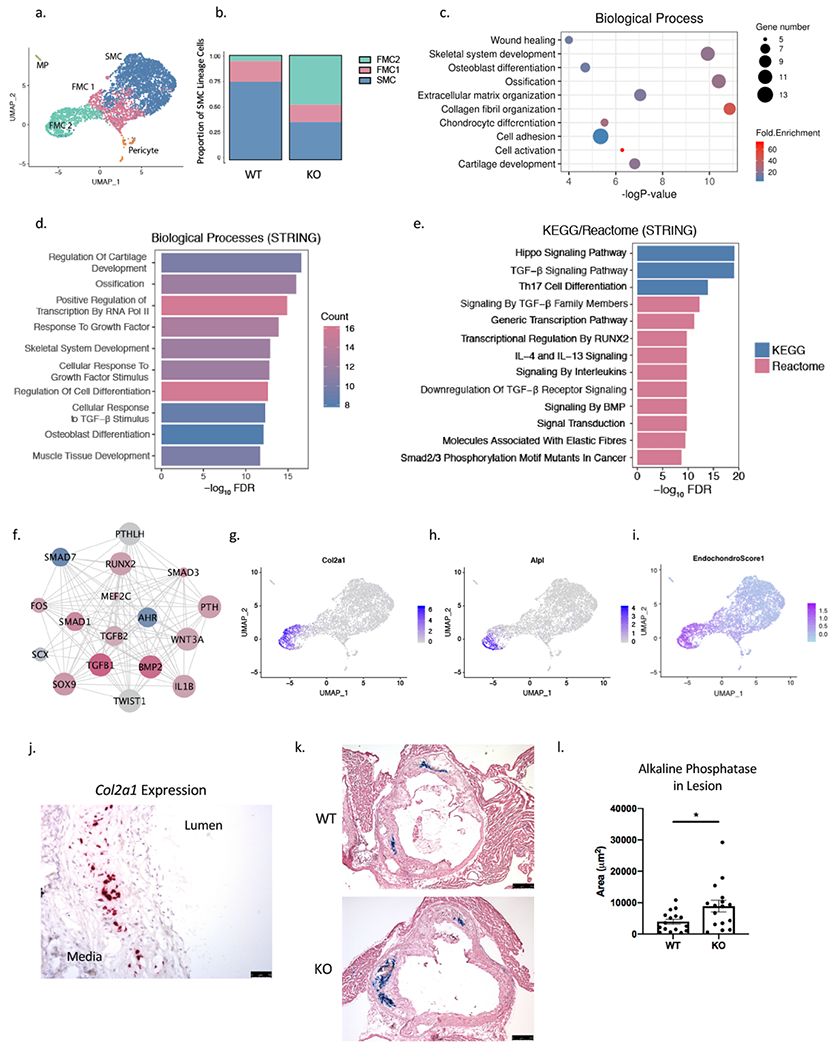
Genomic studies coupled with functional assays in cultured HCASMC revealed that AHR modulates HCASMC phenotype and suppresses ossification in these cells. Lineage tracing and activity tracing studies in the mouse aortic sinus showed that the Ahr pathway is active in modulated SMC in the atherosclerotic lesion cap. Furthermore, scRNA-Seq studies of the SMC-specific Ahr knockout mice showed a significant increase in the proportion of modulated SMC expressing chondrocyte markers such as Col2a1 and Alpl, which localized to the lesion neointima. These cells, which we term “chondromyocytes” (CMC), were also identified in the neointima of human coronary arteries. In histological analyses, these changes manifested as larger lesion size, increased lineage-traced SMC participation in the lesion, decreased lineage-traced SMC in the lesion cap, and increased alkaline phosphatase activity in lesions in the Ahr knockout compared to wild-type mice. We propose that AHR is likely protective based on these data and inference from human genetic analyses.
Conclusions
Overall, we conclude that AHR promotes maintenance of lesion cap integrity and diminishes the disease related SMC-to-CMC transition in atherosclerotic tissues.
-
Subjects:
-
Source:Circulation. 142(6):575-590
-
Pubmed ID:32441123
-
Pubmed Central ID:PMC8066499
-
Document Type:
-
Funding:R01 HL109512/HL/NHLBI NIH HHSUnited States/ ; R01 DK107437/DK/NIDDK NIH HHSUnited States/ ; R01 HL139478/HL/NHLBI NIH HHSUnited States/ ; R33 HL120757/HL/NHLBI NIH HHSUnited States/ ; K08 HL133375/HL/NHLBI NIH HHSUnited States/ ; R01 HL134817/HL/NHLBI NIH HHSUnited States/ ; H23 IP000999/IP/NCIRD CDC HHSUnited States/ ; F32 HL143847/HL/NHLBI NIH HHSUnited States/ ; P30 DK116074/DK/NIDDK NIH HHSUnited States/ ; S10 OD018220/OD/NIH HHSUnited States/ ; S10 RR025518/RR/NCRR NIH HHSUnited States/
-
Volume:142
-
Issue:6
-
Collection(s):
-
Main Document Checksum:urn:sha256:09a0a4f0be7cd9d4c8109129a7279e74508ddc84602f5f852621a391a535205a
-
Download URL:
-
File Type:
 [PDF
- 1.19 MB
]
[PDF
- 1.19 MB
]
Supporting Files


File Language:
English
ON THIS PAGE



CDC STACKS serves as an archival repository of CDC-published products including
scientific findings,
journal articles, guidelines, recommendations, or other public health information authored or
co-authored by CDC or funded partners.
As a repository, CDC STACKS retains documents in their original published format to ensure public access to scientific information.
As a repository, CDC STACKS retains documents in their original published format to ensure public access to scientific information.
You May Also Like
COLLECTION
CDC Public Access