



Physicochemical Characterization of Genotoxicity of the Broad Class of Carbon Nanotubes and Nanofibers Used or Produced in U.S. Facilities
Supporting Files
Peer Reviewed

-
2020/12/07
-
Available in CDC Stacks on December 07, 2020, 12:00 AM
File Language:
English
Details
-
Journal Article:Particle and Fibre Toxicology
-
Personal Author:Bauer, Alison K. ; Birch, M. Eileen ; Boots, Theresa E. ; Bunker, Kristin ; Casuccio, Gary ; Cena, Lorenzo ; Dahm, Matthew M. ; Erdely, Aaron ; Evans, Douglas E. ; Eye, Tracy ; Fraser, Kelly ; Friend, Sherri A. ; Hammer, Mary Ann ; Hubczak, John ; Kashon, Michael L. ; Kodali, Vamsi K. ; Lersch, Traci L. ; Lowry, David ; Sargent, Linda M. ; Schubauer-Berigan, Mary K. ; Siegrist, Katelyn ; Stefaniak, Aleksandr B. ; Yanamala, Naveena
-
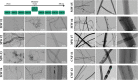
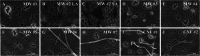
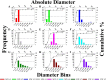
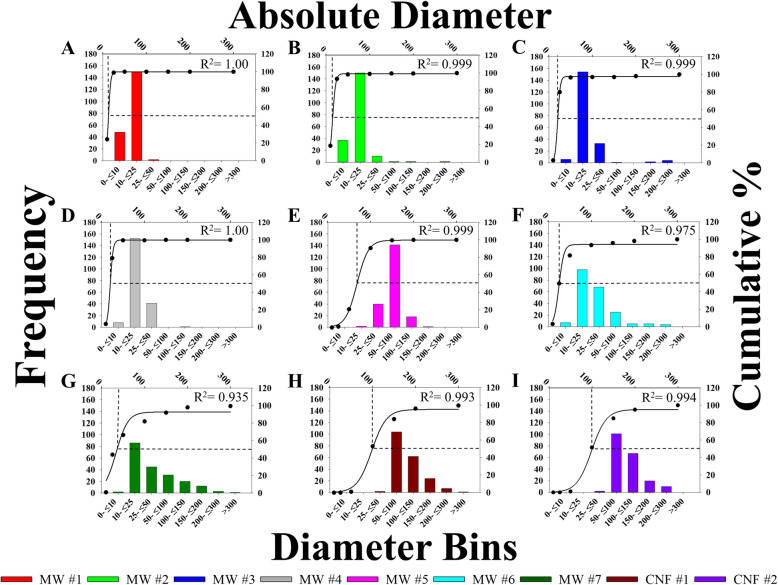
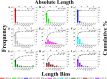
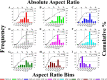
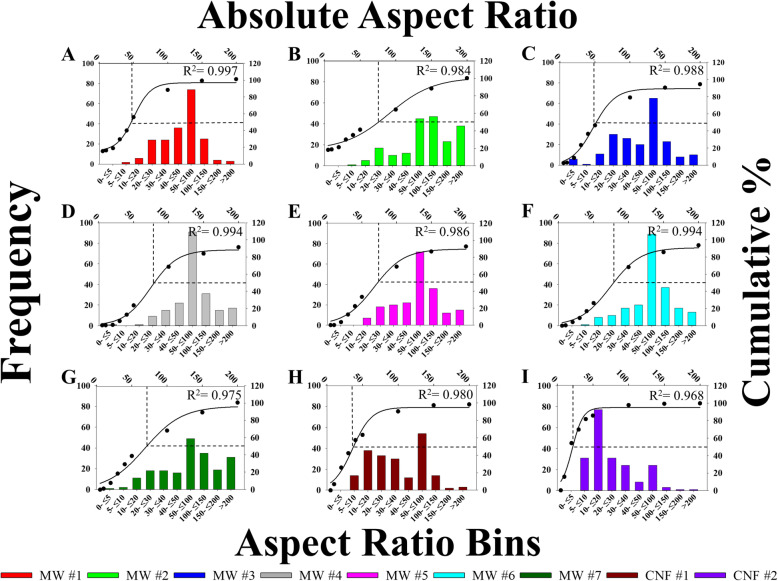
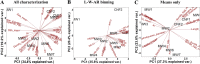
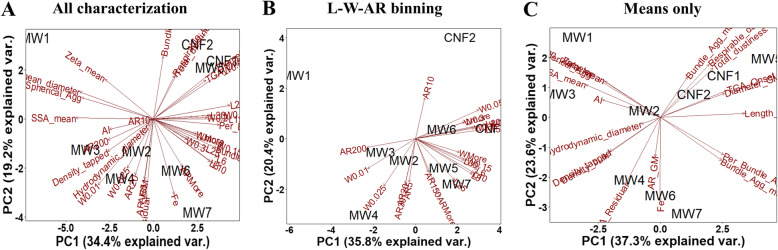
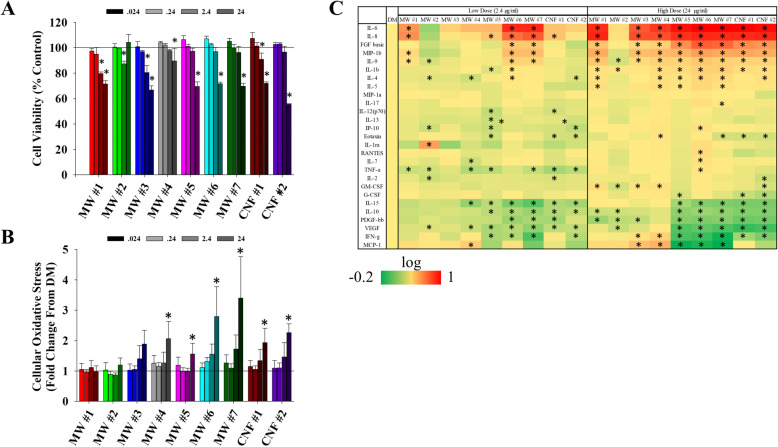
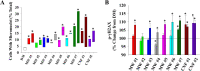
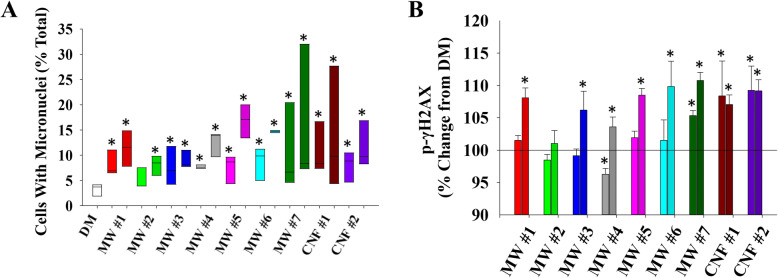
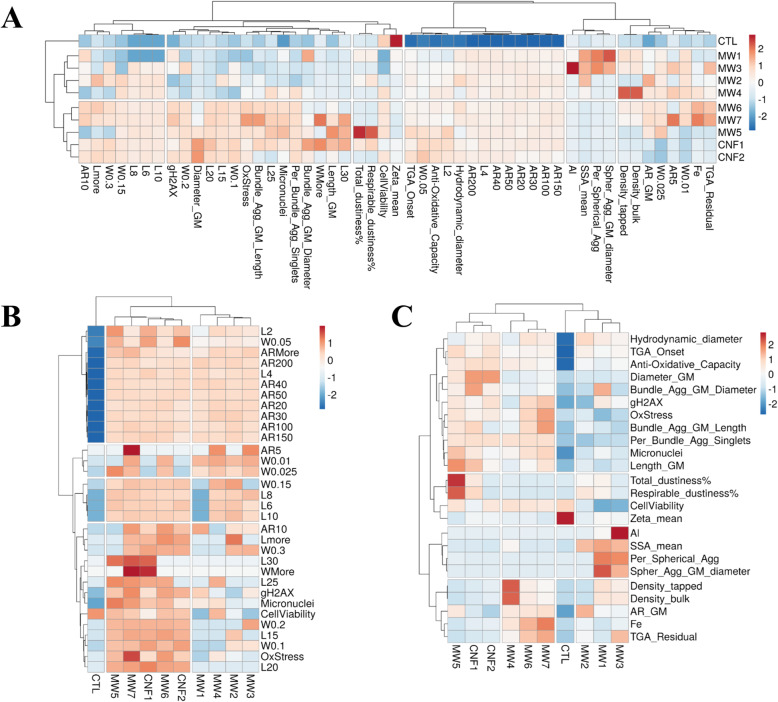
Description:Background: Carbon nanotubes and nanofibers (CNT/F) have known toxicity but simultaneous comparative studies of the broad material class, especially those with a larger diameter, with computational analyses linking toxicity to their fundamental material characteristics was lacking. It was unclear if all CNT/F confer similar toxicity, in particular, genotoxicity. Nine CNT/F (MW #1-7 and CNF #1-2), commonly found in exposure assessment studies of U.S. facilities, were evaluated with reported diameters ranging from 6 to 150 nm. All materials were extensively characterized to include distributions of physical dimensions and prevalence of bundled agglomerates. Human bronchial epithelial cells were exposed to the nine CNT/F (0-24 µg/ml) to determine cell viability, inflammation, cellular oxidative stress, micronuclei formation, and DNA double-strand breakage. Computational modeling was used to understand various permutations of physicochemical characteristics and toxicity outcomes. Results: Analyses of the CNT/F physicochemical characteristics illustrate that using detailed distributions of physical dimensions provided a more consistent grouping of CNT/F compared to using particle dimension means alone. In fact, analysis of binning of nominal tube physical dimensions alone produced a similar grouping as all characterization parameters together. All materials induced epithelial cell toxicity and micronuclei formation within the dose range tested. Cellular oxidative stress, DNA double strand breaks, and micronuclei formation consistently clustered together and with larger physical CNT/F dimensions and agglomerate characteristics but were distinct from inflammatory protein changes. Larger nominal tube diameters, greater lengths, and bundled agglomerate characteristics were associated with greater severity of effect. The portion of tubes with greater nominal length and larger diameters within a sample was not the majority in number, meaning a smaller percentage of tubes with these characteristics was sufficient to increase toxicity. Many of the traditional physicochemical characteristics including surface area, density, impurities, and dustiness did not cluster with the toxicity outcomes. Conclusion: Distributions of physical dimensions provided more consistent grouping of CNT/F with respect to toxicity outcomes compared to means only. All CNT/F induced some level of genotoxicity in human epithelial cells. The severity of toxicity was dependent on the sample containing a proportion of tubes with greater nominal lengths and diameters. Description provided by NIOSH
-
Subjects:
-
Keywords:
-
Source:Part Fibre Toxicol 2020 Dec; 17:62
-
ISSN:1743-8977
-
Pubmed ID:33287860
-
Pubmed Central ID:PMC7720492
-
Document Type:
-
Funding:
-
Genre:
-
Place as Subject:
-
CIO:
-
Division:
-
Topic:
-
Location:
-
Pages in Document:26 pdf pages
-
Volume:17
-
Issue:62
-
NIOSHTIC Number:nn:20061632
-
Contact Point Address:Aaron Erdely, Health Effect Laboratory Division, National Institute for Occupational Safety and Health, 1095 Willowdale Rd, MS-2015, Morgantown, WV 26505-2888, USA
-
Email:efi4@cdc.gov
-
CAS Registry Number:
-
Federal Fiscal Year:2021
-
NORA Priority Area:
-
Peer Reviewed:True
-
Download URL:
-
File Type:
 [PDF - 3.40 MB]
 -
Collection(s):
-
Main Document Checksum:urn:sha-512:805e366351ef863b17c89fb238da14fa3a3363eb5a3bce9dcfd1233e26dc4161628bdb7fca39b0e976363b6c8e07616669d24445ef139c6a577c53c6bd6dfec0
Supporting Files


File Language:
English
 Was this page helpful?
 Found an issue?





CDC STACKS serves as an archival repository of CDC-published products including
scientific findings, journal articles, guidelines, recommendations, or other public health information authored or
co-authored by CDC or funded partners.
As a repository, CDC STACKS retains documents in their original published format to ensure public access to scientific information.
As a repository, CDC STACKS retains documents in their original published format to ensure public access to scientific information.
You May Also Like