



Quantification of Potential Inequities in Breast Cancer Incidence in New Mexico Through Bayesian Disease Mapping
Supporting Files

-
March 11 2021
File Language:
English
Details
-
Journal Article:Preventing Chronic Disease (PCD)
-
Personal Author:
-
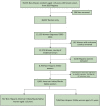
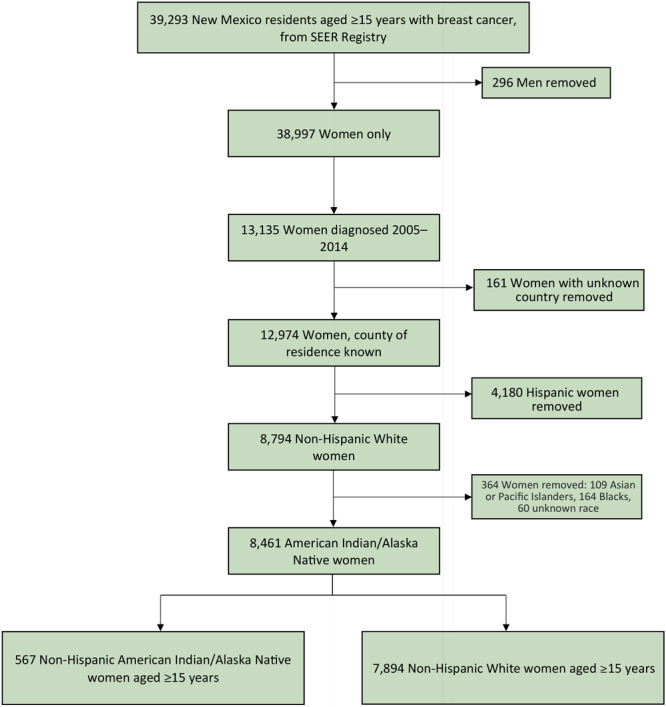
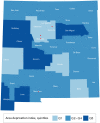
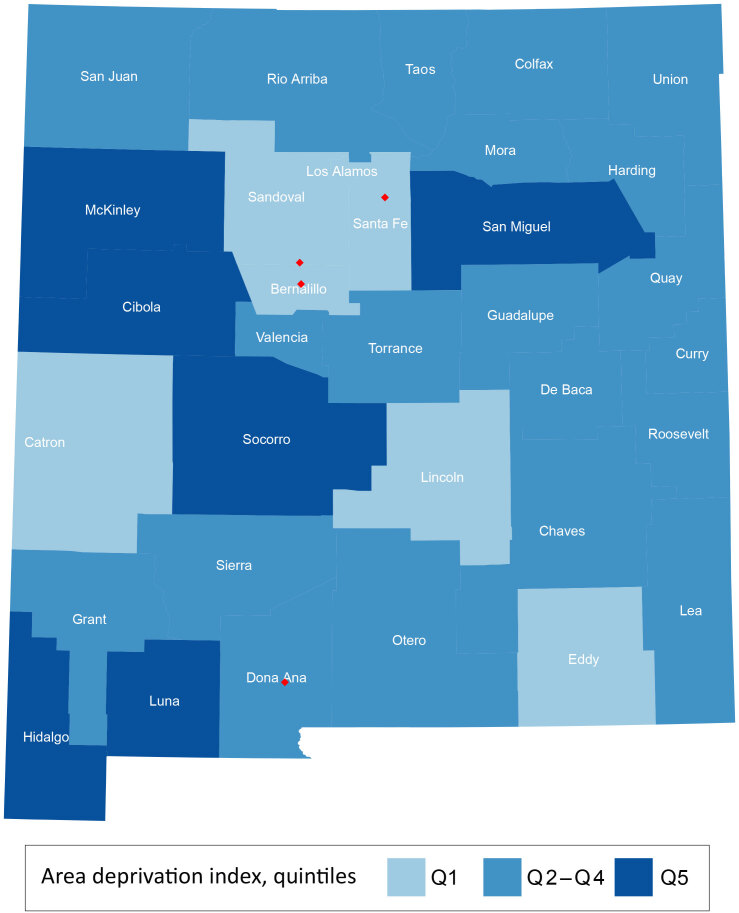
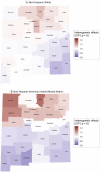
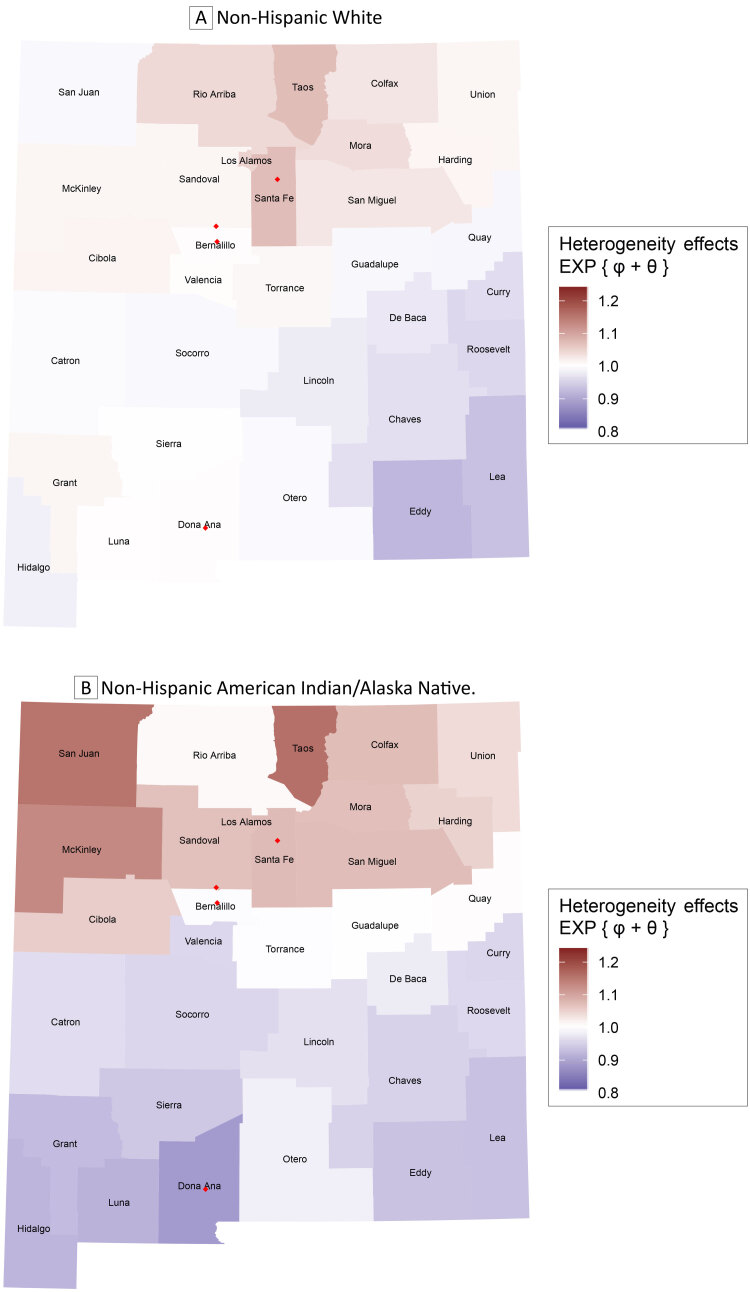
Description:Introduction ; The incidence of breast cancer among non-Hispanic American Indian and Alaska Native (AI/AN) women varies across the United States. We applied county-level Bayesian disease mapping to quantify potential inequities in 10-year breast cancer incidence in New Mexico to better inform health equity initiatives among its non-Hispanic at-risk AI/AN population. ; Methods ; We used data from the Surveillance, Epidemiology, and End Results (SEER) program from 2005 through 2014 to identify new cases of breast cancer in New Mexico’s 33 counties. To account for spatial variation, a county-level Area Deprivation Index, and the small area estimation problem inherent in these data, we borrowed strength globally and locally by applying Bayesian disease mapping to the counts of age-adjusted county-level breast cancer incidence. We quantified the disparity effect, as measured by the age-adjusted rate ratio, comparing the incidence of breast cancer between at-risk non-Hispanic AI/AN and non-Hispanic White women and assessed whether the ratio differed among counties. ; Results ; Accounting for over-dispersion and spatial correlation among the 33 counties and a county-level Area Deprivation Index, the posterior mean of the overall age-adjusted rate ratio was 0.384 (95% credible interval, 0.253–0.546). The age-adjusted rate of breast cancer in non-Hispanic AI/AN women was 0.38 times the corresponding age-adjusted rate for non-Hispanic White women; however, a significant reduction in breast cancer incidence was observed in 16 of the 33 counties. ; Conclusion ; The application of Bayesian disease mapping to these data provided substantial evidence of an overall disparity in breast cancer incidence between at-risk non-Hispanic AI/AN and non-Hispanic White women in New Mexico, which was more marked than previously reported and limited to certain counties. Targeted statewide and county-level health-equity initiatives may lead to a reduction in these disparities.
-
Subjects:
-
Source:Prev Chronic Dis. 2021; 18
-
ISSN:1545-1151
-
Pubmed ID:33705303
-
Pubmed Central ID:PMC7986972
-
Document Type:
-
Funding:
-
Volume:18
-
Download URL:
-
File Type:
 [PDF - 833.94 KB]
 -
Collection(s):
-
Main Document Checksum:urn:sha-512:47242990d53f43b56730190ccdd76747afe4b2a751f6f4d5d87dd426a8843da955b444c3c4c868721481f40f338e4bee74fc03204c520df6079464c8871596e2
Supporting Files


File Language:
English
 Was this page helpful?
 Found an issue?

CDC STACKS serves as an archival repository of CDC-published products including
scientific findings, journal articles, guidelines, recommendations, or other public health information authored or
co-authored by CDC or funded partners.
As a repository, CDC STACKS retains documents in their original published format to ensure public access to scientific information.
As a repository, CDC STACKS retains documents in their original published format to ensure public access to scientific information.
You May Also Like
COLLECTION
Preventing Chronic Disease