


DMD mutation and LTBP4 haplotype do not predict onset of left ventricular dysfunction in Duchenne muscular dystrophy
Supporting Files

-
May 16 2018
-
File Language:
English
Details
-
Alternative Title:Cardiol Young
-
Personal Author:
-
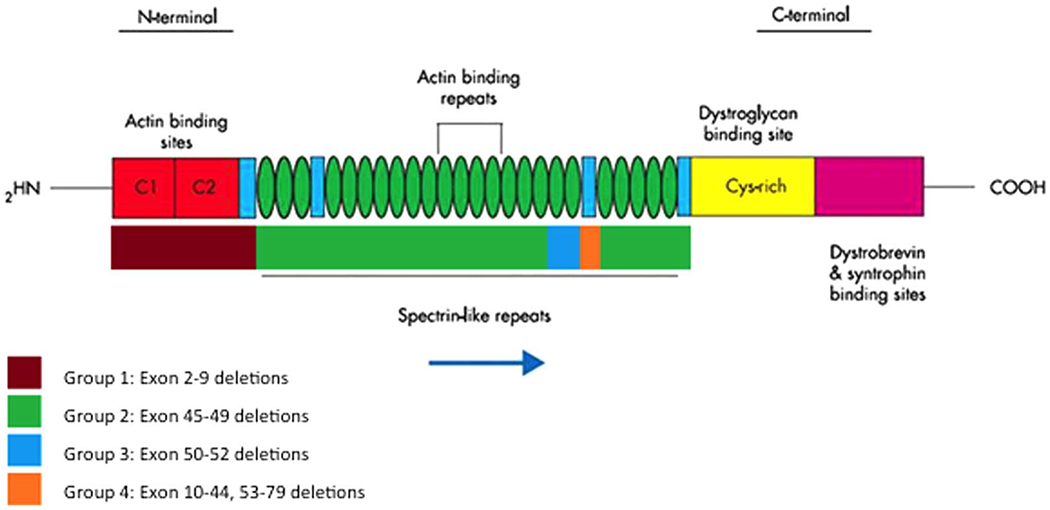
Description:Cardiomyopathy develops in >90% of Duchenne muscular dystrophy (DMD) patients by the second decade of life. We assessed the associations between DMD gene mutations, as well as Latent transforming growth factor-beta-binding protein 4 (LTBP4) haplotypes, and age at onset of myocardial dysfunction in DMD. DMD patients with baseline normal left ventricular systolic function and genotyping between 2004 and 2013 were included. Patients were grouped in multiple ways: specific DMD mutation domains, true loss-of-function mutations (group A) versus possible residual gene expression (group B), and LTBP4 haplotype. Age at onset of myocardial dysfunction was the first echocardiogram with an ejection fraction <55% and/or shortening fraction <28%. Of 101 DMD patients, 40 developed cardiomyopathy. There was no difference in age at onset of myocardial dysfunction among DMD genotype mutation domains (13.7±4.8 versus 14.3±1.0 versus 14.3±2.9 versus 13.8±2.5, p=0.97), groups A and B (14.4±2.8 versus 12.1±4.4, p=0.09), or LTBP4 haplotypes (14.5±3.2 versus 13.1±3.2 versus 11.0±2.8, p=0.18). DMD gene mutations involving the hinge 3 region, actin-binding domain, and exons 45-49, as well as the LTBP4 IAAM haplotype, were not associated with age of left ventricular dysfunction onset in DMD.
-
Subjects:
-
Source:Cardiol Young. 28(7):910-915
-
Pubmed ID:29766838
-
Pubmed Central ID:PMC8018586
-
Document Type:
-
Funding:
-
Volume:28
-
Issue:7
-
Collection(s):
-
Main Document Checksum:urn:sha256:1e98016768fe3f9ac724c96ecc3c537f68b9a099f6a0e013fa5709ce980eef4e
-
Download URL:
-
File Type:
 [PDF
- 373.01 KB
]
[PDF
- 373.01 KB
]
Supporting Files


File Language:
English
ON THIS PAGE

CDC STACKS serves as an archival repository of CDC-published products including
scientific findings,
journal articles, guidelines, recommendations, or other public health information authored or
co-authored by CDC or funded partners.
As a repository, CDC STACKS retains documents in their original published format to ensure public access to scientific information.
As a repository, CDC STACKS retains documents in their original published format to ensure public access to scientific information.
You May Also Like
COLLECTION
CDC Public Access