



A machine learning approach to investigate potential risk factors for gastroschisis in California
Supporting Files

-
3 01 2019
-
Available in CDC Stacks on March 01, 2020, 12:00 AM
File Language:
English
Details
-
Alternative Title:Birth Defects Res
-
Personal Author:
-
Description:Background:
To generate new leads about risk factors for gastroschisis, a birth defect that has been increasing in prevalence over time, we performed an untargeted data mining statistical approach.
Methods:
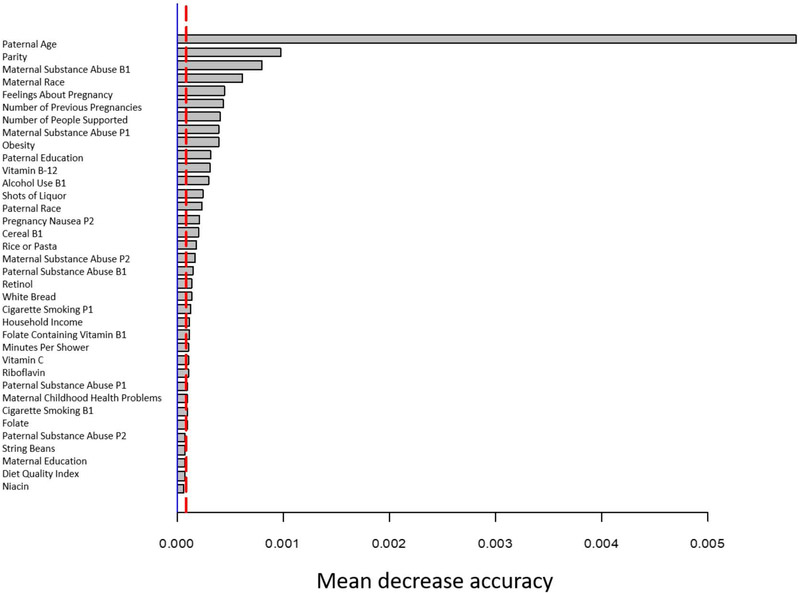
Using data exclusively from the California Center of the National Birth Defects Prevention Study, we compared 286 cases of gastroschisis and 1,263 non-malformed, live-born controls. All infants had delivery dates between October 1997 and December 2011 and were stratified by maternal age at birth (<20 and ≥20 years). Cases and controls were compared by maternal responses to 183 questions (219 variables) using random forest, a data mining procedure. Variables deemed important by random forest were included in logistic regression models to estimate odds ratios and 95% confidence intervals.
Results:
Among women younger than 20, of variables deemed important, there were higher odds observed for higher consumption of chocolate, low intake of iron, acetaminophen use and urinary tract infections during the beginning of pregnancy. After adjustment, the higher odds remained for low iron intake and a urinary tract infection in the first month of pregnancy. Among women aged 20 or older, of variables deemed important, higher odds were observed for US-born women of Hispanic ethnicity and for parental substance abuse. There were lower odds observed for obese women, women who ate any cereal the month before pregnancy, and those with higher parity.
Conclusions:
We did not discover many previously unreported associations, despite our novel approach to generate new hypotheses. However, our results do add evidence to some previously proposed risk factors. -
Subjects:
-
Keywords:
-
Source:Birth Defects Res. 111(4):212-221
-
Pubmed ID:30588769
-
Pubmed Central ID:PMC6397054
-
Document Type:
-
Funding:R01 HD075761/HD/NICHD NIH HHSUnited States/ ; U01 DD001033/DD/NCBDD CDC HHSUnited States/ ; R24 ES030888/ES/NIEHS NIH HHSUnited States/ ; R00 ES021470/ES/NIEHS NIH HHSUnited States/ ; P30 DK056350/DK/NIDDK NIH HHSUnited States/ ; U01 DD001226/DD/NCBDD CDC HHSUnited States/ ; U01DD001033/ACL/ACL HHSUnited States/ ; P01 ES022849/ES/NIEHS NIH HHSUnited States/
-
Volume:111
-
Issue:4
-
Download URL:
-
File Type:
 [PDF - 421.78 KB]
 -
Collection(s):
-
Main Document Checksum:urn:sha-512:cd788f8aaa4c113fb7d3999dcec39970bfcd5adc6b1cf944f019076ce0bad8679662f2c80b637278407d5d277fc2a32ef6bccd94de3ffb9644e376a3d5cdfff3
Supporting Files


File Language:
English
 Was this page helpful?
 Found an issue?


CDC STACKS serves as an archival repository of CDC-published products including
scientific findings, journal articles, guidelines, recommendations, or other public health information authored or
co-authored by CDC or funded partners.
As a repository, CDC STACKS retains documents in their original published format to ensure public access to scientific information.
As a repository, CDC STACKS retains documents in their original published format to ensure public access to scientific information.
You May Also Like
COLLECTION
CDC Public Access