



COVID-19 Case Investigation and Contact Tracing Efforts from Health Departments — United States, June 25–July 24, 2020
Supporting Files
Public Domain

-
January 22 2021
File Language:
English
Details
-
Journal Article:Morbidity and Mortality Weekly Report (MMWR)
-
Personal Author:
-
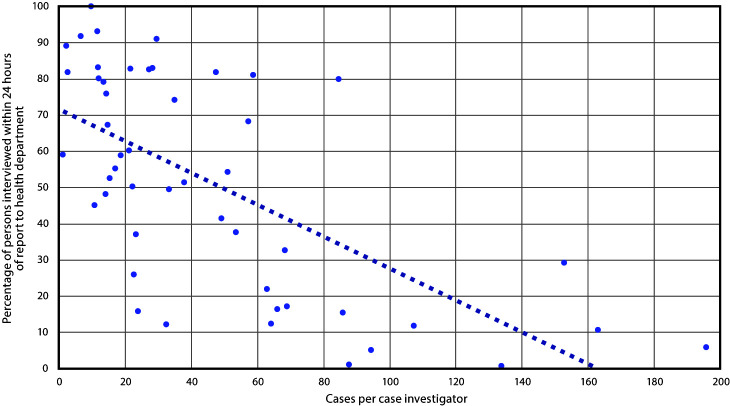
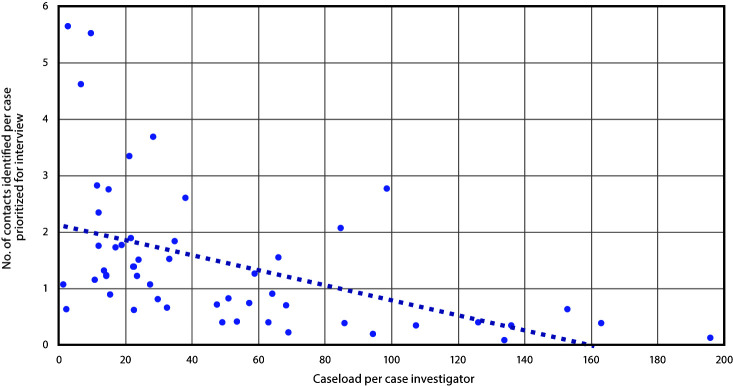
Description:Case investigation and contact tracing are core public health tools used to interrupt Transmission of pathogens, including SARS-CoV-2, the Virus that causes coronaVirus disease 2019 (COVID-19); timeliness is critical to effectiveness (1,2). In May 2020, CDC funded* 64 state, local, and territorial health departments| to support COVID-19 response activities. As part of the monitoring process, case investigation and contact tracing metrics for June 25-July 24, 2020, were submitted to CDC by 62 health departments. Descriptive analyses of case investigation and contact tracing load, timeliness, and yield (i.e., the number of contacts elicited divided by the number of patients prioritized for interview) were performed. A median of 57% of patients were interviewed within 24 hours of report of the case to a health department (interquartile range IQR = 27%-82%); a median of 1.15 contacts were identified per patient prioritized for interview| (IQR = 0.62-1.76), and a median of 55% of contacts were notified within 24 hours of identification by a patient (IQR = 32%-79%). With higher caseloads, the percentage of patients interviewed within 24 hours of case report was lower (Spearman coefficient = -0.68), and the number of contacts identified per patient prioritized for interview also decreased (Spearman coefficient = -0.60). The capacity to conduct timely contact tracing varied among health departments, largely driven by investigators' caseloads. Incomplete identification of contacts affects the ability to reduce Transmission of SARS-CoV-2. Enhanced staffing capacity and ability and improved community engagement could lead to more timely interviews and identification of more contacts.
-
Subjects:
-
Source:MMWR Morbidity Mortal Weekly Rep. 70(3):83-87
-
Series:
-
ISSN:0149-2195 (print) ; 1545-861X (digital)
-
Pubmed ID:33476317
-
Pubmed Central ID:PMC7821771
-
Document Type:
-
Place as Subject:
-
Pages in Document:5 pdf pages
-
Volume:70
-
Issue:3
-
Download URL:
-
File Type:
 [PDF - 128.38 KB]
 -
Collection(s):
-
Main Document Checksum:urn:sha-512:208d29eea9d11a4c8b60a1baded0baf3d741d76a2feb9a6d9a16b78214e8ae7c63c9d5f27f554042415c99952cae7409c3cb56ce864ea6a2847250e709639d8a
Supporting Files


File Language:
English
 Was this page helpful?
 Found an issue?


CDC STACKS serves as an archival repository of CDC-published products including
scientific findings, journal articles, guidelines, recommendations, or other public health information authored or
co-authored by CDC or funded partners.
As a repository, CDC STACKS retains documents in their original published format to ensure public access to scientific information.
As a repository, CDC STACKS retains documents in their original published format to ensure public access to scientific information.
You May Also Like
COLLECTION
Morbidity and Mortality Weekly Report (MMWR)