



The Fraction of Rhinovirus Detections Attributable to Mild and Severe Respiratory Illness in a Setting of High Human Immunodeficiency Virus Prevalence, South Africa, 2013–2015
Supporting Files

-
5 05 2019 ; 5-05-
-
Available in CDC Stacks on January 13, 2021, 12:00 AM
File Language:
English
Details
-
Alternative Title:J Infect Dis
-
Personal Author:
-
Description:Background.
The association of rhinovirus (RV) detection to illness is poorly understood.
Methods.
We enrolled case patients hospitalized with severe respiratory illness (SRI) at 2 hospitals and outpatients with influenza-like illness (ILI) and asymptomatic individuals (controls) from 2 affiliated clinics during 2013–2015. We compared the RV prevalence among ILI and SRI cases to those of controls stratified by human immunodeficiency virus (HIV) serostatus using penalized logistic regression. The attributable fraction (AF) was calculated.
Results.
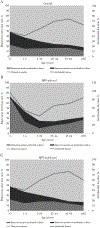
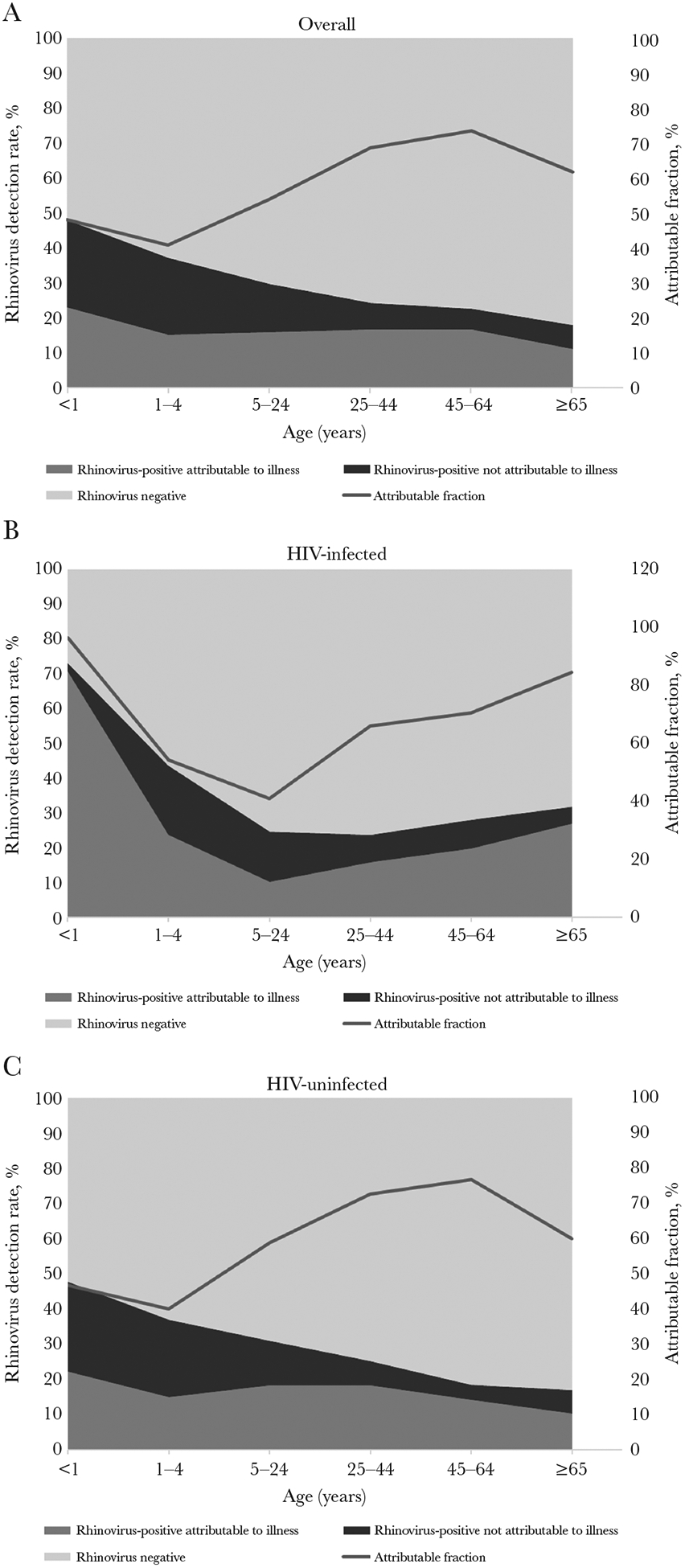
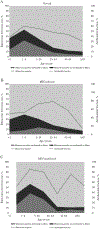
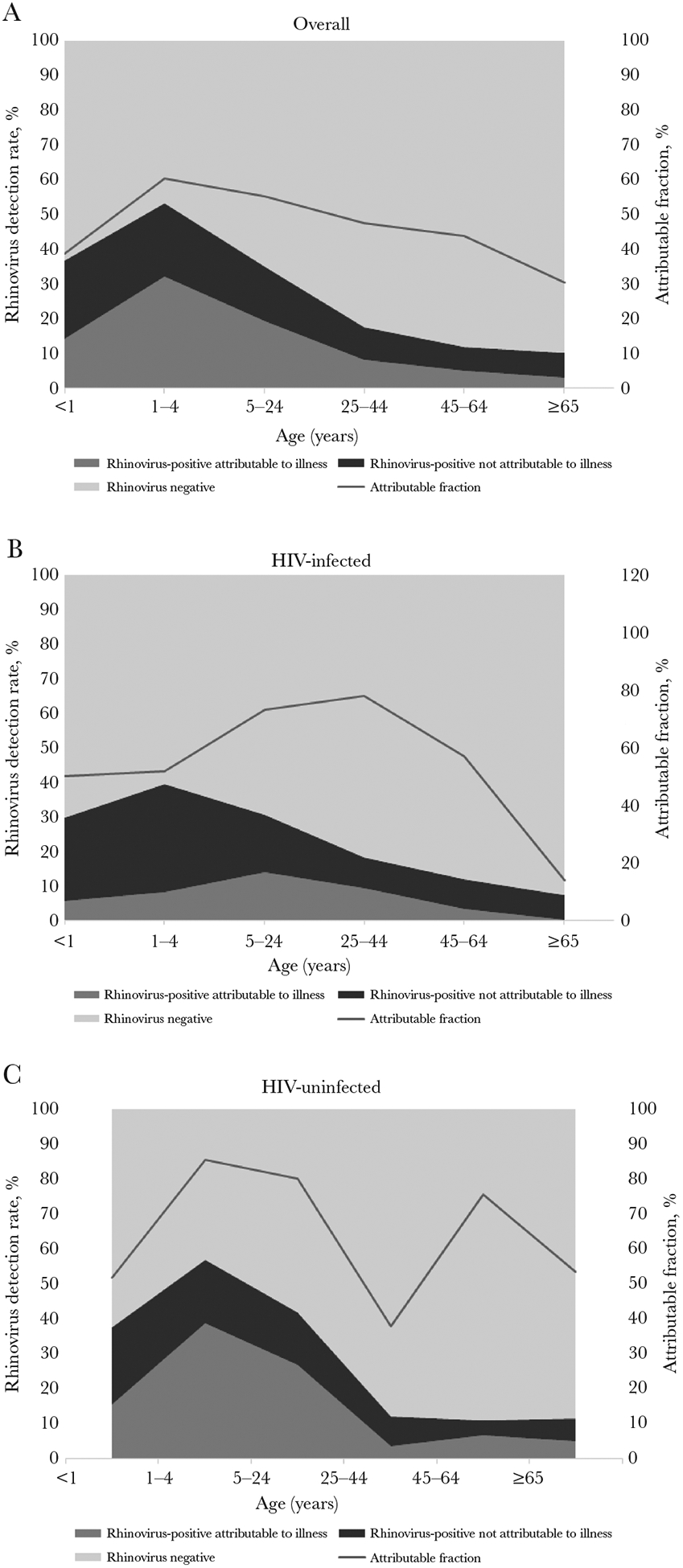
During 2013–2015, RV was detected in 17.4% (368/2120), 26.8% (979/3654), and 23.0% (1003/4360) of controls, ILI cases, and SRI cases, respectively. The RV AF (95% confidence interval) was statistically significant among children aged <5 years (ILI: 44.6% 30.7%–55.7% and SRI: 50.3% 38.6%–59.9%; P < .001) and individuals aged ≥5 years (ILI: 62.9% 54.4%–69.8% and SRI: 51.3% 38.7%–61.3%; P < .001) as well as among HIV-infected (ILI: 59.9% 45.8%–70.3% and SRI: 39.8% 22.3%–53.3%; P < .001) and HIV-uninfected (ILI: 53.6% 44.7%–61.1% and SRI: 55.3% 45.6%–63.2%; P < .001) individuals.
Conclusions.
Although RV detection was common among controls, it was also associated with a substantial proportion of clinical illness across age groups, irrespective of HIV status. -
Subjects:
-
Keywords:
-
Source:J Infect Dis. 219(11):1697-1704
-
Pubmed ID:30590585
-
Pubmed Central ID:PMC7804373
-
Document Type:
-
Funding:
-
Volume:219
-
Issue:11
-
Download URL:
-
File Type:
 [PDF - 568.06 KB]
 -
Collection(s):
-
Main Document Checksum:urn:sha256:ed98a6559548e26f856fa22be390e45d8602a4b355e7ba29d9ce08db236663fd
Supporting Files


File Language:
English
 Was this page helpful?
 Found an issue?

CDC STACKS serves as an archival repository of CDC-published products including
scientific findings, journal articles, guidelines, recommendations, or other public health information authored or
co-authored by CDC or funded partners.
As a repository, CDC STACKS retains documents in their original published format to ensure public access to scientific information.
As a repository, CDC STACKS retains documents in their original published format to ensure public access to scientific information.
You May Also Like
COLLECTION
CDC Public Access