i
Near Real-Time Surveillance to Assess the Safety of the 9-Valent Human Papillomavirus Vaccine
-
November 18 2019
-
-
Source: Pediatrics. 144(6)
 [PDF-407.05 KB]
Details:
-
Alternative Title:Pediatrics
-
Personal Author:
-
Description:BACKGROUND AND OBJECTIVES:
Human papillomavirus is the most common sexually transmitted infection in the United States and causes certain anogenital and oropharyngeal cancers. The 9-valent human papillomavirus vaccine (9vHPV) provides protection against additional types not included in the quadrivalent vaccine. We conducted near real-time vaccine safety surveillance for 24 months after the vaccine became available in the Vaccine Safety Datalink.
METHODS:
Immunizations and adverse events were extracted weekly from October 2015 to October 2017 from standardized data files for persons 9 to 26 years old at 6 Vaccine Safety Datalink sites. Prespecified adverse events included anaphylaxis, allergic reaction, appendicitis, Guillain-Barré syndrome, chronic inflammatory demyelinating polyneuropathy, injection site reaction, pancreatitis, seizure, stroke, syncope, and venous thromboembolism. The observed and expected numbers of events after 9vHPV were compared weekly by using sequential methods. Both historical and concurrent comparison groups were used to identify statistical signals for adverse events. Unexpected signals were investigated by medical record review and/or additional analyses.
RESULTS:
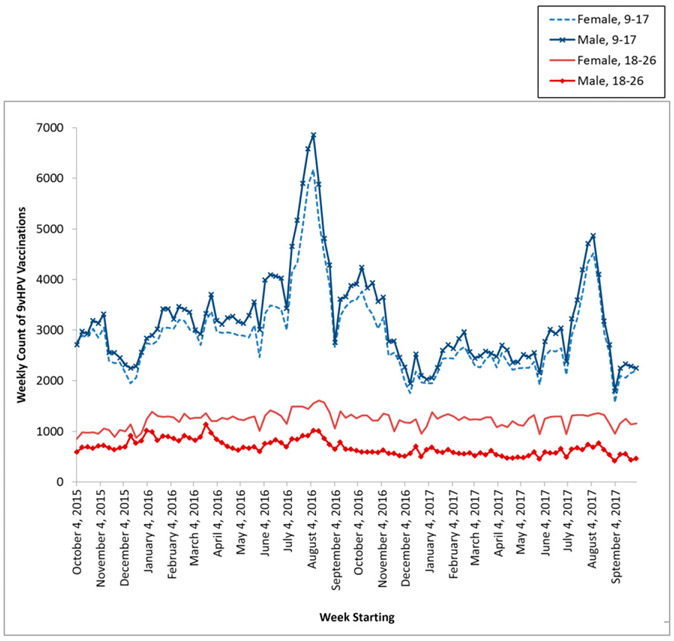
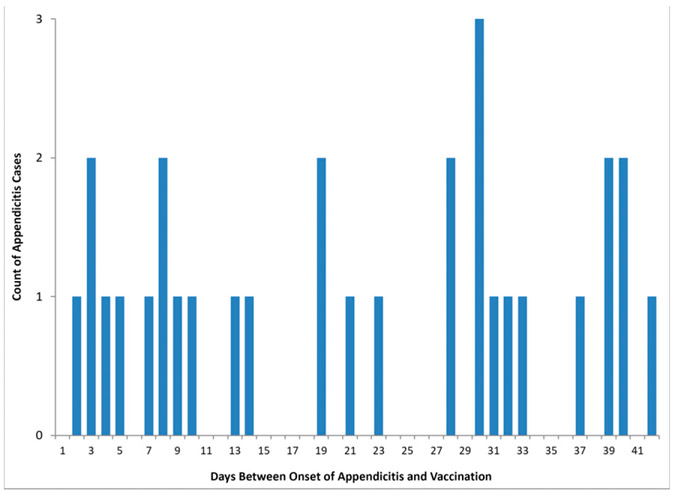
During 105 weeks of surveillance, 838 991 doses of 9vHPV were administered. We identified unexpected statistical signals for 4 adverse events: appendicitis among boys 9 to 17 years old after dose 3; pancreatitis among men 18 to 26 years old; and allergic reactions among girls 9 to 17 years old and women 18 to 26 years old after dose 2. On further evaluation, which included medical record review, temporal scan analysis, and additional epidemiological analyses, we did not confirm signals for any adverse events.
CONCLUSIONS:
After 2 years of near real-time surveillance of 9vHPV and several prespecified adverse events, no new safety concerns were identified.
-
Subjects:
-
Source:
-
Pubmed ID:31740498
-
Pubmed Central ID:PMC7780202
-
Document Type:
-
Funding:
-
Collection(s):
-
Main Document Checksum:
-
Download URL:
-
File Type: