



Characteristics and Clinical Outcomes of Adult Patients Hospitalized with COVID-19 — Georgia, March 2020
Supporting Files
Public Domain

-
May 08 2020
File Language:
English
Details
-
Journal Article:Morbidity and Mortality Weekly Report (MMWR)
-
Personal Author:Gold, Jeremy A. W. ; Wong, Karen K. ; Szablewski, Christine M. ; Patel, Priti R. ; Rossow, John ; da Silva, Juliana ; Natarajan, Pavithra ; Morris, Sapna Bamrah ; Fanfair, Robyn Neblett ; Rogers-Brown, Jessica ; Bruce, Beau B. ; Browning, Sean D. ; Hernandez-Romieu, Alfonso C. ; Furukawa, Nathan W. ; Kang, Mohleen ; Evans, Mary E. ; Oosmanally, Nadine ; Tobin-D’Angelo, Melissa ; Drenzek, Cherie ; Murphy, David J. ; Hollberg, Julie ; Blum, James M. ; Jansen, Robert ; Wright, David W. ; Sewell, William M. ; Owens, Jack D. ; Lefkove, Benjamin ; Brown, Frank W. ; Burton, Deron C. ; Uyeki, Timothy M. ; Bialek, Stephanie R. ; Jackson, Brendan R.
-
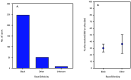
Description:SARS-CoV-2, the novel coronaVirus that causes coronaVirus disease 2019 (COVID-19), was first detected in the United States during January 2020 (1). Since then, >980,000 cases have been reported in the United States, including >55,000 associated deaths as of April 28, 2020 (2). Detailed data on demographic characteristics, underlying medical conditions, and clinical outcomes for persons hospitalized with COVID-19 are needed to inform Prevention strategies and community-specific intervention messages. For this report, CDC, the Georgia Department of Public Health, and eight Georgia hospitals (seven in metropolitan Atlanta and one in southern Georgia) summarized medical record-abstracted data for hospitalized adult patients with laboratory-confirmed* COVID-19 who were admitted during March 2020. Among 305 hospitalized patients with COVID-19, 61.6% were aged <65 years, 50.5% were female, and 83.2% with known race/ethnicity were non-Hispanic black (black). Over a quarter of patients (26.2%) did not have conditions thought to put them at higher risk for severe disease, including being aged ≥65 years. The proportion of hospitalized patients who were black was higher than expected based on overall hospital admissions. In an adjusted time-to-event Analysis, black patients were not more likely than were nonblack patients to receive invasive mechanical ventilation| (IMV) or to die during hospitalization (hazard ratio HR = 0.63; 95% confidence interval CI = 0.35-1.13). Given the overrepresentation of black patients within this hospitalized cohort, it is important for public health officials to ensure that Prevention activities prioritize communities and racial/ethnic groups most affected by COVID-19. Clinicians and public officials should be aware that all adults, regardless of underlying conditions or age, are at risk for serious illness from COVID-19.
-
Subjects:
-
Source:MMWR Morbidity Mortal Weekly Rep. 69(18):545-550
-
Series:
-
ISSN:0149-2195 (print) ; 1545-861X (digital)
-
Pubmed ID:32379729
-
Pubmed Central ID:PMC7737948
-
Document Type:
-
Place as Subject:
-
Pages in Document:6 pdf pages
-
Volume:69
-
Issue:18
-
Download URL:
-
File Type:
 [PDF - 144.32 KB]
 -
Collection(s):
-
Main Document Checksum:urn:sha-512:237b1765267fc4c445f6f7f03e17a36a8889651d9376dba90cfff5373cbafde094fff034940fa071529d916a29a4d6edf94d3c62a47004b2a086c3e045999be0
Supporting Files


File Language:
English
 Was this page helpful?
 Found an issue?



CDC STACKS serves as an archival repository of CDC-published products including
scientific findings, journal articles, guidelines, recommendations, or other public health information authored or
co-authored by CDC or funded partners.
As a repository, CDC STACKS retains documents in their original published format to ensure public access to scientific information.
As a repository, CDC STACKS retains documents in their original published format to ensure public access to scientific information.
You May Also Like
COLLECTION
Morbidity and Mortality Weekly Report (MMWR)