



FAMILY-SUPPORTIVE SUPERVISOR BEHAVIOR POSITIVELY AFFECTS WORK BEHAVIOR AND NONWORK WELL-BEING AMONG MEN IN LONG-TERM CARE
Supporting Files

-
10 2020
-
Available in CDC Stacks on October 01, 2021, 12:00 AM

File Language:
English
Details
-
Journal Article:J Nurs Manag
-
Personal Author:
-
Description:AIMS
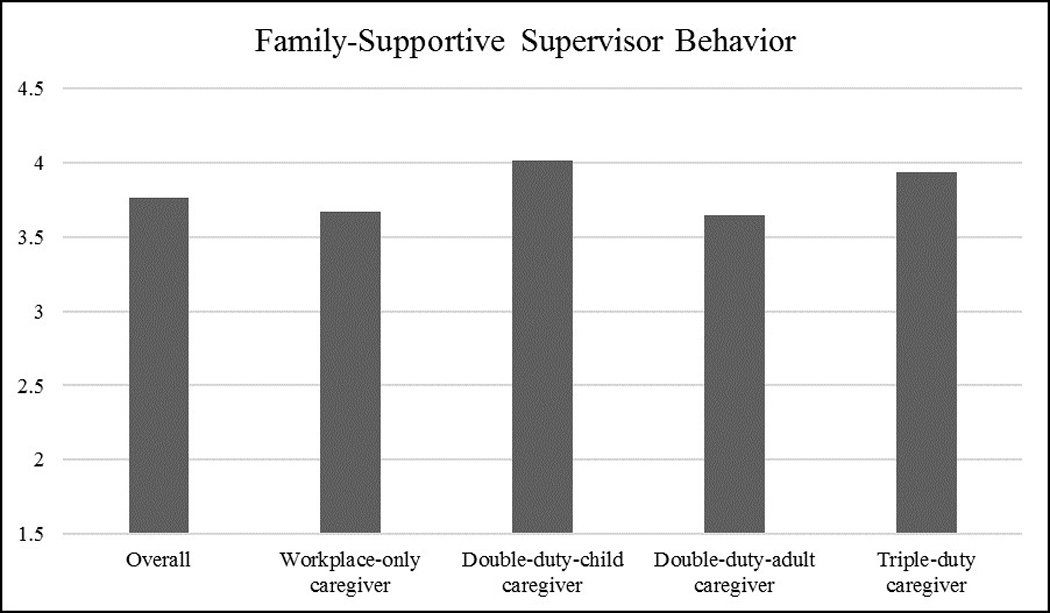
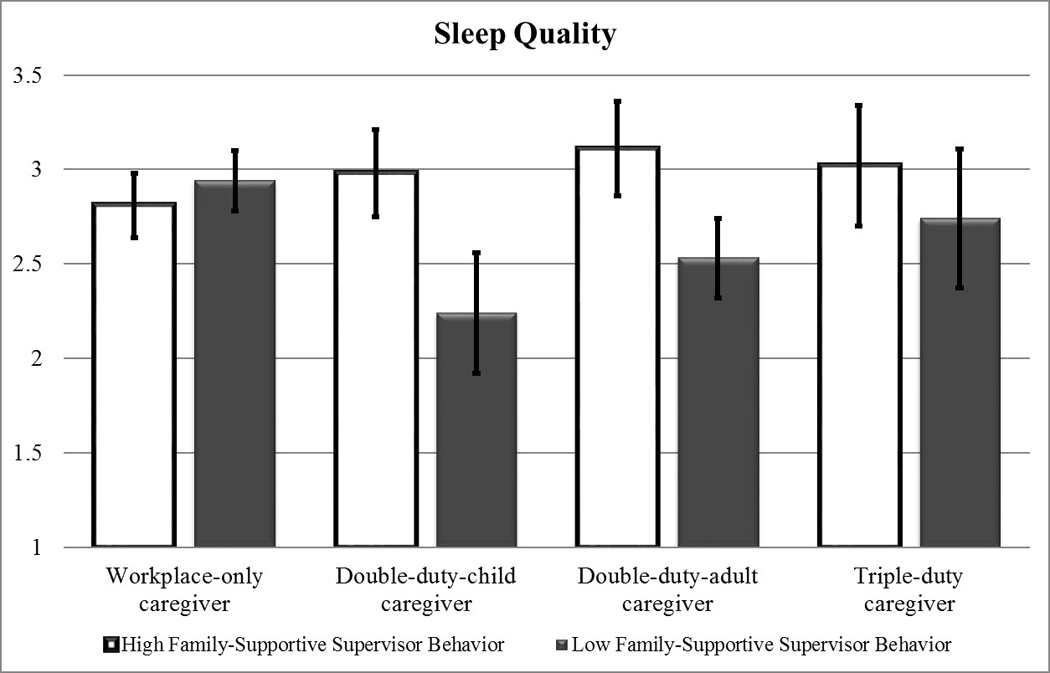
This study examined family-supportive supervisor behavior as a resource for the work behavior (safety compliance and organizational citizenship behavior) and nonwork well-being (family time adequacy, time in bed, and sleep quality) of men in the long-term care workforce. Men’s nonwork care roles for children (double-duty-child caregivers), adult relatives (double-duty-adult caregivers), or children and adult relatives (triple-duty caregivers) were assessed as moderators.
BACKGROUND
Family-supportive supervisor behavior is a modifiable workplace practice that may help recruit and retain men in nursing amid their increasing nonwork demands.
METHOD
Multiple linear regression analysis was performed on cross-sectional, secondary survey data from 122 men working in U.S.-based nursing homes.
RESULTS
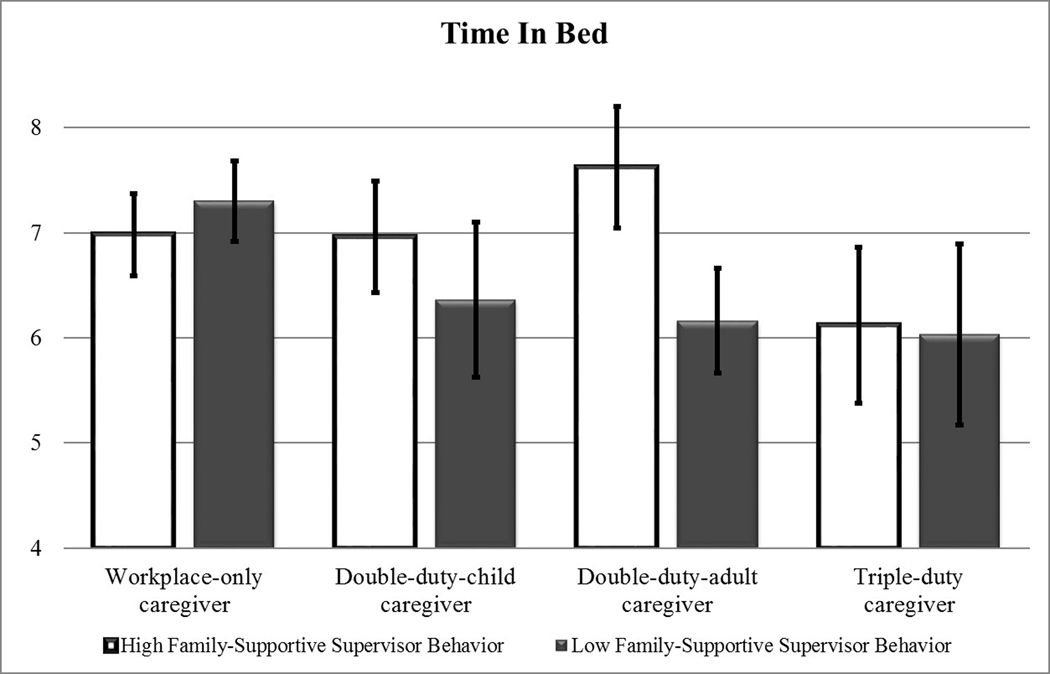
Family-supportive supervisor behavior was directly and positively related to safety compliance, organizational citizenship behavior, and family time adequacy. It was also positively associated with time in bed and sleep quality for double-duty caregivers.
CONCLUSION
Family-supportive supervisor behavior plays an important role in the work behavior and nonwork well-being of men with and without nonwork care roles in the long-term care workforce, a finding with favorable implications at the employee- and organizational-level.
IMPLICATIONS FOR NURSING MANAGEMENT
Training may facilitate nurse managers’ engagement in family-supportive supervisor behavior and, in turn, improve employees’ work and nonwork outcomes. -
Subjects:
-
Keywords:
-
Source:J Nurs Manag. 28(7):1504-1514
-
DOI:
-
Pubmed ID:32677064
-
Pubmed Central ID:PMC7722109
-
Document Type:
-
Funding:U01AG027669/NH/NIH HHSUnited States/ ; Alfred P. Sloan Foundation/ ; AF/ACF HHSUnited States/ ; U01 HD051256/HD/NICHD NIH HHSUnited States/ ; U01 OH008788/OH/NIOSH CDC HHSUnited States/ ; National Institute of Child Health and Human Development/ ; CC/CDC HHSUnited States/ ; William T. Grant Foundation/ ; Duke University School of Medicine/ ; Duke University/ ; Office of Behavioral and Social Sciences Research/ ; U01 HD051217/HD/NICHD NIH HHSUnited States/ ; R01HL107240/NH/NIH HHSUnited States/ ; U01 AG027669/AG/NIA NIH HHSUnited States/ ; R01 HL107240/HL/NHLBI NIH HHSUnited States/ ; U01 HD059773/HD/NICHD NIH HHSUnited States/ ; U01 HD051276/HD/NICHD NIH HHSUnited States/ ; U01 HD051218/HD/NICHD NIH HHSUnited States/
-
Genre:
-
Volume:28
-
Issue:7
-
Download URL:
-
File Type:
 [PDF - 847.79 KB]
 -
Collection(s):
-
Main Document Checksum:urn:sha-512:3f33d68c221008747773de59758abde98b70494d5c2f3dc732fdd71e1c86fdd5abcd378837384fd009133a8de588a6e3c1e9c0f3f9f5978825c491cee50b1b3b
Supporting Files


File Language:
English
 Was this page helpful?
 Found an issue?


CDC STACKS serves as an archival repository of CDC-published products including
scientific findings, journal articles, guidelines, recommendations, or other public health information authored or
co-authored by CDC or funded partners.
As a repository, CDC STACKS retains documents in their original published format to ensure public access to scientific information.
As a repository, CDC STACKS retains documents in their original published format to ensure public access to scientific information.
You May Also Like
COLLECTION
CDC Public Access