


Clinical and Multimodal Imaging Findings and Risk Factors for Ocular Involvement in a Presumed Waterborne Toxoplasmosis Outbreak, Brazil1
Supporting Files
Public Domain

-
Nov 2020
File Language:
English
Details
-
Alternative Title:Emerg Infect Dis
-
Personal Author:Brandão-de-Resende, Camilo ; Santos, Helena Hollanda ; Rojas Lagos, Angel Alessio ; Lara, Camila Munayert ; Arruda, Jacqueline Souza Dutra ; Marino, Ana Paula Maia Peixoto ; do Valle Antonelli, Lis Ribeiro ; Gazzinelli, Ricardo Tostes ; de Almeida Vitor, Ricardo Wagner ; Vasconcelos-Santos, Daniel Vitor
-
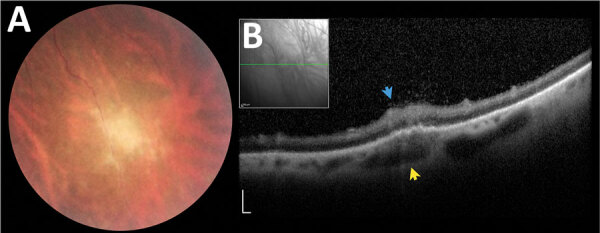
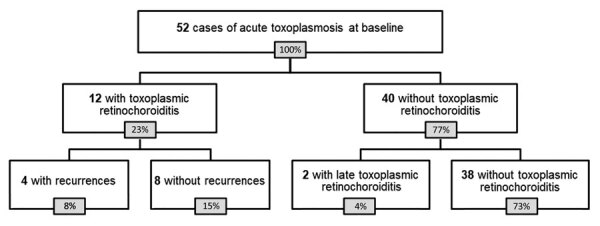
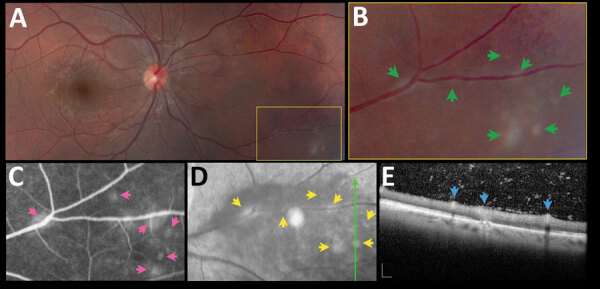
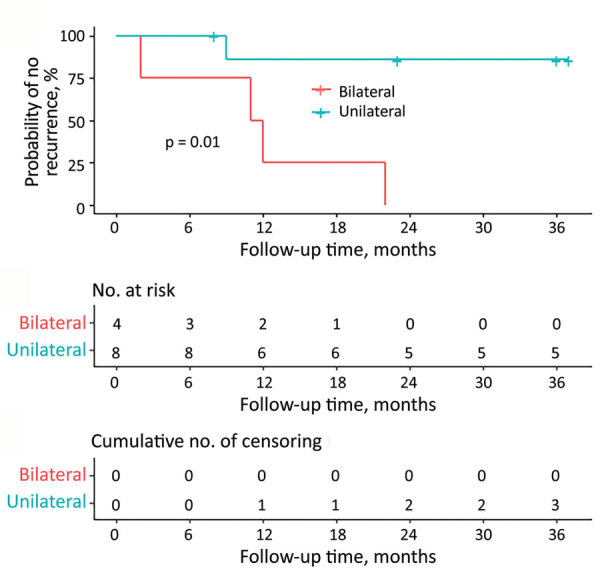
Description:In 2015, an outbreak of presumed waterborne toxoplasmosis occurred in Gouveia, Brazil. We conducted a 3-year prospective study on a cohort of 52 patients from this outbreak, collected clinical and multimodal imaging findings, and determined risk factors for ocular involvement. At baseline examination, 12 (23%) patients had retinochoroiditis; 4 patients had bilateral and 2 had macular lesions. Multimodal imaging revealed 2 distinct retinochoroiditis patterns: necrotizing focal retinochoroiditis and punctate retinochoroiditis. Older age, worse visual acuity, self-reported recent reduction of visual acuity, and presence of floaters were associated with retinochoroiditis. Among patients, persons >40 years of age had 5 times the risk for ocular involvement. Five patients had recurrences during follow-up, a rate of 22% per person-year. Recurrences were associated with binocular involvement. Two patients had late ocular involvement that occurred >34 months after initial diagnosis. Patients with acquired toxoplasmosis should have long-term ophthalmic follow-up, regardless of initial ocular involvement.
-
Subjects:
-
Source:Emerg Infect Dis. 26(12):2922-2932
-
Pubmed ID:33219657
-
Pubmed Central ID:PMC7706934
-
Document Type:
-
Place as Subject:
-
Volume:26
-
Issue:12
-
Collection(s):
-
Main Document Checksum:urn:sha256:d7e95ee835875821ccb46a5e3ecc6b4a957dea9f982719f2b1555b1e264691e2
-
Download URL:
-
File Type:
 [PDF
- 2.48 MB
]
[PDF
- 2.48 MB
]
Supporting Files


File Language:
English
ON THIS PAGE




CDC STACKS serves as an archival repository of CDC-published products including
scientific findings,
journal articles, guidelines, recommendations, or other public health information authored or
co-authored by CDC or funded partners.
As a repository, CDC STACKS retains documents in their original published format to ensure public access to scientific information.
As a repository, CDC STACKS retains documents in their original published format to ensure public access to scientific information.
You May Also Like
COLLECTION
Emerging Infectious Diseases