



Violence exposure, affective style, and stress-induced changes in resting state functional connectivity
Supporting Files

-
12 2020
-
Available in CDC Stacks on 2021-12-01T00:00:00Z
File Language:
English
Details
-
Journal Article:Cogn Affect Behav Neurosci
-
Personal Author:
-
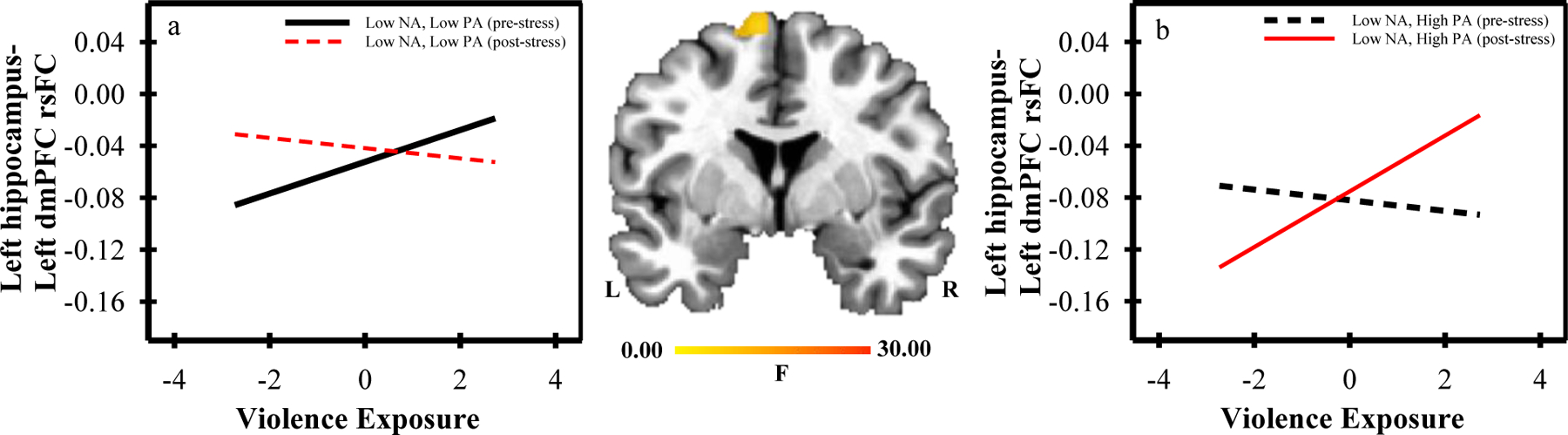
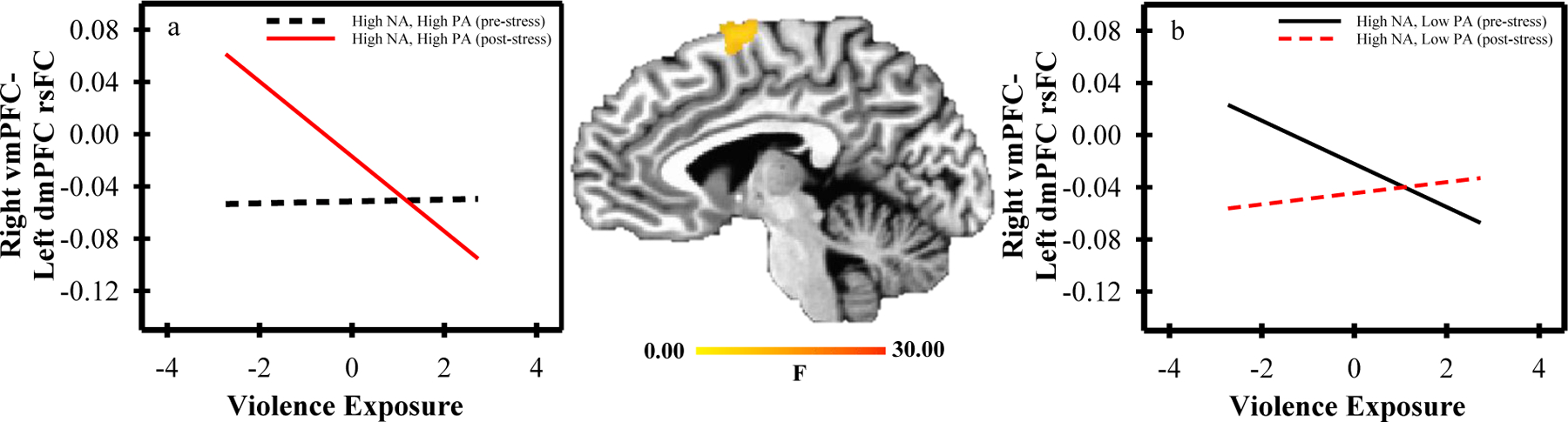
Description:Chronic childhood stress is linked to greater susceptibility to internalizing disorders in adulthood. Specifically, chronic stress leads to changes in brain connectivity patterns, and, in turn, affects psychological functioning. Violence exposure, a chronic stressor, increases stress reactivity and disrupts emotion regulation processes. However, it is unclear to what extent violence exposure affects the neural circuitry underlying emotion regulation. Individual differences in affective style also moderate the impact of stress on psychological function and can thus alter the relationship between violence exposure and brain function. Resting-state functional connectivity (rsFC) is an index of intrinsic brain activity. Stress-induced changes in rsFC between the amygdala, hippocampus, and prefrontal cortex (PFC) are associated with emotion dysregulation and may elucidate how affective style modulates the relationship between violence exposure and brain connectivity. Therefore, the present study examined the impact of violence exposure and affective style on stress-induced changes in rsFC. Participants (n = 233) completed two 6-minute resting-state functional magnetic resonance imaging scans, one before (pre-stress) and one after (post-stress) a psychosocial stress task. The bilateral amygdala, hippocampus, and ventromedial prefrontal cortex (vmPFC) were used as seed regions for rsFC analyses. Significant stress-induced changes in the prefrontal, fronto-limbic, and parieto-limbic rsFC were observed. Further, pre-stress to post-stress differences in rsFC varied with violence exposure and affective style. These findings suggest that prefrontal, fronto-limbic, and parieto-limbic connectivity is associated with the emotional response to stress and provide new insight into the neural mechanisms through which affective style moderates the impact violence exposure has on the brain.
-
Subjects:
-
Keywords:
-
Source:Cogn Affect Behav Neurosci. 20(6):1261-1277
-
DOI:
-
Pubmed ID:33000367
-
Pubmed Central ID:PMC7718383
-
Document Type:
-
Funding:U19 DP002664/DP/NCCDPHP CDC HHSUnited States/ ; U48 DP000046/DP/NCCDPHP CDC HHSUnited States/ ; TL1 TR003106/TR/NCATS NIH HHSUnited States/ ; U19 DP002665/DP/NCCDPHP CDC HHSUnited States/ ; U48 DP000057/DP/NCCDPHP CDC HHSUnited States/ ; U19 DP002663/DP/NCCDPHP CDC HHSUnited States/ ; U48 DP000056/DP/NCCDPHP CDC HHSUnited States/ ; R01 MH098348/MH/NIMH NIH HHSUnited States/
-
Genre:
-
Volume:20
-
Issue:6
-
Download URL:
-
File Type:
 [PDF - 723.09 KB]
 -
Collection(s):
-
Main Document Checksum:urn:sha-512:cc880e11ddc49fe0c8358435f5d20b2e6d9d198c1ff1b875d48d9b0a50a0ea2c97da7f2e14877263daabbf680fd9f78ac7aba362b61022bf8c93104dda5460a2
Supporting Files


File Language:
English
 Was this page helpful?
 Found an issue?





CDC STACKS serves as an archival repository of CDC-published products including
scientific findings, journal articles, guidelines, recommendations, or other public health information authored or
co-authored by CDC or funded partners.
As a repository, CDC STACKS retains documents in their original published format to ensure public access to scientific information.
As a repository, CDC STACKS retains documents in their original published format to ensure public access to scientific information.
You May Also Like
COLLECTION
CDC Public Access