



Preventing Emergency Vehicle Crashes: Status and Challenges of Human Factors Issues
Supporting Files

-
July 02 2018
-
Available in CDC Stacks on 2020-11-24T00:00:00Z
File Language:
English
Details
-
Alternative Title:Hum Factors
-
Personal Author:
-
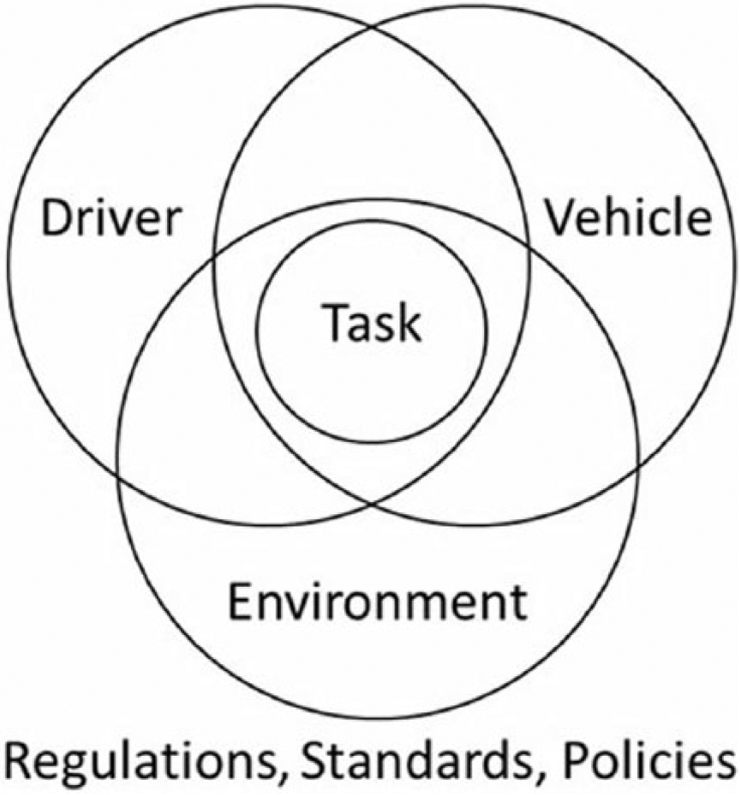
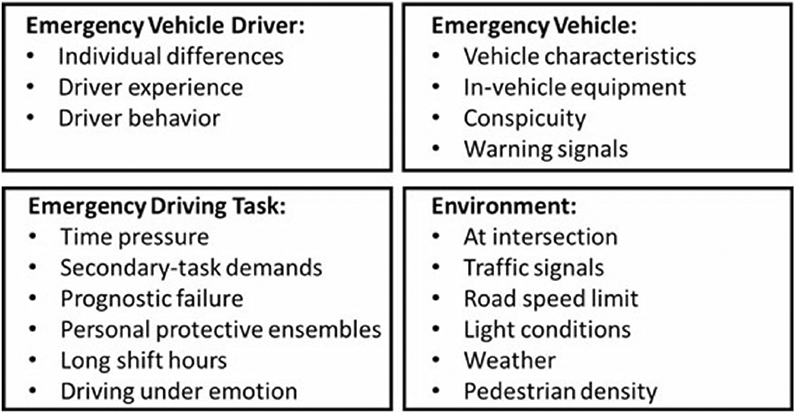
Description:Objective: ; This study reports current status of knowledge and challenges associated with the emergency vehicle (police car, fire truck, and ambulance) crashes, with respect to the major contributing risk factors. ; Background: ; Emergency vehicle crashes are a serious nationwide problem, causing injury and death to emergency responders and citizens. Understanding the underlying causes of these crashes is critical for establishing effective strategies for reducing the occurrence of similar incidents. ; Method: ; We reviewed the broader literature associated with the contributing factors for emergency vehicle crashes: peer-reviewed journal papers; and reports, policies, and manuals published by government agencies, universities, and research institutes. ; Results: ; Major risk factors for emergency vehicle crashes identified in this study were organized into four categories: driver, task, vehicle, and environmental factors. Also, current countermeasures and interventions to mitigate the hazards of emergency vehicle crashes were discussed, and new ideas for future studies were suggested. ; Conclusion: ; Risk factors, control measures, and knowledge gaps relevant to emergency vehicle crashes were presented. Six research concepts are offered for the human factors community to address. Among the topics are emergency vehicle driver risky behavior carryover between emergency response and return from a call, distraction in emergency vehicle driving, in-vehicle driver assistance technologies, vehicle red light running, and pedestrian crash control. ; Application: ; This information is helpful for emergency vehicle drivers, safety practitioners, public safety agencies, and research communities to mitigate crash risks. It also offers ideas for researchers to advance technologies and strategies to further emergency vehicle safety on the road.
-
Subjects:
-
Source:Hum Factors. 60(7):1048-1072
-
Pubmed ID:29965790
-
Pubmed Central ID:PMC7685529
-
Document Type:
-
Funding:
-
Volume:60
-
Issue:7
-
Download URL:
-
File Type:
 [PDF - 276.21 KB]
 -
Collection(s):
-
Main Document Checksum:urn:sha256:669bd93dc7451763181ec89d5fbc992188e87a8163e86d717182c4b041f85860
Supporting Files


File Language:
English
 Was this page helpful?
 Found an issue?

CDC STACKS serves as an archival repository of CDC-published products including
scientific findings, journal articles, guidelines, recommendations, or other public health information authored or
co-authored by CDC or funded partners.
As a repository, CDC STACKS retains documents in their original published format to ensure public access to scientific information.
As a repository, CDC STACKS retains documents in their original published format to ensure public access to scientific information.
You May Also Like
COLLECTION
CDC Public Access