



Differential inflammatory potential of particulate matter (PM) size fractions from Imperial Valley, CA
Supporting Files

-
1 1 2021
-
File Language:
English
Details
-
Alternative Title:Atmos Environ (1994)
-
Personal Author:D’Evelyn, SM ; Vogel, CFA ; Bein, KJ ; Lara, B ; Laing, EA ; Abarca, RA ; Zhang, Q ; Li, L ; Li, J ; Nguyen, TB ; Pinkerton, KE
-
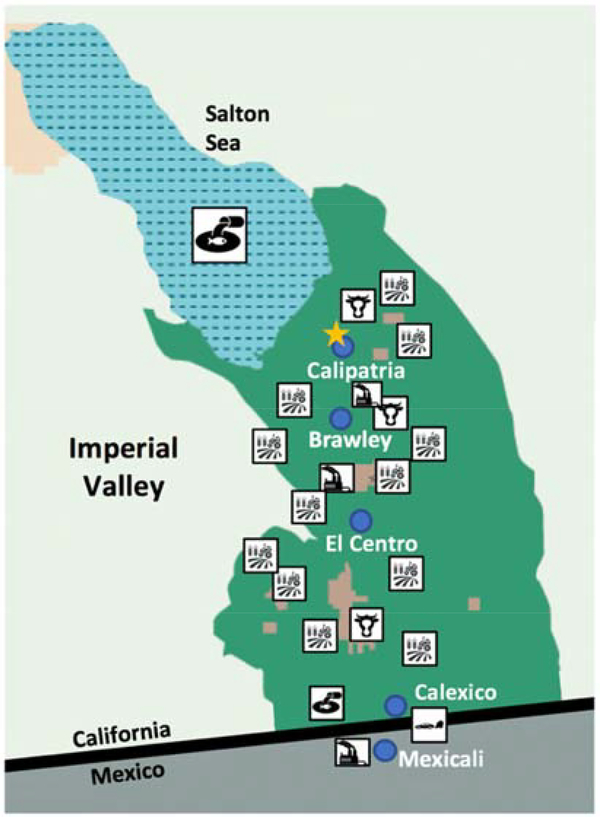
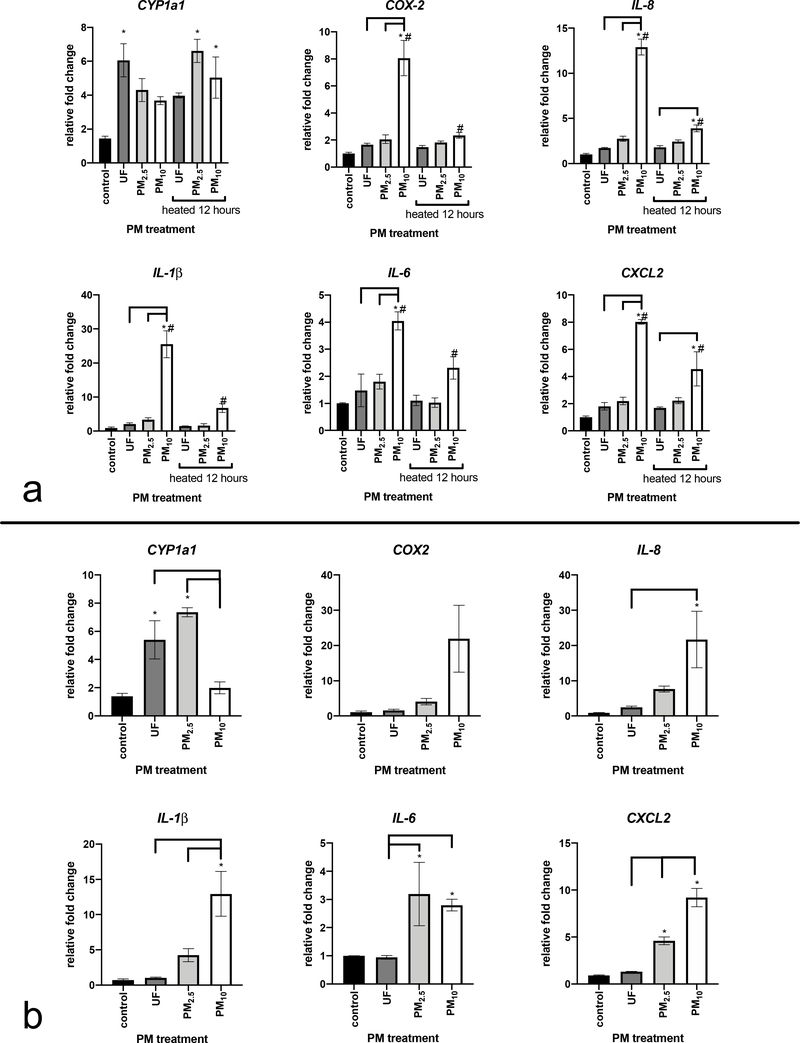
Description:Particulate matter (PM) in Imperial Valley originates from a variety of sources such as agriculture, traffic at the border crossing, emissions from the cross-border city of Mexicali, and the drying lakebed of the Salton Sea. Dust storms in Imperial Valley, California regularly lead to exceedances of the federal air quality standards for PM| (diameter less than 10 microns). To determine if there are differences in the composition and biological response to Imperial County PM by size, ambient PM samples were collected from a sampling unit stationed in the northern-most part of the valley, South of the Salton Sea. Ultrafine, fine, and coarse PM samples were collected and extracted separately. Chemical composition of each size fraction was obtained after extraction by using several analytical techniques, and biological response was measured by exposing a cell line of macrophages to particles and quantifying subsequent gene expression. Biological measurements demonstrated coarse PM induced an inflammatory response in macrophages measured in increases of inflammatory markers | and |, whereas ultrafine and fine PM only demonstrated significant increases in expression of |. These differential responses were due not only to particle size, but to the distinct chemical profiles of each size faction as well. Community groups in Imperial Valley have already completed several projects to learn more about local air quality, giving residents access to data that provides real-time levels of PM| and PM| as well as recommendations on health-based practices dependent on the current AQI (air quality index). However, to date there is no information on the composition or toxicity of ambient PM from the region. The data presented here could provide more definitive information on the toxicity of PM by size, and further inform the community on local air quality.
-
Keywords:
-
Source:Atmos Environ (1994). 244
-
Pubmed ID:33184556
-
Pubmed Central ID:PMC7654835
-
Document Type:
-
Funding:P51 OD011107/OD/NIH HHSUnited States/ ; T32 HL007013/HL/NHLBI NIH HHSUnited States/ ; T32 ES015459/ES/NIEHS NIH HHSUnited States/ ; T32 ES007059/ES/NIEHS NIH HHSUnited States/ ; U01 OH010969/OH/NIOSH CDC HHSUnited States/ ; P30 ES023513/ES/NIEHS NIH HHSUnited States/ ; U54 OH007550/OH/NIOSH CDC HHSUnited States/ ; R01 ES029126/ES/NIEHS NIH HHSUnited States/
-
Volume:244
-
Collection(s):
-
Main Document Checksum:urn:sha-512:1d6440b1402f9893cc09724ebf3ac87f910ad810abd72cbd3e763a6062fc7d24d5251130397acfba584ee3f4f5844e045bb0c113f30e8567fb594f9e0cbd8e0d
-
Download URL:
-
File Type:
 [PDF
- 1.53 MB
]
[PDF
- 1.53 MB
]
Supporting Files


File Language:
English
 Was this page helpful?
 Found an issue?







CDC STACKS serves as an archival repository of CDC-published products including
scientific findings,
journal articles, guidelines, recommendations, or other public health information authored or
co-authored by CDC or funded partners.
As a repository, CDC STACKS retains documents in their original published format to ensure public access to scientific information.
As a repository, CDC STACKS retains documents in their original published format to ensure public access to scientific information.
You May Also Like
COLLECTION
CDC Public Access