


Exploring the Role of Chemokine Receptor 6 (Ccr6) in the BXD Mouse Model of Gulf War Illness
Supporting Files
Public Domain

-
August 14 2020
-
File Language:
English
Details
-
Alternative Title:Front Neurosci
-
Personal Author:
-
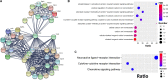
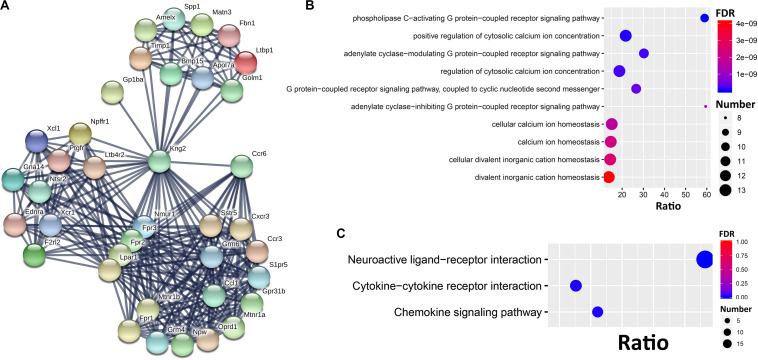
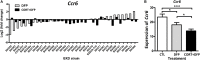
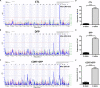
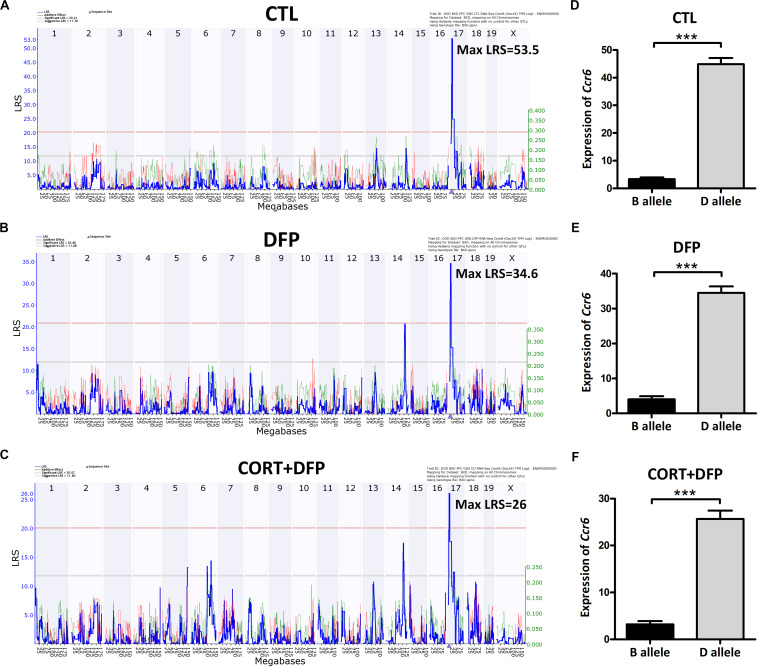
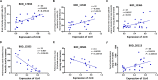
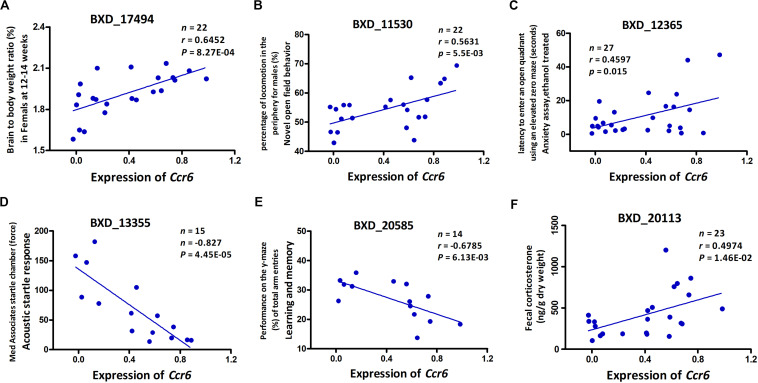
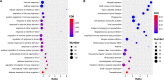
Description:Gulf War illness (GWI) is a chronic and multi-symptomatic disorder with persistent neuroimmune symptomatology. Chemokine receptor 6 (CCR6) has been shown to be involved in several inflammation disorders in humans. However, the causative relationship between | and neuroinflammation in GWI has not yet been investigated. By using RNA-seq data of prefrontal cortex (PFC) from 31 C57BL/6J X DBA/2J (BXD) recombinant inbred (RI) mouse strains and their parental strains under three chemical treatment groups - saline control (CTL), diisopropylfluorophosphate (DFP), and corticosterone combined with diisopropylfluorophosphate (CORT+DFP), we identified | as a candidate gene underlying individual differences in susceptibility to GWI. The | gene is |-regulated and its expression is significantly correlated with CORT+DFP treatment. Its mean transcript abundance in PFC of BXD mice decreased 1.6-fold (| < 0.0001) in the CORT+DFP group. The response of | to CORT+DFP is also significantly different (| < 0.0001) between the parental strains, suggesting | is affected by both host genetic background and chemical treatments. Pearson product-moment correlation analysis revealed 1473 |-correlated genes (| < 0.05). Enrichment of these genes was seen in the immune, inflammation, cytokine, and neurological related categories. In addition, we also found five central nervous system-related phenotypes and fecal corticosterone concentration have significant correlation (| < 0.05) with expression of | in the PFC. We further established a protein-protein interaction subnetwork for the |correlated genes, which provides an insight on the interaction of G protein-coupled receptors, kallikrein-kinin system and neuroactive ligand-receptors. This analysis likely defines the heterogeneity and complexity of GWI. Therefore, our results suggest that | is one of promising GWI biomarkers.
-
Subjects:
-
Source:Front Neurosci. 2020; 14
-
Pubmed ID:32922257
-
Pubmed Central ID:PMC7456958
-
Document Type:
-
Volume:14
-
Collection(s):
-
Main Document Checksum:urn:sha256:a50e4fe463ac2a45b59e7289c54b603b609229f92a15adfd9f4ff411e7c3ab39
-
Download URL:
-
File Type:
 [PDF
- 7.07 MB
]
[PDF
- 7.07 MB
]
Supporting Files


File Language:
English
ON THIS PAGE



CDC STACKS serves as an archival repository of CDC-published products including
scientific findings,
journal articles, guidelines, recommendations, or other public health information authored or
co-authored by CDC or funded partners.
As a repository, CDC STACKS retains documents in their original published format to ensure public access to scientific information.
As a repository, CDC STACKS retains documents in their original published format to ensure public access to scientific information.
You May Also Like
COLLECTION
CDC Public Access