


Raccoon Rabies Virus Variant Transmission Through Solid Organ Transplantation
Supporting Files

-
7 24 2013
-
File Language:
English
Details
-
Alternative Title:JAMA
-
Personal Author:Vora, Neil M. ; Basavaraju, Sridhar V. ; Feldman, Katherine A. ; Paddock, Christopher D. ; Orciari, Lillian ; Gitterman, Steven ; Griese, Stephanie ; Wallace, Ryan M. ; Said, Maria ; Blau, Dianna M. ; Selvaggi, Gennaro ; Velasco-Villa, Andres ; Ritter, Jana ; Yager, Pamela ; Kresch, Agnes ; Niezgoda, Mike ; Blanton, Jesse ; Stosor, Valentina ; Falta, Edward M. ; Lyon, G. Marshall ; Zembower, Teresa ; Kuzmina, Natalia ; Rohatgi, Prashant K. ; Recuenco, Sergio ; Zaki, Sherif ; Damon, Inger ; Franka, Richard ; Kuehnert, Matthew J.
-
Corporate Authors:
-
Description:IMPORTANCE
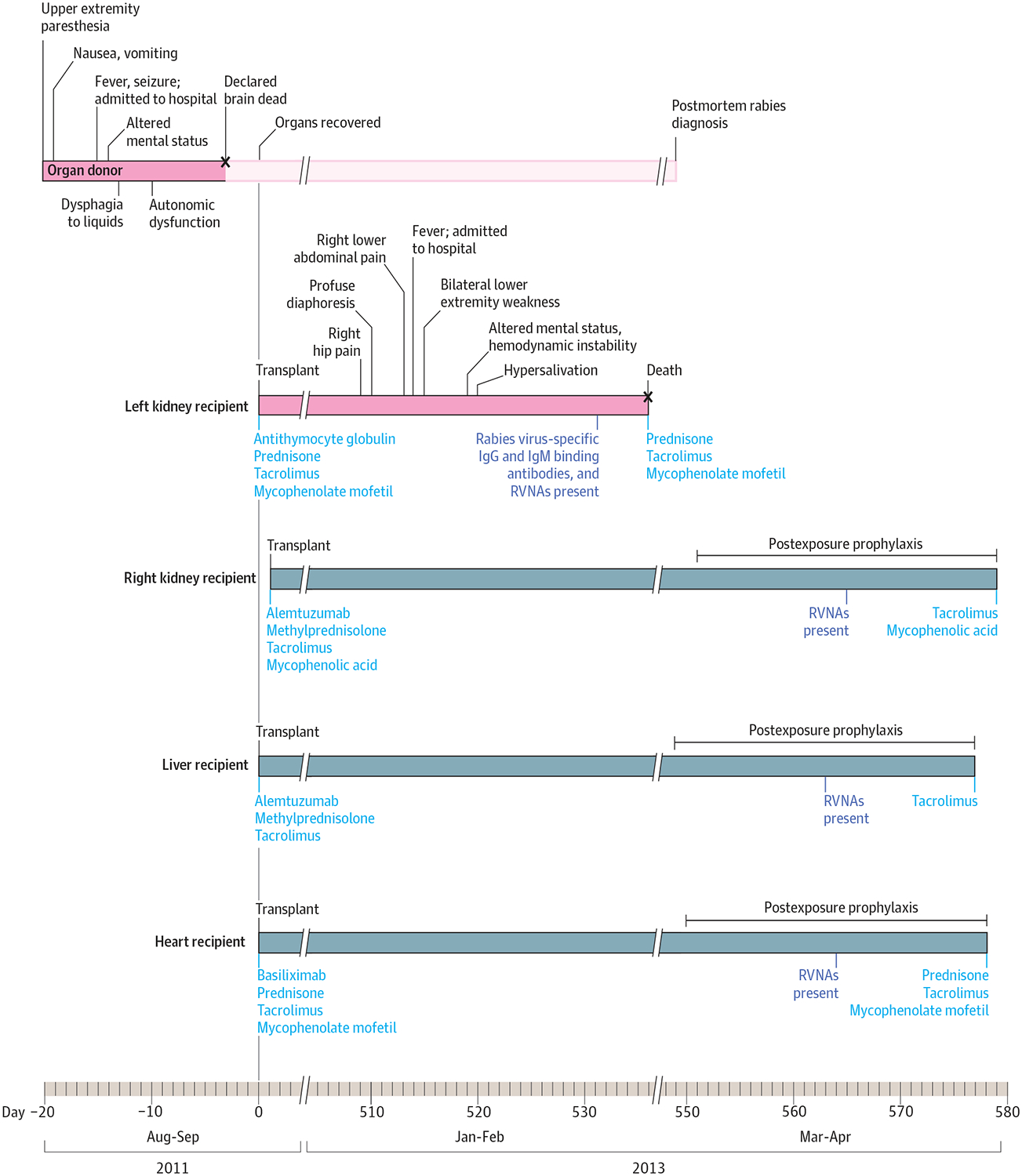
The rabies virus causes a fatal encephalitis and can be transmitted through tissue or organ transplantation. In February 2013, a kidney recipient with no reported exposures to potentially rabid animals died from rabies 18 months after transplantation.
OBJECTIVES
To investigate whether organ transplantation was the source of rabies virus exposure in the kidney recipient, and to evaluate for and prevent rabies in other transplant recipients from the same donor.
DESIGN
Organ donor and all transplant recipient medical records were reviewed. Laboratory tests to detect rabies virus–specific binding antibodies, rabies virus neutralizing antibodies, and rabies virus antigens were conducted on available specimens, including serum, cerebrospinal fluid, and tissues from the donor and the recipients. Viral ribonucleic acid was extracted from tissues and amplified for nucleoprotein gene sequencing for phylogenetic comparisons.
MAIN OUTCOMES AND MEASURES
Determination of whether the donor died from undiagnosed rabies and whether other organ recipients developed rabies.
RESULTS
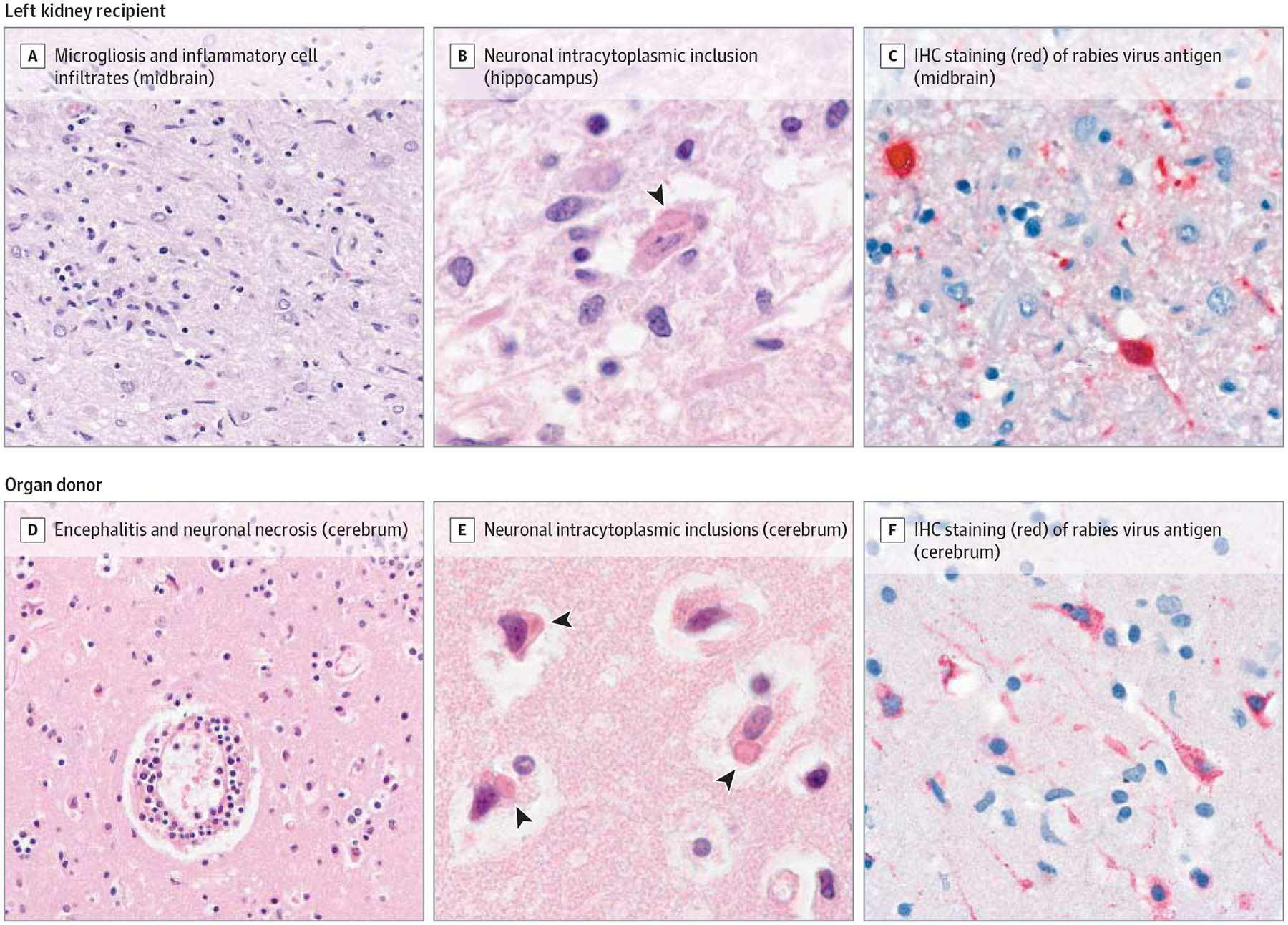
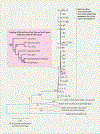
In retrospect, the donor’s clinical presentation (which began with vomiting and upper extremity paresthesias and progressed to fever, seizures, dysphagia, autonomic dysfunction, and brain death) was consistent with rabies. Rabies virus antigen was detected in archived autopsy brain tissue collected from the donor. The rabies viruses infecting the donor and the deceased kidney recipient were consistent with the raccoon rabies virus variant and were more than 99.9% identical across the entire N gene (1349/1350 nucleotides), thus confirming organ transplantation as the route of transmission. The 3 other organ recipients remained asymptomatic, with rabies virus neutralizing antibodies detected in their serum after completion of postexposure prophylaxis (range, 0.3–40.8 IU/mL).
CONCLUSIONS AND RELEVANCE
Unlike the 2 previous clusters of rabies virus transmission through solid organ transplantation, there was a long incubation period in the recipient who developed rabies, and survival of 3 other recipients without pretransplant rabies vaccination. Rabies should be considered in patients with acute progressive encephalitis of unexplained etiology, especially for potential organ donors. A standard evaluation of potential donors who meet screening criteria for infectious encephalitis should be considered, and risks and benefits for recipients of organs from these donors should be evaluated.
-
Subjects:
-
Source:JAMA. 310(4):398-407
-
Pubmed ID:23917290
-
Pubmed Central ID:PMC7552820
-
Document Type:
-
Funding:
-
Volume:310
-
Issue:4
-
Collection(s):
-
Main Document Checksum:urn:sha256:0a2a5eddae419f5a2d96d3f86ce5d7f457371f194cdd32dac565f40fa9be259f
-
Download URL:
-
File Type:
 [PDF
- 872.20 KB
]
[PDF
- 872.20 KB
]
Supporting Files


File Language:
English
ON THIS PAGE



CDC STACKS serves as an archival repository of CDC-published products including
scientific findings,
journal articles, guidelines, recommendations, or other public health information authored or
co-authored by CDC or funded partners.
As a repository, CDC STACKS retains documents in their original published format to ensure public access to scientific information.
As a repository, CDC STACKS retains documents in their original published format to ensure public access to scientific information.
You May Also Like
COLLECTION
CDC Public Access