


The MMR Vaccine and Autism
Supporting Files

-
April 15 2019
File Language:
English
Details
-
Journal Article:Annu Rev Virol
-
Personal Author:
-
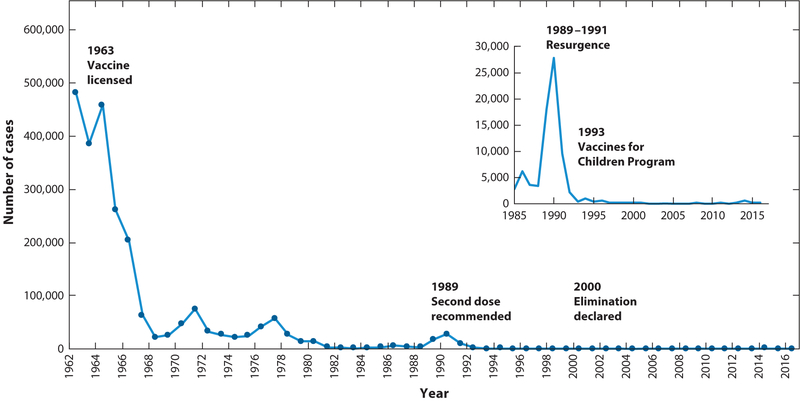
Description:Autism is a developmental disability that can cause significant social, communication, and behavioral challenges. A report published in 1998, but subsequently retracted by the journal, suggested that measles, mumps, and rubella (MMR) vaccine causes autism. However, autism is a neurodevelopmental condition that has a strong genetic component with genesis before one year of age, when MMR vaccine is typically administered. Several epidemiologic studies have not found an association between MMR vaccination and autism, including a study that found that MMR vaccine was not associated with an increased risk of autism even among high-risk children whose older siblings had autism. Despite strong evidence of its safety, some parents are still hesitant to accept MMR vaccination of their children. Decreasing acceptance of MMR vaccination has led to outbreaks or resurgence of measles. Health-care providers have a vital role in maintaining confidence in vaccination and preventing suffering, disability, and death from measles and other vaccine-preventable diseases.
-
Subjects:
-
Source:Annu Rev Virol. 6(1):585-600
-
DOI:
-
Pubmed ID:30986133
-
Pubmed Central ID:PMC6768751
-
Document Type:
-
Funding:
-
Genre:
-
Volume:6
-
Issue:1
-
Collection(s):
-
Main Document Checksum:urn:sha-512:446cb8ef66760fb9b868d5c2c832cf2e1fe38bfd11f6e2c3c1653c768e6bbbf7f4ac500877e9b9fa567b591e02350a3d75312f0667cfe444f5880bcaf6000bbf
-
Download URL:
-
File Type:
 [PDF
- 266.10 KB
]
[PDF
- 266.10 KB
]
Supporting Files


File Language:
English
ON THIS PAGE




CDC STACKS serves as an archival repository of CDC-published products including
scientific findings,
journal articles, guidelines, recommendations, or other public health information authored or
co-authored by CDC or funded partners.
As a repository, CDC STACKS retains documents in their original published format to ensure public access to scientific information.
As a repository, CDC STACKS retains documents in their original published format to ensure public access to scientific information.
You May Also Like
COLLECTION
CDC Public Access