



Vital Signs: Characteristics of Drug Overdose Deaths Involving Opioids and Stimulants — 24 States and the District of Columbia, January–June 2019
Supporting Files
Public Domain

-
September 04 2020
File Language:
English
Details
-
Alternative Title:Characteristics of Drug Overdose Deaths Involving Opioids and Stimulants — 24 States and the District of Columbia, January–June 2019
-
Journal Article:Morbidity and Mortality Weekly Report (MMWR)
-
Personal Author:
-
Description:Introduction
Provisional estimates indicate that drug overdose deaths increased in 2019 after a slight decrease in 2018. In 2018, overdose deaths primarily involved opioids, with continued increases in deaths involving illicitly manufactured fentanyls (IMFs). Deaths involving stimulants such as cocaine and methamphetamine are also increasing, mainly in combination with opioids.
Methods
CDC analyzed data on drug overdose deaths during January–June 2019 from 24 states and the District of Columbia (DC) in the State Unintentional Drug Overdose Reporting System to describe characteristics and circumstances of opioid- and stimulant-involved overdose deaths.
Results
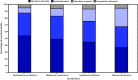
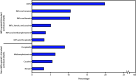
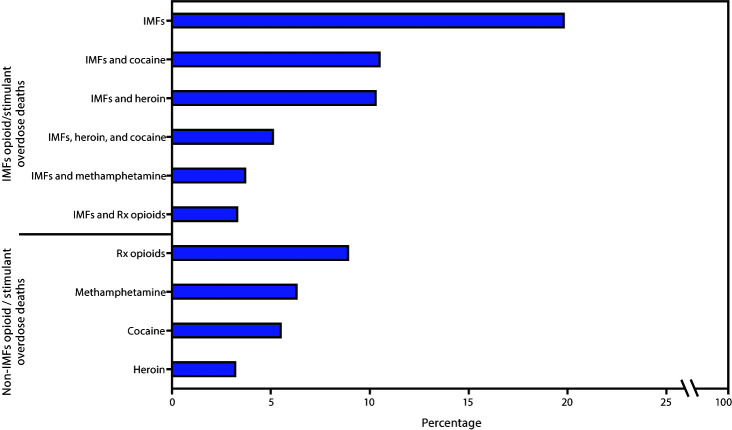
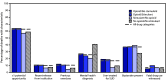
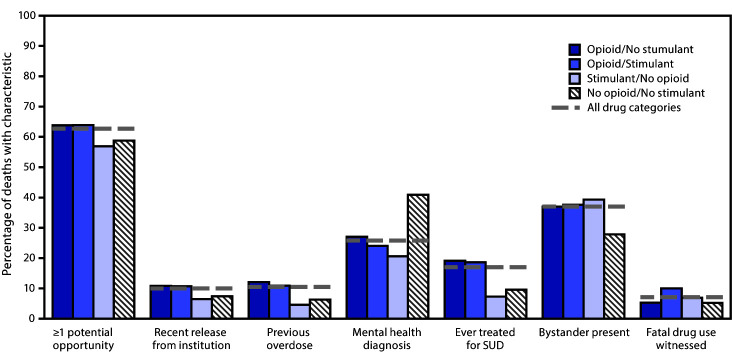
Among 16,236 drug overdose deaths in 24 states and DC, 7,936 (48.9%) involved opioids without stimulants, 5,301 (32.6%) involved opioids and stimulants, 2,056 (12.7%) involved stimulants without opioids, and 943 (5.8%) involved neither opioids nor stimulants. Approximately 80% of overdose deaths involved one or more opioid, and IMFs were involved in three of four opioid-involved overdose deaths. IMFs, heroin, cocaine, or methamphetamine (alone or in combination) were involved in 83.8% of overdose deaths. More than three in five (62.7%) overdose deaths had documentation of at least one potential opportunity for overdose Prevention intervention.
Conclusions and implications for public health practice
Identifying opportunities to intervene before an overdose death and implementing evidence-based Prevention policies, programs, and practices could save lives. Strategies should address characteristics of overdoses involving IMFs, such as rapid overdose progression, as well as opioid and stimulant co-involvement. These efforts should be complemented by efforts to prevent initiation of prescription opioid and stimulant misuse and illicit drug use. -
Subjects:
-
Source:MMWR Morbidity Mortal Weekly Rep. 69(35):1189-1197
-
Series:
-
ISSN:0149-2195 (print) ; 1545-861X (digital)
-
Pubmed ID:32881854
-
Pubmed Central ID:PMC7470457
-
Document Type:
-
Place as Subject:
-
Pages in Document:9 pdf pages
-
Volume:69
-
Issue:35
-
Download URL:
-
File Type:
 [PDF - 262.53 KB]
 -
Collection(s):
-
Main Document Checksum:urn:sha-512:a211fc208d0fae419226730046ad48ea32cdfd2c789c44e2de81a793f4fc6854b7c6ae31b190690480b09dd867f425d07b6b573a6918b912c091acc96098dbbb
Supporting Files


File Language:
English
 Was this page helpful?
 Found an issue?


CDC STACKS serves as an archival repository of CDC-published products including
scientific findings, journal articles, guidelines, recommendations, or other public health information authored or
co-authored by CDC or funded partners.
As a repository, CDC STACKS retains documents in their original published format to ensure public access to scientific information.
As a repository, CDC STACKS retains documents in their original published format to ensure public access to scientific information.
You May Also Like
COLLECTION
Morbidity and Mortality Weekly Report (MMWR)