



Mass Testing for SARS-CoV-2 in 16 Prisons and Jails — Six Jurisdictions, United States, April–May 2020
Supporting Files
Public Domain

-
August 21 2020
File Language:
English
Details
-
Journal Article:Morbidity and Mortality Weekly Report (MMWR)
-
Personal Author:Hagan, Liesl M. ; Williams, Samantha P. ; Spaulding, Anne C. ; Toblin, Robin L. ; Figlenski, Jessica ; Ocampo, Jeanne ; Ross, Tara ; Bauer, Heidi ; Hutchinson, Justine ; Lucas, Kimberley D. ; Zahn, Matthew ; Chiang, Chun ; Collins, Timothy ; Burakoff, Alexis ; Bettridge, Juli ; Stringer, Ginger ; Maul, Randolph ; Waters, Kristen ; Dewart, Courtney ; Clayton, Jennifer ; de Fijter, Sietske ; Sadacharan, Radha ; Garcia, Linda ; Lockett, Naomi ; Short, Kirstin ; Sunder, Laxman ; Handanagic, Senad
-
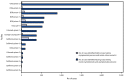
Description:Preventing coronaVirus disease 2019 (COVID-19) in correctional and detention facilities* can be challenging because of population-dense housing, varied access to hygiene facilities and supplies, and limited space for isolation and quarantine (1). Incarcerated and detained populations have a high prevalence of chronic Diseases, increasing their risk for severe COVID-19-associated illness and making early detection critical (2,3). Correctional and detention facilities are not closed systems; SARS-CoV-2, the Virus that causes COVID-19, can be transmitted to and from the surrounding community through staff member and visitor movements as well as entry, transfer, and release of incarcerated and detained persons (1). To better understand SARS-CoV-2 prevalence in these settings, CDC requested data from 15 jurisdictions describing results of mass tTesting events among incarcerated and detained persons and cases identified through earlier symptom-based tTesting. Six jurisdictions reported SARS-CoV-2 prevalence of 0%-86.8% (median = 29.3%) from mass tTesting events in 16 adult facilities. Before mass tTesting, 15 of the 16 facilities had identified at least one COVID-19 case among incarcerated or detained persons using symptom-based tTesting, and mass tTesting increased the total number of known cases from 642 to 8,239. Case Surveillance from symptom-based tTesting has likely underestimated SARS-CoV-2 prevalence in correctional and detention facilities. Broad-based tTesting can provide a more accurate assessment of prevalence and generate data to help control Transmission (4).
-
Subjects:
-
Source:MMWR Morbidity Mortal Weekly Rep. 69(33):1139-1143
-
Series:
-
ISSN:0149-2195 (print) ; 1545-861X (digital)
-
Pubmed ID:32817597
-
Pubmed Central ID:PMC7439979
-
Document Type:
-
Place as Subject:
-
Pages in Document:5 pdf pages
-
Volume:69
-
Issue:33
-
Download URL:
-
File Type:
 [PDF - 115.82 KB]
 -
Collection(s):
-
Main Document Checksum:urn:sha-512:abd50dde68a929327e5d798ba0073c250e88c40d90c7be8e341cdb9cf8346fb83fee12f10fd501a47b6e4b0bf957e554a6ad4f0d3ff76257341fead62ff56a37
Supporting Files


File Language:
English
 Was this page helpful?
 Found an issue?


CDC STACKS serves as an archival repository of CDC-published products including
scientific findings, journal articles, guidelines, recommendations, or other public health information authored or
co-authored by CDC or funded partners.
As a repository, CDC STACKS retains documents in their original published format to ensure public access to scientific information.
As a repository, CDC STACKS retains documents in their original published format to ensure public access to scientific information.
You May Also Like
COLLECTION
Morbidity and Mortality Weekly Report (MMWR)