


Mortality-to-incidence ratios by US Congressional District: Implications for epidemiologic, dissemination and implementation research, and public health policy
Supporting Files

-
November 01 2019
-
File Language:
English
Details
-
Alternative Title:Prev Med
-
Personal Author:
-
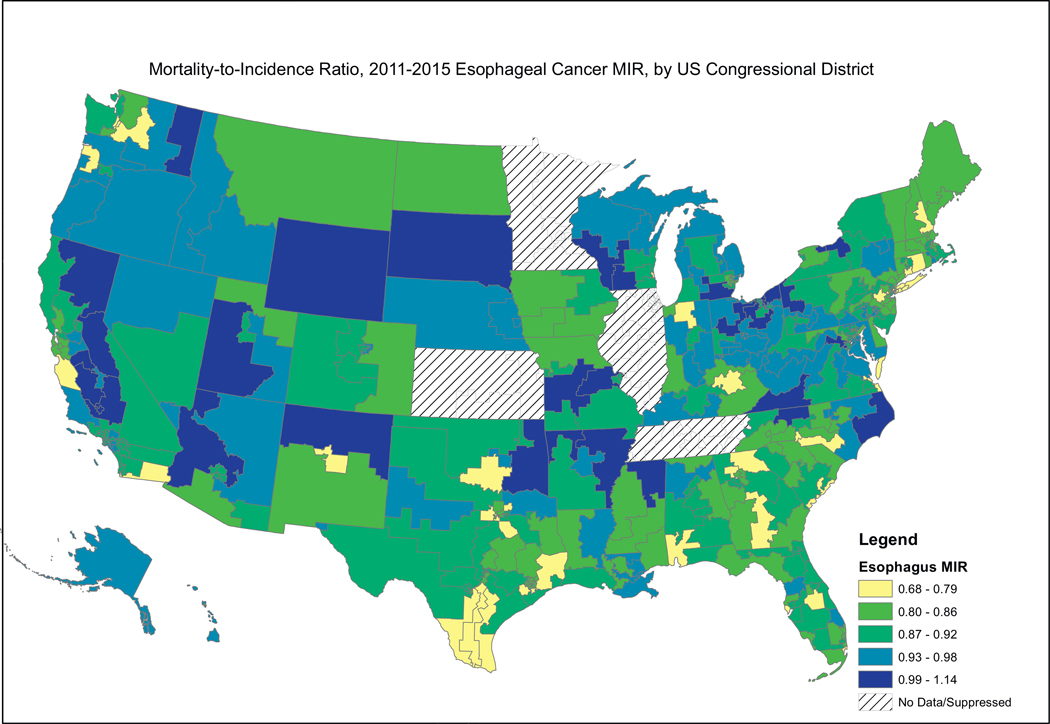
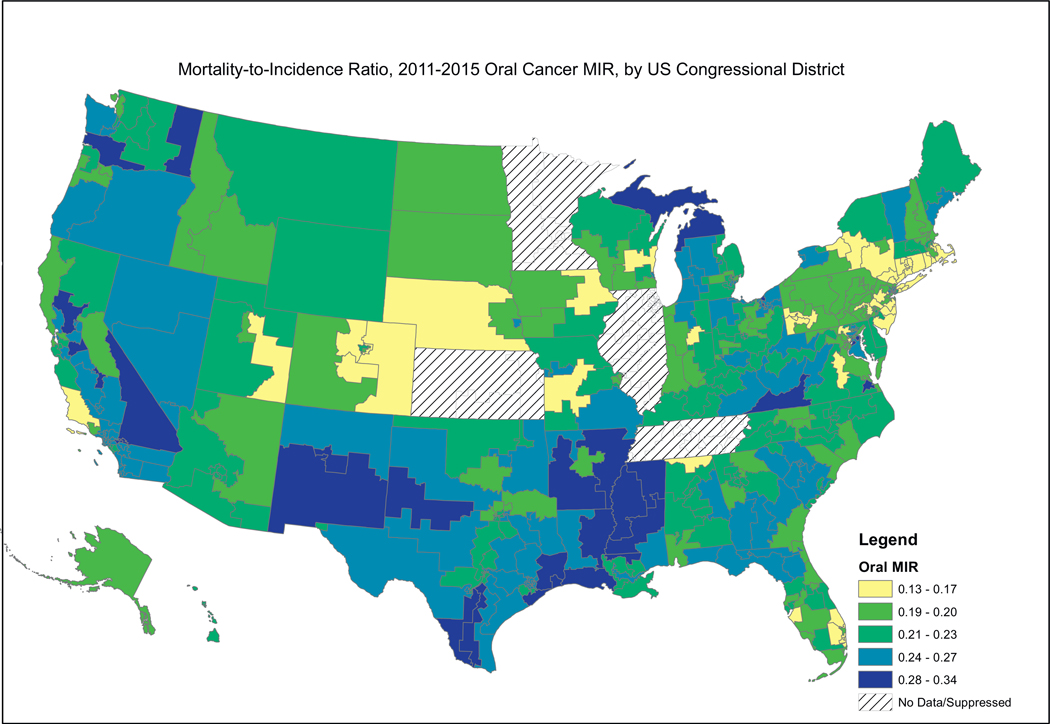
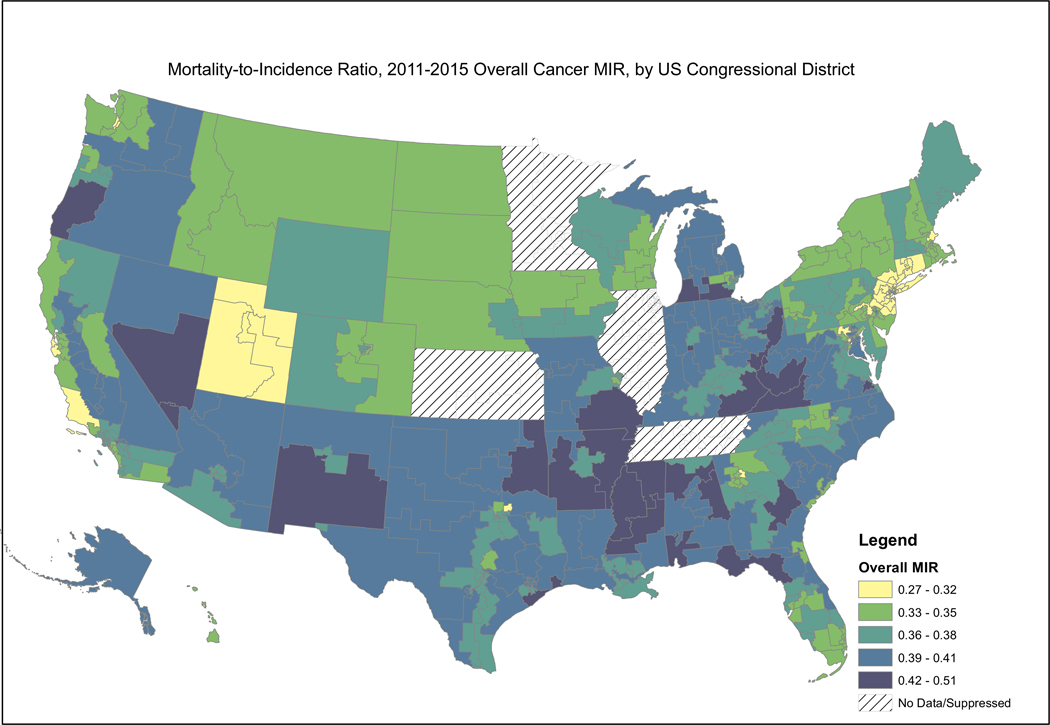
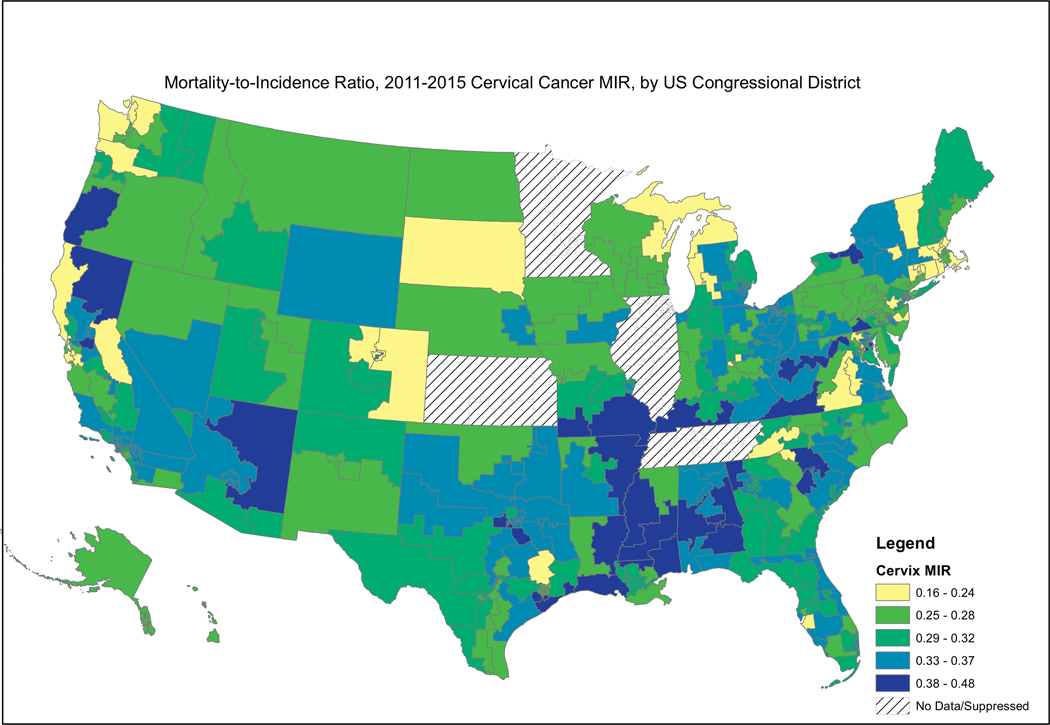
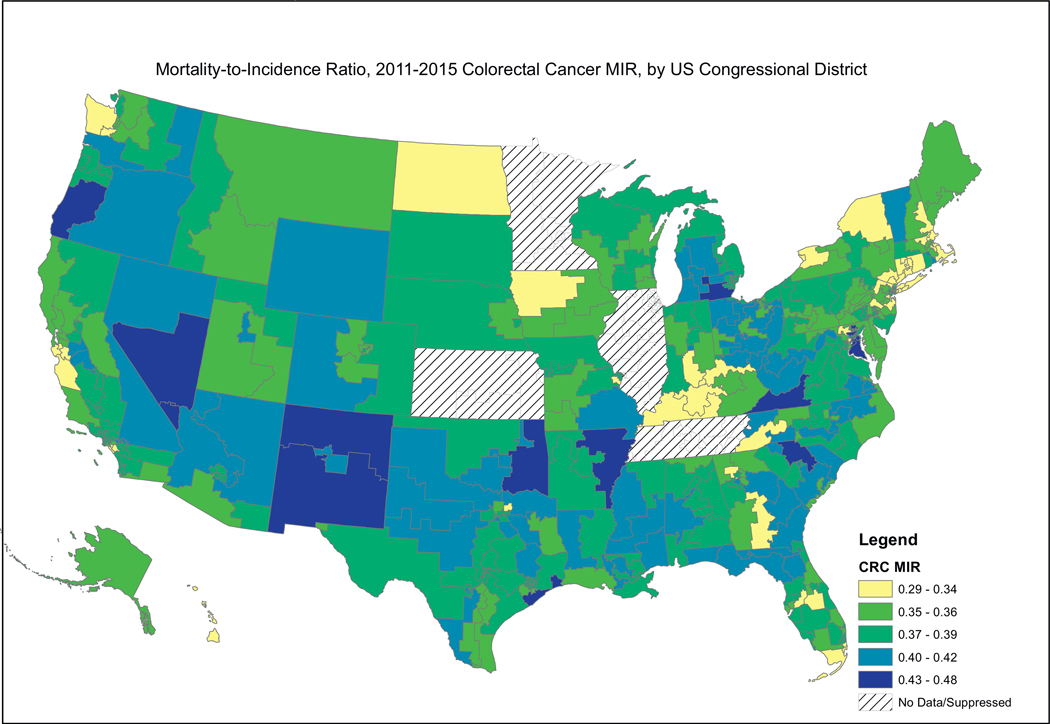
Description:The mortality-to-incidence ratio (MIR) can be computed from readily accessible, public-use data on cancer incidence and mortality, and a high MIR value is an indicator of poor survival relative to incidence. Newly available data on congressional district-specific cancer incidence and mortality from the U.S. Cancer Statistics (USCS) database from 2011 to 2015 were used to compute MIR values for overall (all types combined), breast, cervix, colorectal, esophagus, lung, oral, pancreas, and prostate cancer. Congressional districts in the South and Midwest, including MS, AL, and KY, had higher (worse) MIR values for all cancer types combined than for the U.S. as a whole. For all cancers combined, there was a positive correlation between each district's percent of rural residents and the MIR (r = 0.47; p < .001). The MIR for all cancer types combined was lower in districts within states that expanded Medicaid vs. those states that did not expand Medicaid (0.36 vs. 0.38; p < .001). A positive correlation was seen between the proportion of non-Hispanic Black residents and MIR (r = 0.15; p < .01 for all cancers). Lower MIRs were observed in districts in New England and in states that expanded Medicaid. However, there also were some interesting departures from this rule (e.g., Wyoming, South Dakota, parts of Wisconsin and Florida). Rural congressional districts have generally higher MIRs than more urban districts. There is some concern that poorer, more rural states that did not expand Medicaid may experience greater disparities in MIRs relative to Medicaid expansion states in the future.
-
Subjects:
-
Source:Prev Med. 129 Suppl:105849
-
Pubmed ID:31679842
-
Pubmed Central ID:PMC7393609
-
Document Type:
-
Funding:
-
Collection(s):
-
Main Document Checksum:urn:sha256:1949bf7fd5925c65f9000487abb1a1f5c695a7391857c4ead5e9952cacff60ec
-
Download URL:
-
File Type:
 [PDF
- 3.28 MB
]
[PDF
- 3.28 MB
]
Supporting Files


File Language:
English
ON THIS PAGE









CDC STACKS serves as an archival repository of CDC-published products including
scientific findings,
journal articles, guidelines, recommendations, or other public health information authored or
co-authored by CDC or funded partners.
As a repository, CDC STACKS retains documents in their original published format to ensure public access to scientific information.
As a repository, CDC STACKS retains documents in their original published format to ensure public access to scientific information.
You May Also Like
COLLECTION
CDC Public Access