


Vinyl Composite Tile Surrogate for Mechanical Slip Testing
Supporting Files

-
2019
File Language:
English
Details
-
Journal Article:IISE Trans Occup Ergon Hum Factors
-
Personal Author:
-
Description:Background:
Vinyl composite tile (VCT), which is a common flooring in workplaces, is sometimes utilized as the standard floor material for mechanical slip testing experiments. Unfortunately, VCT is a sub-optimal standard test material, since it changes over time and is difficult to manufacture consistently.
Purpose:
This study aimed to identify a durable laboratory-grade substitute flooring that could provide traction results that are representative of footwear performance on VCT.
Methods:
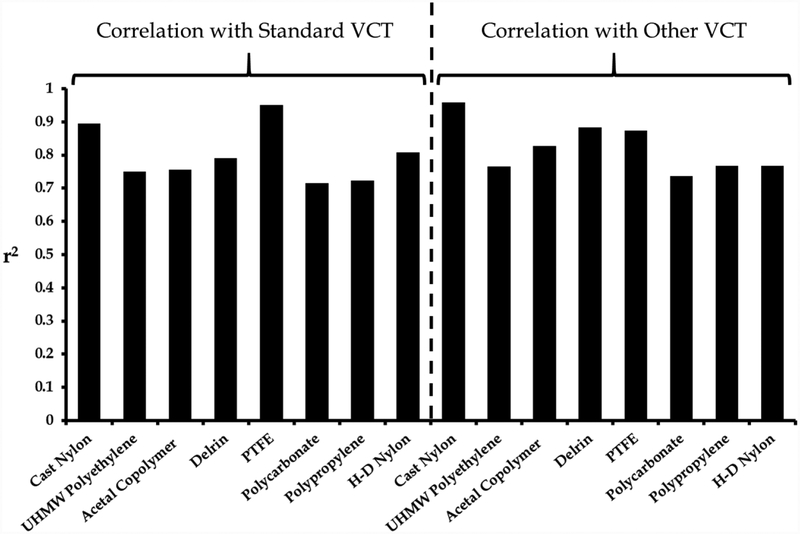
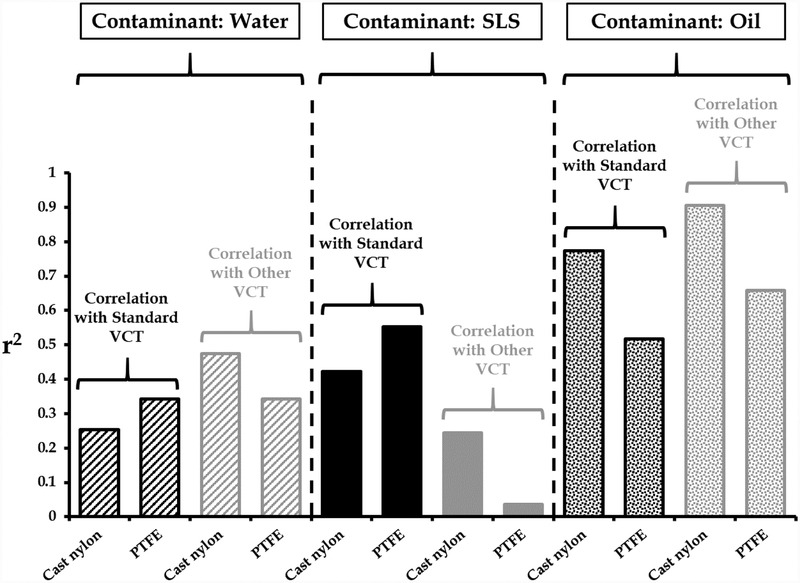
Eight polymer tiles (cast nylon, polyethylene, polycarbonate, acetal, Delrin, PTFE, polypropylene, and nylon) were tested and the available coefficient of friction (ACOF) was measured and compared with that of two VCT designs. First, a screening test was performed to identify good material candidates based on six shoes and two contaminants (water and oil). Two surrogate candidate tiles were then tested across 17 shoes and three contaminant conditions (water, sodium laurel sulfate, and oil).
Results:
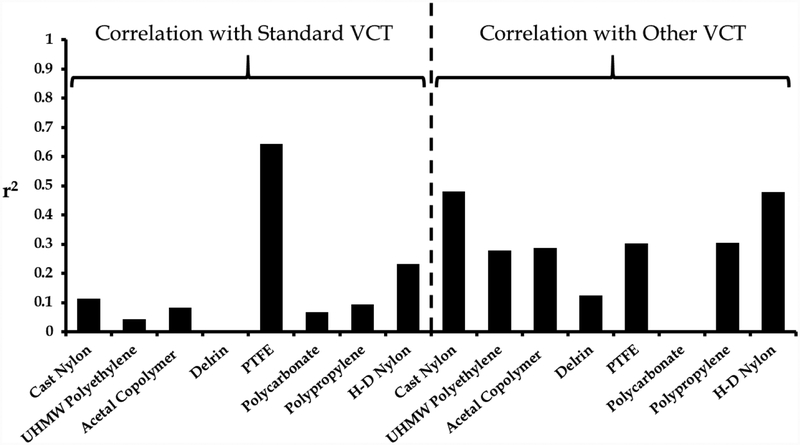
Cast nylon tile was found to be the most generalizable VCT surrogate, exhibiting strong correlations with both VCTs for oil contamination. None of candidates were representative of the VCTs for other contaminants.
Conclusions:
Cast nylon may be a useful alternative for VCT for standard slip testing of footwear in oily conditions.
-
Keywords:
-
Source:IISE Trans Occup Ergon Hum Factors. 7(2):132-141
-
DOI:
-
Pubmed ID:32724872
-
Pubmed Central ID:PMC7386451
-
Document Type:
-
Funding:
-
Genre:
-
Volume:7
-
Issue:2
-
Collection(s):
-
Main Document Checksum:urn:sha-512:bab6f9c35e5bc096343b61d37bb9105a2cacba0bcce949af3c25e25bb569bf48b012bbb4117aa9a6cc9e8e90bb2a8f7f749e2618393dac14292c5033fb0214bf
-
Download URL:
-
File Type:
 [PDF
- 1.24 MB
]
[PDF
- 1.24 MB
]
Supporting Files


File Language:
English
ON THIS PAGE






CDC STACKS serves as an archival repository of CDC-published products including
scientific findings,
journal articles, guidelines, recommendations, or other public health information authored or
co-authored by CDC or funded partners.
As a repository, CDC STACKS retains documents in their original published format to ensure public access to scientific information.
As a repository, CDC STACKS retains documents in their original published format to ensure public access to scientific information.
You May Also Like
COLLECTION
CDC Public Access