



Vital Signs: Prescription Opioid Pain Reliever Use During Pregnancy — 34 U.S. Jurisdictions, 2019
Supporting Files
Public Domain

-
July 17 2020
File Language:
English
Details
-
Alternative Title:Prescription Opioid Pain Reliever Use During Pregnancy — 34 U.S. Jurisdictions, 2019
-
Journal Article:Morbidity and Mortality Weekly Report (MMWR)
-
Personal Author:
-
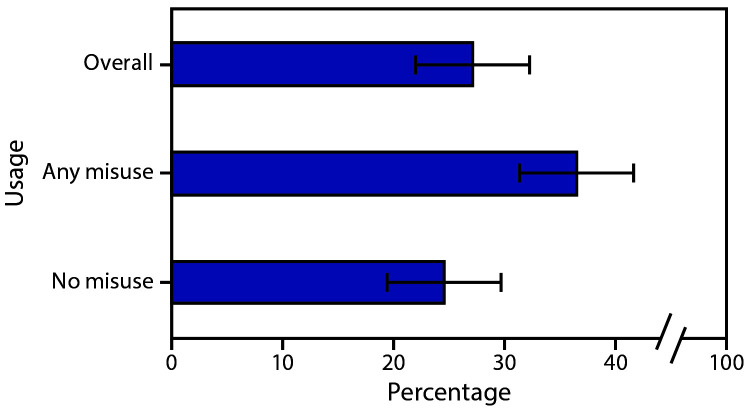
Description:Prescription opioid use during pregnancy has been associated with poor outcomes for mothers and infants. Studies using administrative data have estimated that 14%-22% of women filled a prescription for opioids during pregnancy; however, data on self-reported prescription opioid use during pregnancy are limited.|CDC analyzed 2019 data from the Pregnancy Risk Assessment Monitoring System (PRAMS) survey in 32 jurisdictions and maternal and infant health surveys in two additional jurisdictions not participating in PRAMS to estimate self-reported prescription opioid pain reliever (prescription opioid) use during pregnancy overall and by maternal characteristics among women with a recent live birth. This study describes source of prescription opioids, reasons for use, want or need to cut down or stop use, and receipt of health care provider counseling on how use during pregnancy can affect an infant.|An estimated 6.6% of respondents reported prescription opioid use during pregnancy. Among these women, 21.2% reported misuse (a source other than a health care provider or a reason for use other than pain), 27.1% indicated wanting or needing to cut down or stop using, and 68.1% received counseling from a provider on how prescription opioid use during pregnancy could affect an infant.|Among respondents reporting opioid use during pregnancy, most indicated receiving prescription opioids from a health care provider and using for pain reasons; however, answers from one in five women indicated misuse. Improved screening for opioid misuse and treatment of opioid use disorder in pregnant patients might prevent adverse outcomes. Implementation of public health strategies (e.g., improving state prescription drug monitoring program use and enhancing provider training) can support delivery of evidence-based care for pregnant women.
-
Subjects:
-
Source:MMWR Morbidity Mortal Weekly Rep. 69(28):897-903
-
Series:
-
ISSN:0149-2195 (print) ; 1545-861X (digital)
-
Pubmed ID:32673301
-
Pubmed Central ID:PMC7366850
-
Document Type:
-
Place as Subject:
-
Pages in Document:7 pdf pages
-
Volume:69
-
Issue:28
-
Download URL:
-
File Type:
 [PDF - 335.25 KB]
 -
Collection(s):
-
Main Document Checksum:urn:sha-512:430a6a5746b9d34ab1904bf5bdd8f864853d38feb03532f8378b0566c8be86b9406bbaa77fa5cffa06fb41d091e23fb986f8a388865da52bf120cb55d929b249
Supporting Files


File Language:
English
 Was this page helpful?
 Found an issue?

CDC STACKS serves as an archival repository of CDC-published products including
scientific findings, journal articles, guidelines, recommendations, or other public health information authored or
co-authored by CDC or funded partners.
As a repository, CDC STACKS retains documents in their original published format to ensure public access to scientific information.
As a repository, CDC STACKS retains documents in their original published format to ensure public access to scientific information.
You May Also Like
COLLECTION
Morbidity and Mortality Weekly Report (MMWR)