



Intervention To Stop Transmission of Imported Pneumonic Plague — Uganda, 2019
Supporting Files
Public Domain

-
March 06 2020
File Language:
English
Details
-
Journal Article:Morbidity and Mortality Weekly Report (MMWR)
-
Personal Author:Apangu, Titus ; Acayo, Sarah ; Atiku, Linda A. ; Apio, Harriet ; Candini, Gordian ; Okoth, Felix ; Basabose, John Kaggwa ; Ojosia, Lawrence ; Ajoga, Sam ; Mongiba, Grace ; Wetaka, Milton Makoba ; Kayiwa, Joshua ; Balinandi, Stephen ; Schwartz, Amy ; Yockey, Brook ; Sexton, Christopher ; Dietrich, Elizabeth A. ; Pappert, Ryan ; Petersen, Jeannine M. ; Mead, Paul S. ; Lutwama, Julius J. ; Kugeler, Kiersten J.
-
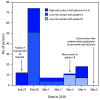
Description:Plague, an acute zoonosis caused by Yersinia pestis, is endemic in the West Nile region of northwestern Uganda and neighboring northeastern Democratic Republic of the Congo (DRC) (1-4). The illness manifests in multiple clinical forms, including bubonic and pneumonic plague. Pneumonic plague is rare, rapidly fatal, and transmissible from person to person via respiratory droplets. On March 4, 2019, a patient with suspected pneumonic plague was hospitalized in West Nile, Uganda, 4 days after caring for her sister, who had come to Uganda from DRC and died shortly thereafter, and 2 days after area officials received a message from a clinic in DRC warning of possible plague. The West Nile-based Uganda Virus Research Institute (UVRI) plague program, together with local health officials, commenced a multipronged response to suspected person-to-person Transmission of pneumonic plague, including contact tracing, prophylaxis, and education. Plague was laboratory-confirmed, and no additional Transmission occurred in Uganda. This event transpired in the context of heightened awareness of cross-border disease spread caused by ongoing Ebola Virus disease Transmission in DRC, approximately 400 km to the south. Building expertise in areas of plague endemicity can provide the rapid detection and effective response needed to mitigate epidemic spread and minimize Mortality. Cross-border agreements can improve ability to respond effectively.
-
Subjects:
-
Source:MMWR Morbidity Mortal Weekly Rep. 69(9):241-244
-
Series:
-
ISSN:0149-2195 (print) ; 1545-861X (digital)
-
Pubmed ID:32134908
-
Pubmed Central ID:PMC7367092
-
Document Type:
-
Place as Subject:
-
Pages in Document:4 pdf pages
-
Volume:69
-
Issue:9
-
Download URL:
-
File Type:
 [PDF - 102.75 KB]
 -
Collection(s):
-
Main Document Checksum:urn:sha-512:32af5da03fc7d9572a1135c9e1a074d136eb4d2a3c9f5da1548b6d6431db577ff039be320ee56f6dc50ad28c84bbfbea2ffa4796d46ae1eaa0ee97ee2936f5f3
Supporting Files


File Language:
English
 Was this page helpful?
 Found an issue?


CDC STACKS serves as an archival repository of CDC-published products including
scientific findings, journal articles, guidelines, recommendations, or other public health information authored or
co-authored by CDC or funded partners.
As a repository, CDC STACKS retains documents in their original published format to ensure public access to scientific information.
As a repository, CDC STACKS retains documents in their original published format to ensure public access to scientific information.
You May Also Like
COLLECTION
Morbidity and Mortality Weekly Report (MMWR)