



Prediction of survival of HPV16-negative, p16-negative oral cavity cancer patients using a 13-gene signature: A multicenter study using FFPE samples
Supporting Files

-
December 10 2019
-
Available in CDC Stacks on 2020-07-28T00:00:00Z
File Language:
English
Details
-
Alternative Title:Oral Oncol
-
Personal Author:Chen, Chu ; Lohavanichbutr, Pawadee ; Zhang, Yuzheng ; Houck, John R. ; Upton, Melissa P. ; Abedi-Ardekani, Behnoush ; Agudo, Antonio ; Ahrens, Wolfgang ; Alemany, Laia ; Anantharaman, Devasena ; Conway, David I. ; Futran, Neal D. ; Holcatova, Ivana ; Günther, Kathrin ; Hansen, Bo T. ; Healy, Claire M. ; Itani, Doha ; Kjaerheim, Kristina ; Monroe, Marcus M. ; Thomson, Peter J. ; Witt, Benjamin L. ; Nakoneshny, Steven ; Peterson, Lisa A. ; Schwartz, Stephen M. ; Zarins, Katie R. ; Hashibe, Mia ; Brennan, Paul ; Rozek, Laura S. ; Wolf, Gregory ; Dort, Joseph C. ; Wang, Pei
-
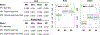
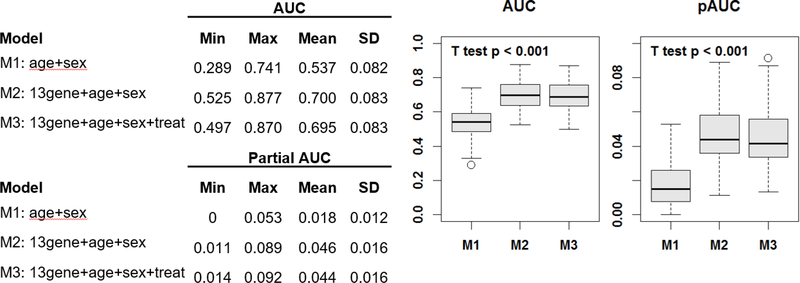
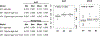
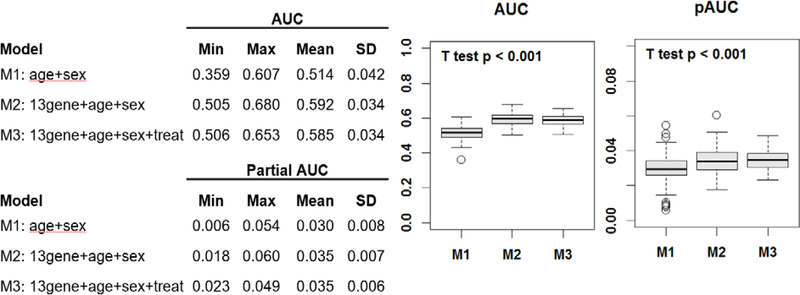
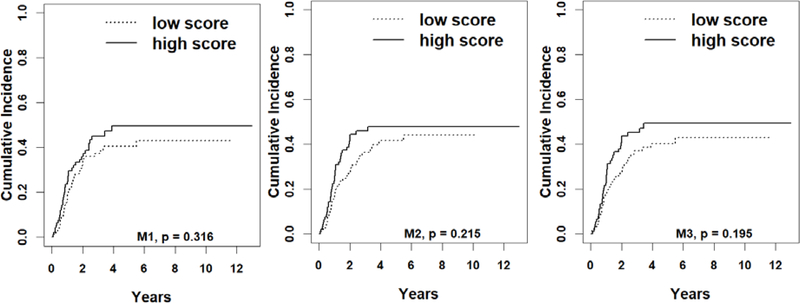
Description:Objectives ; To test the performance of an oral cancer prognostic 13-gene signature for the prediction of survival of patients diagnosed with HPV-negative and p16-negative oral cavity cancer. ; Materials and Methods ; Diagnostic formalin-fixed paraffin-embedded oral cavity cancer tumor samples were obtained from the Fred Hutchinson Cancer Research Center/University of Washington, University of Calgary, University of Michigan, University of Utah, and seven ARCAGE study centers coordinated by the International Agency of Research on Cancer. RNA from 638 Human Papillomavirus (HPV)-negative and p16-negative samples was analyzed for the 13 genes using a NanoString assay. Ridge-penalized Cox regressions were applied to samples randomly split into discovery and validation sets to build models and evaluate the performance of the 13-gene signature in predicting 2-year oral cavity cancer-specific survival overall and separately for patients with early and late stage disease. ; Results ; Among AJCC stage I/II patients, including the 13-gene signature in the model resulted in substantial improvement in the prediction of 2-year oral cavity cancer-specific survival. For models containing age and sex with and without the 13-gene signature score, the areas under the Receiver Operating Characteristic Curve (AUC) and partial AUC were 0.700 vs. 0.537 (p<0.001), and 0.046 vs. 0.018 (p<0.001), respectively. Improvement in predicting prognosis for AJCC stage III/IV disease also was observed, but to a lesser extent. ; Conclusions ; If confirmed using tumor samples from a larger number of early stage oral cavity cancer patients, the 13-gene signature may inform personalized treatment of early stage HPV-negative and p16-negative oral cavity cancer patients.
-
Subjects:
-
Source:Oral Oncol. 100:104487
-
Pubmed ID:31835136
-
Pubmed Central ID:PMC7386199
-
Document Type:
-
Funding:T42 OH008455/OH/NIOSH CDC HHS/United States ; T32 DC000018/DC/NIDCD NIH HHS/United States ; R01 CA177736/CA/NCI NIH HHS/United States ; P30 CA042014/CA/NCI NIH HHS/United States ; U24 CA210993/CA/NCI NIH HHS/United States ; P30 CA046592/CA/NCI NIH HHS/United States ; K12 RR023265/RR/NCRR NIH HHS/United States ; R01 CA095419/CA/NCI NIH HHS/United States ; P50 CA097248/CA/NCI NIH HHS/United States ; T32 DC005356/DC/NIDCD NIH HHS/United States ; P30 CA015704/CA/NCI NIH HHS/United States
-
Volume:100
-
Download URL:
-
File Type:
 [PDF - 619.65 KB]
 -
Collection(s):
-
Main Document Checksum:urn:sha256:9a9560668069606f84daa3aa98e3f8064c6983641075ed04074a54f013b6b7b7
Supporting Files


File Language:
English
 Was this page helpful?
 Found an issue?


CDC STACKS serves as an archival repository of CDC-published products including
scientific findings, journal articles, guidelines, recommendations, or other public health information authored or
co-authored by CDC or funded partners.
As a repository, CDC STACKS retains documents in their original published format to ensure public access to scientific information.
As a repository, CDC STACKS retains documents in their original published format to ensure public access to scientific information.
You May Also Like
COLLECTION
CDC Public Access