



Update on Extensively Drug-Resistant Salmonella Serotype Typhi Infections Among Travelers to or from Pakistan and Report of Ceftriaxone-Resistant Salmonella Serotype Typhi Infections Among Travelers to Iraq — United States, 2018–2019
Supporting Files
Public Domain

-
May 22 2020
File Language:
English
Details
-
Journal Article:Morbidity and Mortality Weekly Report (MMWR)
-
Personal Author:François Watkins, Louise K. ; Winstead, Alison ; Appiah, Grace D. ; Friedman, Cindy R. ; Medalla, Felicita ; Hughes, Michael J. ; Birhane, Meseret G. ; Schneider, Zachary D. ; Marcenac, Perrine ; Hanna, Samir S. ; Godbole, Gauri ; Walblay, Kelly A . ; Wiggington, Ashley E. ; Leeper, Molly ; Meservey, Elizabeth H. ; Tagg, Kaitlin A. ; Chen, Jessica C. ; Abubakar, Abdinasir ; Lami, Faris ; Asaad, Asaad M. ; Sabaratnam, Vickneswaran ; Ikram, Aamer ; Angelo, Kristina M. ; Walker, Allison ; Mintz, Eric
-
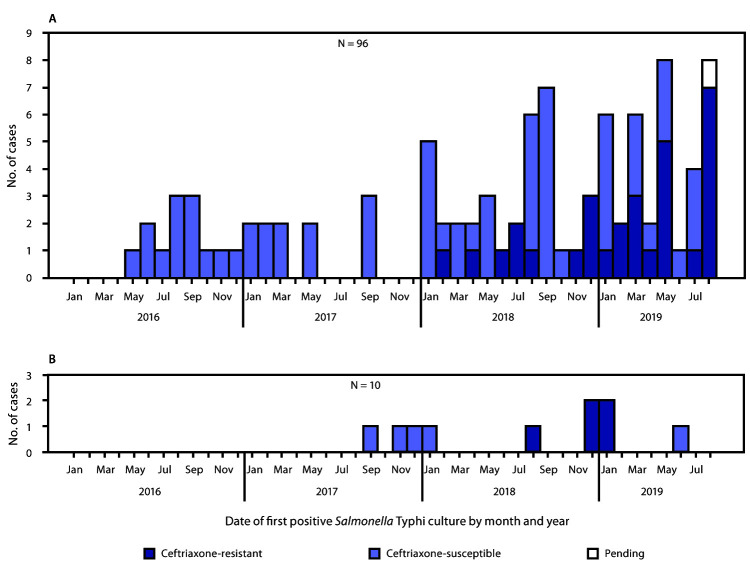
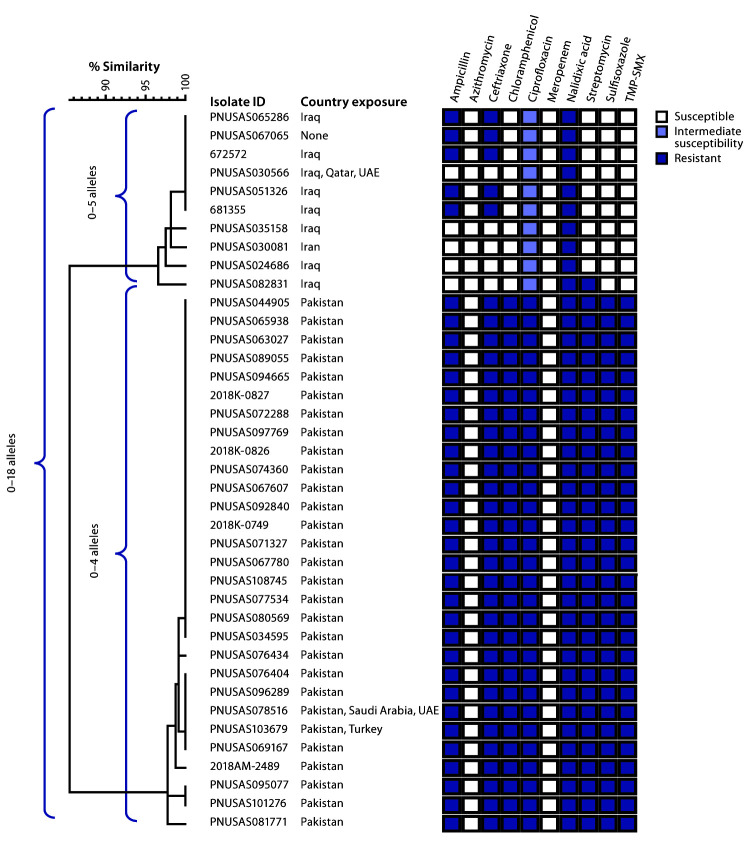
Description:Ceftriaxone-resistant Salmonella enterica serotype Typhi (Typhi), the bacterium that causes typhoid fever, is a growing public health threat. Extensively drug-resistant (XDR) Typhi is resistant to ceftriaxone and other antibiotics used for treatment, including ampicillin, chloramphenicol, ciprofloxacin, and trimethoprim-sulfamethoxazole (1). In March 2018, CDC began enhanced Surveillance for ceftriaxone-resistant Typhi in response to an ongoing outbreak of XDR typhoid fever in Pakistan. CDC had previously reported the first five cases of XDR Typhi in the United States among patients who had spent time in Pakistan (2). These illnesses represented the first cases of ceftriaxone-resistant Typhi documented in the United States (3). This report provides an update on U.S. cases of XDR typhoid fever linked to Pakistan and describes a new, unrelated cluster of ceftriaxone-resistant Typhi infections linked to Iraq. Travelers to areas with endemic Typhi should receive typhoid vaccination before traveling and adhere to safe food and water precautions (4). Treatment of patients with typhoid fever should be guided by antimicrobial susceptibility tTesting whenever possible (5), and clinicians should consider travel History when selecting empiric therapy.
-
Subjects:
-
Source:MMWR Morbidity Mortal Weekly Rep. 69(20):618-622
-
Series:
-
ISSN:0149-2195 (print) ; 1545-861X (digital)
-
Pubmed ID:32437343
-
Pubmed Central ID:PMC7357342
-
Document Type:
-
Place as Subject:
-
Pages in Document:5 pdf pages
-
Volume:69
-
Issue:20
-
Download URL:
-
File Type:
 [PDF - 160.83 KB]
 -
Collection(s):
-
Main Document Checksum:urn:sha-512:3efdc8556084c71ad3721a237df3540c119f6a86f1d8313c25496d6c06d9609db5ac92c5799fd2182511b23f75aa6354cc7c4b7b8d4262b3f5b6842c757371eb
Supporting Files


File Language:
English
 Was this page helpful?
 Found an issue?

CDC STACKS serves as an archival repository of CDC-published products including
scientific findings, journal articles, guidelines, recommendations, or other public health information authored or
co-authored by CDC or funded partners.
As a repository, CDC STACKS retains documents in their original published format to ensure public access to scientific information.
As a repository, CDC STACKS retains documents in their original published format to ensure public access to scientific information.
You May Also Like
COLLECTION
Morbidity and Mortality Weekly Report (MMWR)