



Atypical Manifestations of Cat-Scratch Disease, United States, 2005–2014
Supporting Files
Public Domain

-
2020
File Language:
English
Details
-
Alternative Title:Emerg Infect Dis
-
Personal Author:
-
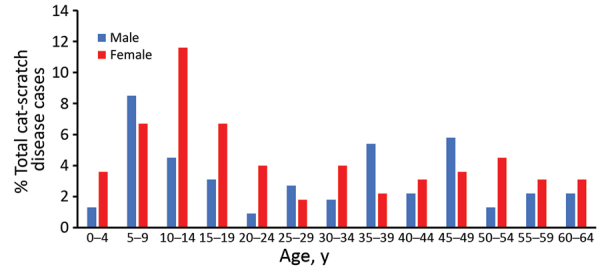
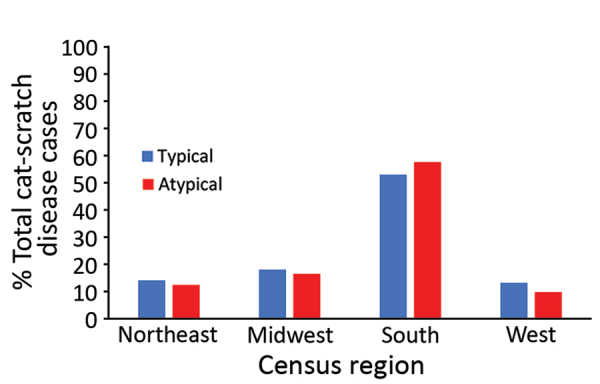
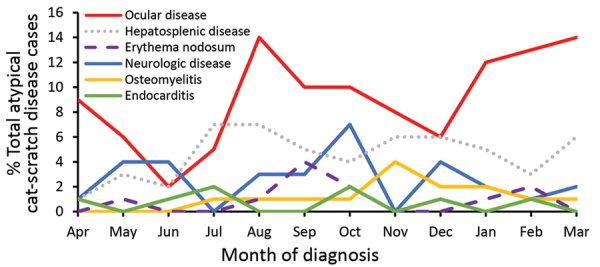
Description:Atypical manifestations that can be severe and difficult to diagnosis develop in 5%-20% of patients with cat-scratch disease. To clarify the epidemiology of atypical cat-scratch disease in the United States, we analyzed data from the 2005-2014 MarketScan national health insurance claims databases by using the International Classification of Diseases, 9th Revision, Clinical Modification, codes for cat-scratch disease and selected atypical manifestations: retinitis/neuroretinitis, conjunctivitis, neuritis, encephalitis, hepatosplenic disease, osteomyelitis, erythema nodosum, and endocarditis. Atypical cat-scratch disease accounted for 1.5% of all cases, resulting in an average annual incidence of 0.7 cases/100,000 population. Atypical cat-scratch disease was associated with increased risk for hospitalization (risk ratios 8.77, 95% CI 6.56-11.72) and occurred most often in female patients 10-14 years of age. Ocular (48.7%), hepatosplenic (24.6%), and neurologic (13.8%) manifestations were most common among patients. A more comprehensive understanding of atypical cat-scratch disease can improve patient diagnosis and potentially elucidate pathophysiology of the disease.
-
Subjects:
-
Source:Emerg Infect Dis. 26(7):1438-1446
-
Pubmed ID:32568056
-
Pubmed Central ID:PMC7323523
-
Document Type:
-
Place as Subject:
-
Location:
-
Volume:26
-
Issue:7
-
Download URL:
-
File Type:
 [PDF - 1.37 MB]
 -
Collection(s):
-
Main Document Checksum:urn:sha256:4d850f1ad3f343b50b2b7a02ba56ab0db53ce18ee55268037f0e187688155805
Supporting Files


File Language:
English
 Was this page helpful?
 Found an issue?



CDC STACKS serves as an archival repository of CDC-published products including
scientific findings, journal articles, guidelines, recommendations, or other public health information authored or
co-authored by CDC or funded partners.
As a repository, CDC STACKS retains documents in their original published format to ensure public access to scientific information.
As a repository, CDC STACKS retains documents in their original published format to ensure public access to scientific information.
You May Also Like
COLLECTION
Emerging Infectious Diseases