



Etiology of Microcephaly and Central Nervous System Defects during the Zika Epidemic in Colombia
Supporting Files

-
7 2020
-
Available in CDC Stacks on July 01, 2020, 12:00 AM
File Language:
English
Details
-
Journal Article:J Pediatr
-
Personal Author:Galang, Romeo R. ; Avila, Greace Alejandra ; Valencia, Diana ; Daza, Marcela ; Tong, Van T. ; Bermúdez, Antonio José ; Gilboa, Suzanne M. ; Rico, Angélica ; Cates, Jordan ; Pacheco, Oscar ; Winfield, Christina M. ; Prieto, Franklyn ; Honein, Margaret A. ; Cortés, Liliana J. ; Moore, Cynthia A. ; Ospina, Martha L.
-
Description:Objective
To estimate the prevalence of microcephaly and central nervous system (CNS) defects during the Zika virus (ZIKV) epidemic in Colombia and proportion attributable to congenital ZIKV infection.
Study design
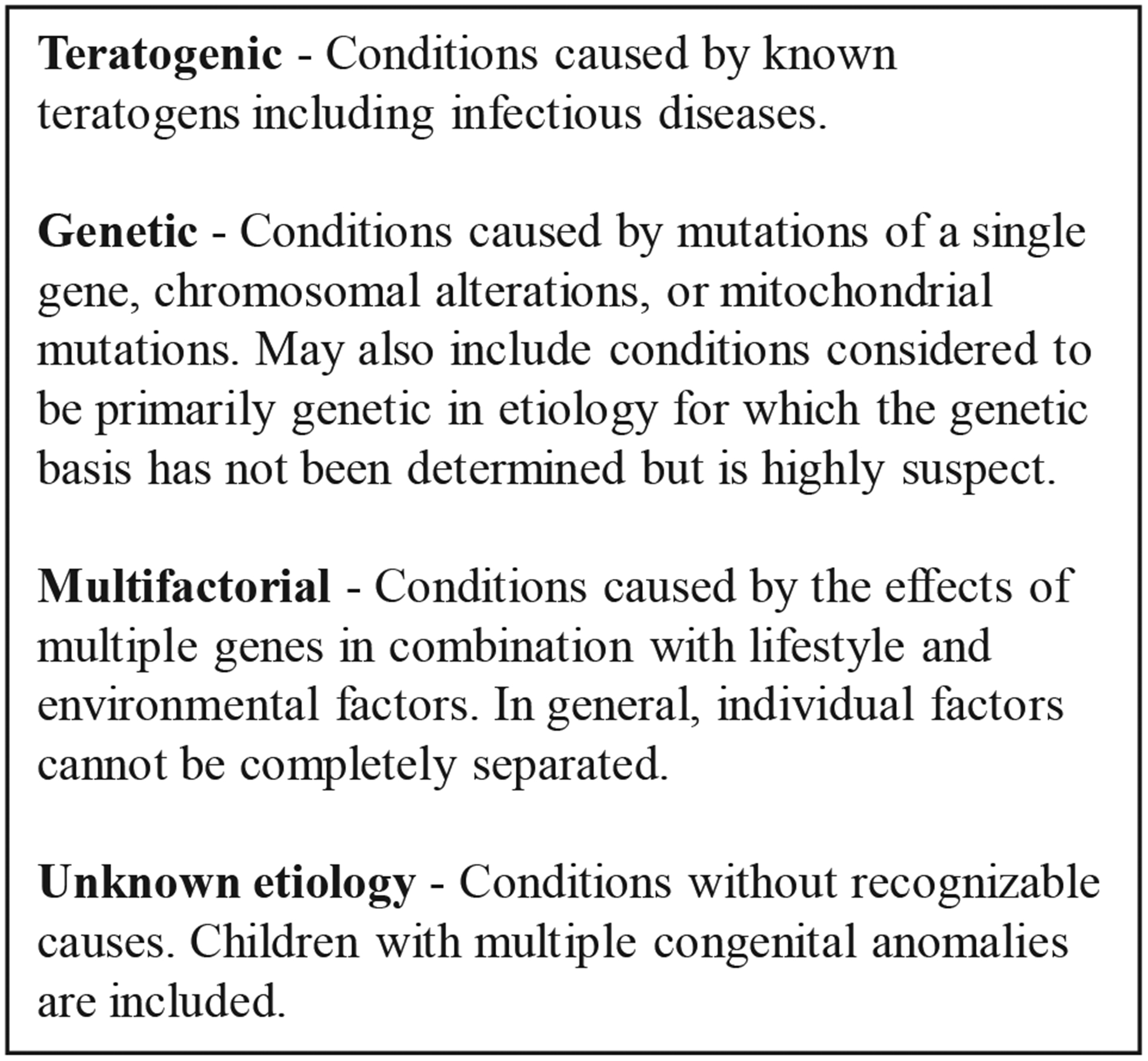
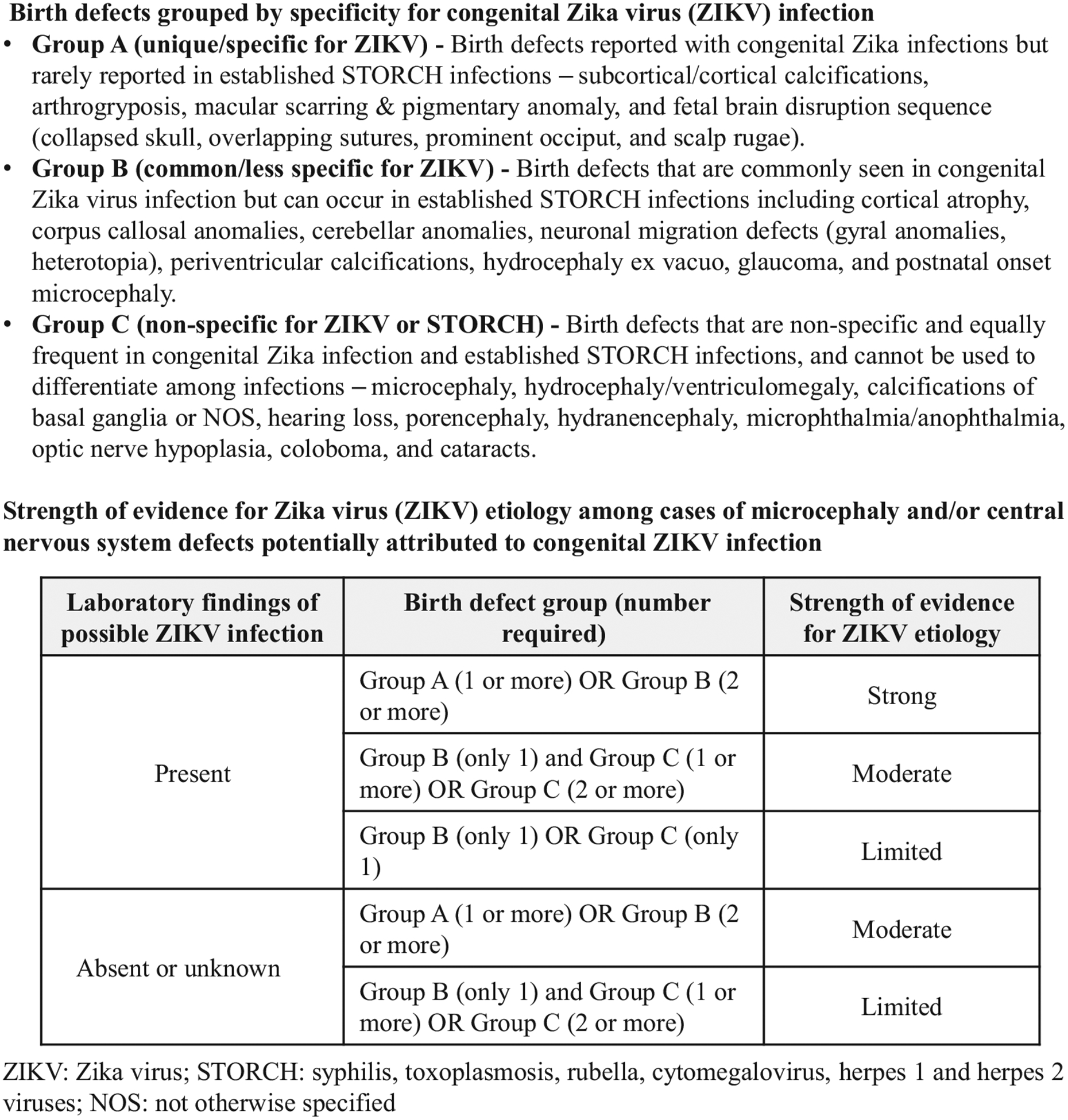
Clinical and laboratory data for cases of microcephaly and/or CNS defects reported to national surveillance between 2015 and 2017 were reviewed and classified by a panel of clinical subject matter experts. Maternal and fetal/infant biologic specimens were tested for congenital infection and chromosomal abnormalities. Infants/fetuses with microcephaly and/or CNS defects (cases) were classified into broad etiologic categories (teratogenic, genetic, multifactorial, and unknown). Cases classified as potentially attributable to congenital ZIKV infection were stratified by strength of evidence for ZIKV etiology (strong, moderate, or limited) using a novel strategy considering birth defects unique or specific to ZIKV or other infections and laboratory evidence.
Results
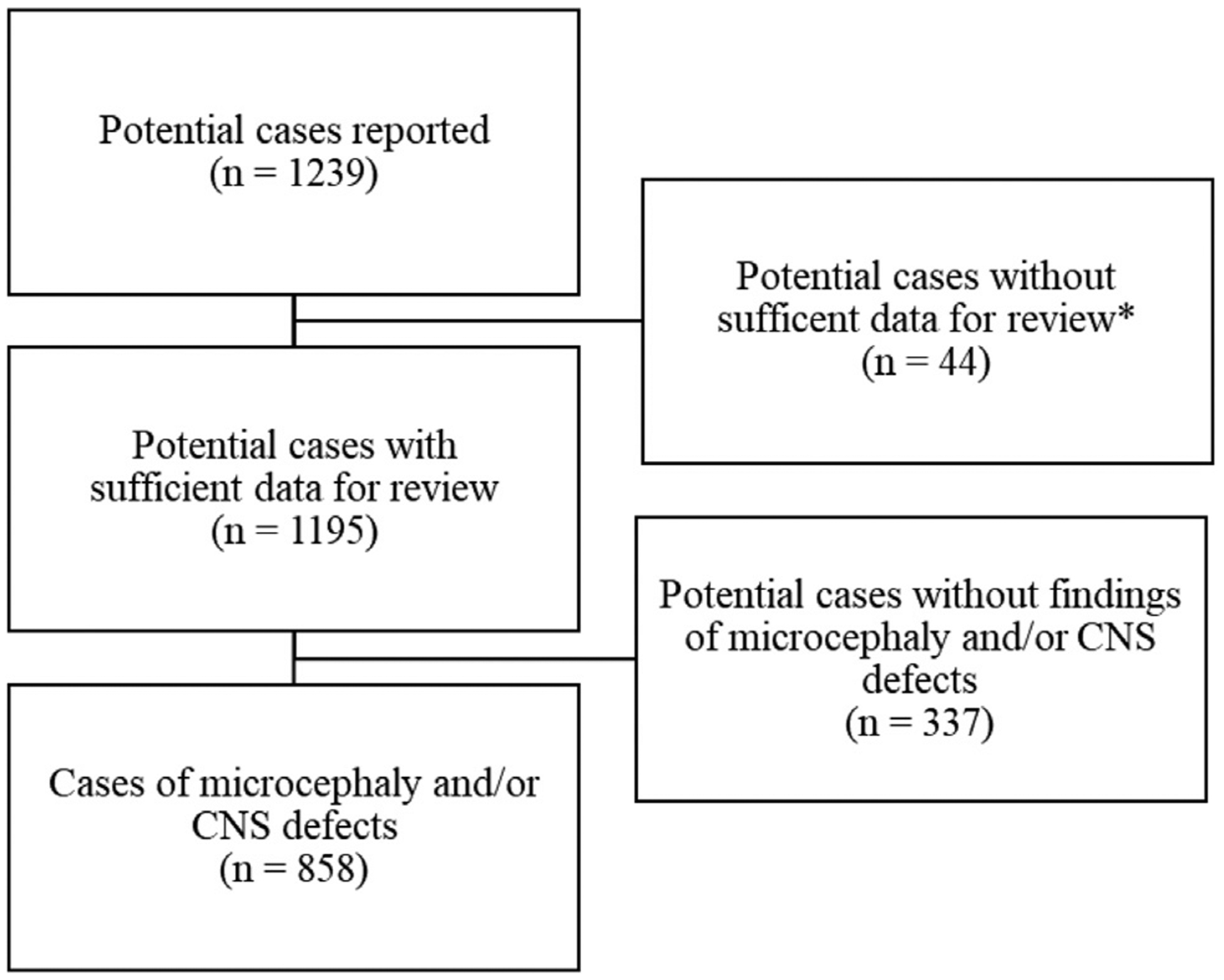
Among 858 reported cases with sufficient information supporting a diagnosis of microcephaly or CNS defects, 503 were classified as potentially attributable to congenital ZIKV infection. Of these, the strength of evidence was considered strong in 124 (24.7%) cases; moderate in 232 (46.1%) cases; and limited in 147 (29.2%). Of the remaining, 355 (41.4%) were attributed to etiologies other than ZIKV infection (syphilis, toxoplasmosis, rubella, cytomegalovirus, herpes 1 and herpes 2 viruses only, n = 32 3.7%; genetic, n = 16 1.9%; multifactorial, n = 42 4.9%; unknown, n = 265 30.9%).
Conclusions
Fifty-eight percent of cases of microcephaly and/or CNS defects were potentially attributable to congenital ZIKV infection; however, the strength of evidence varied considerably. This surveillance protocol might serve as a model approach for investigation and etiologic classification of complex congenital conditions. -
Subjects:
-
Source:J Pediatr. 222:112-119.e3
-
DOI:
-
Pubmed ID:32417080
-
Pubmed Central ID:PMC7321917
-
Document Type:
-
Funding:
-
Genre:
-
Volume:222
-
Download URL:
-
File Type:
 [PDF - 1.37 MB]
 -
Collection(s):
-
Main Document Checksum:urn:sha-512:27b9098ae5770c8bbc4d07ad201613f5a3db34376ec95b0c5ba2a8eb5c87352f8b77b1af5f05187c0b80e2231c573c753982e1859e95cc926e5ee74c434d151e
Supporting Files


File Language:
English
 Was this page helpful?
 Found an issue?


CDC STACKS serves as an archival repository of CDC-published products including
scientific findings, journal articles, guidelines, recommendations, or other public health information authored or
co-authored by CDC or funded partners.
As a repository, CDC STACKS retains documents in their original published format to ensure public access to scientific information.
As a repository, CDC STACKS retains documents in their original published format to ensure public access to scientific information.
You May Also Like
COLLECTION
CDC Public Access