


Multiple Crimean-Congo Hemorrhagic Fever Virus Strains Are Associated with Disease Outbreaks in Sudan, 2008–2009
Supporting Files
Public Domain

-
May 31 2011
-
File Language:
English
Details
-
Alternative Title:PLoS Negl Trop Dis
-
Personal Author:
-
Description:Background
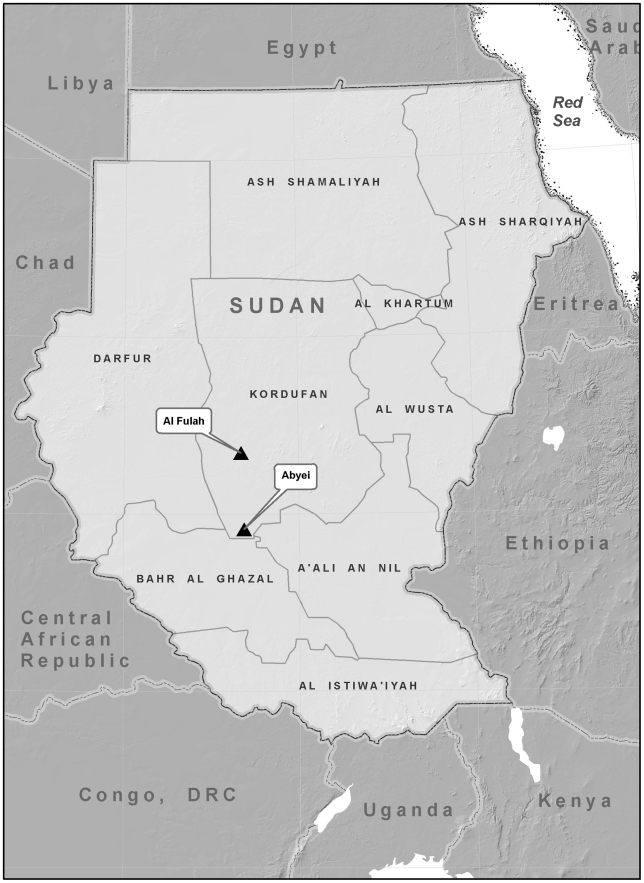
Crimean-Congo hemorrhagic fever (CCHF) activity has recently been detected in the Kordufan region of Sudan. Since 2008, several sporadic cases and nosocomial outbreaks associated with high case-fatality have been reported in villages and rural hospitals in the region.
Principal Findings
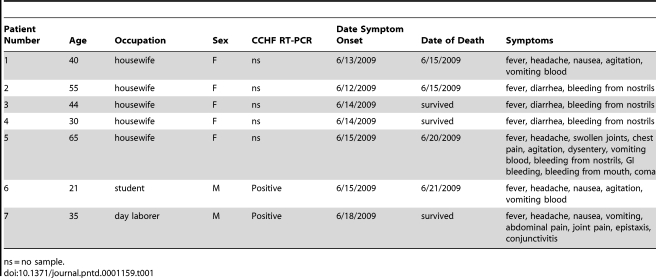
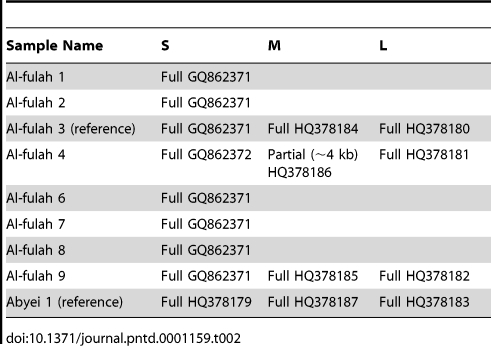
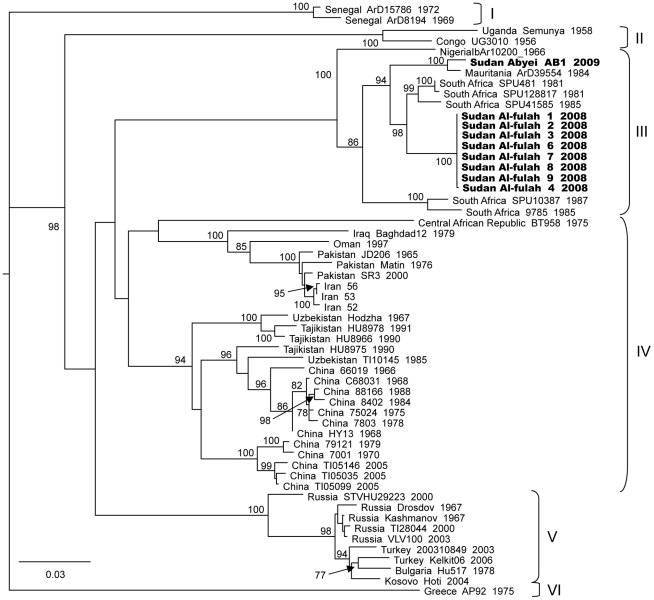
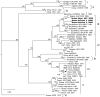
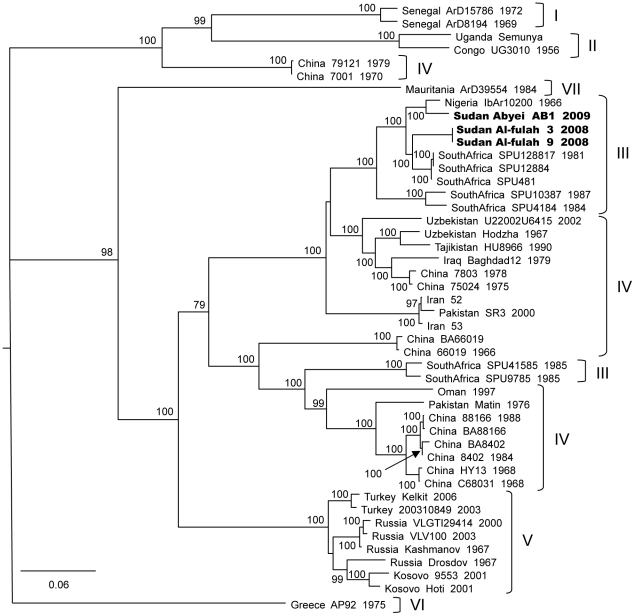
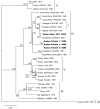
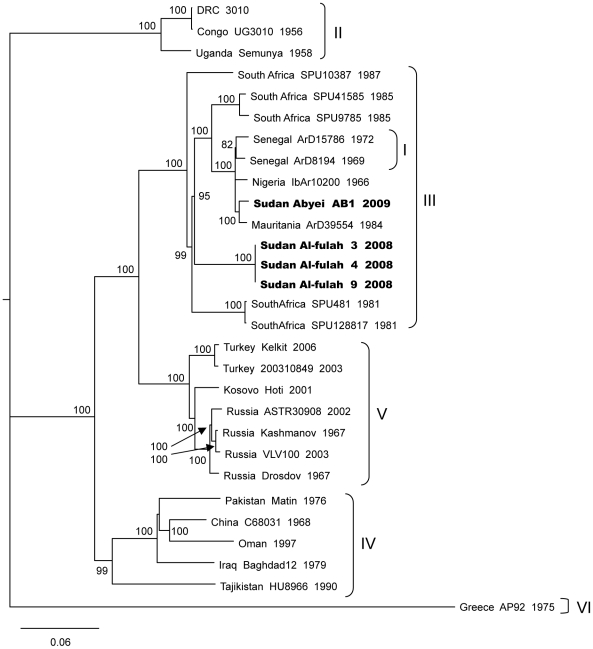
In the present study, we describe a cluster of cases occurring in June 2009 in Dunkop village, Abyei District, South Kordufan, Sudan. Seven CCHF cases were involved in the outbreak; however, clinical specimens could be collected from only two patients, both of whom were confirmed as acute CCHF cases using CCHF-specific reverse transcriptase polymerase chain reaction (RT-PCR). Phylogenetic analysis of the complete S, M, and L segment sequences places the Abyei strain of CCHF virus in Group III, a virus group containing strains from various countries across Africa, including Sudan, South Africa, Mauritania, and Nigeria. The Abyei strain detected in 2009 is genetically distinct from the recently described 2008 Sudanese CCHF virus strains (Al-fulah 3 and 4), and the Abyei strain S and L segments closely match those of CCHF virus strain ArD39554 from Mauritania.
Conclusions
The present investigation illustrates that multiple CCHF virus lineages are circulating in the Kordufan region of Sudan and are associated with recent outbreaks of the disease occurring during 2008–2009.
-
Subjects:
-
Source:PLoS Negl Trop Dis. 2011; 5(5)
-
Pubmed ID:21655310
-
Pubmed Central ID:PMC3104971
-
Document Type:
-
Place as Subject:
-
Volume:5
-
Issue:5
-
Collection(s):
-
Main Document Checksum:urn:sha256:9c72f8e4e456346c9cf34a6a0523af22d39f6a7c94f21e801da6883fcce9f1ea
-
Download URL:
-
File Type:
 [PDF
- 1.32 MB
]
[PDF
- 1.32 MB
]
Supporting Files


File Language:
English
ON THIS PAGE

CDC STACKS serves as an archival repository of CDC-published products including
scientific findings,
journal articles, guidelines, recommendations, or other public health information authored or
co-authored by CDC or funded partners.
As a repository, CDC STACKS retains documents in their original published format to ensure public access to scientific information.
As a repository, CDC STACKS retains documents in their original published format to ensure public access to scientific information.
You May Also Like
COLLECTION
CDC Public Access