


Why men with a low-risk prostate cancer select and stay on active surveillance: A qualitative study
Supporting Files

-
November 20 2019
-
File Language:
English
Details
-
Alternative Title:PLoS One
-
Personal Author:
-
Description:Objective
Active surveillance (AS) is an increasingly utilized strategy for monitoring men with low-risk prostate cancer (PCa) that allows them to defer active treatment (AT) in the absence of cancer progression. Studies have explored reasons for selecting AS and for then switching to AT, but less is known about men’s experiences being on AS. We interviewed men to determine the clinical and psychological factors associated with selecting and adhering to AS protocols.
Methods
We conducted semi-structured interviews with men with a low-risk PCa at two academic medical centers. Subjects had either been on AS for ≥ 1 year or had opted for AT after a period of AS. We used an iterative, content-driven approach to analyze the interviews and to identify themes.
Results
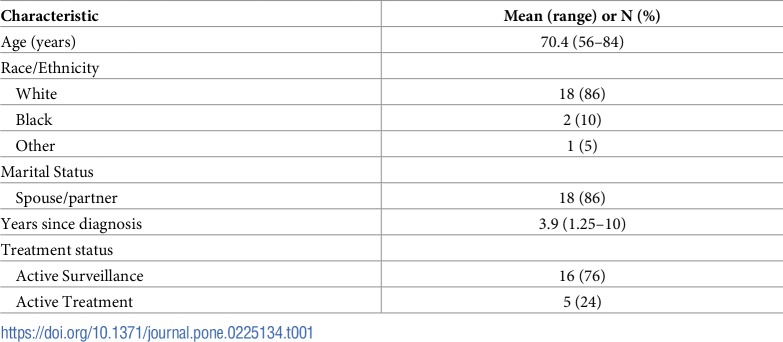
We enrolled 21 subjects, mean age 70.4 years, 3 racial/ethnic minorities, and 16 still on AS. Men recognized the favorable prognosis of their cancer (some had sought second opinions when initially offered AT), valued avoiding treatment complications, were reassured that close monitoring would identify progression early enough to be successfully treated, and trusted their urologists. Although men reported feeling anxious around the time of surveillance testing, those who switched to AT did so based only on evidence of cancer progression.
Conclusions
Our selected sample was comfortable being on AS because they understood and valued the rationale for this approach. However, this highlights the importance of ensuring that men newly diagnosed with a low-risk PCa are provided sufficient information about prognosis and treatment options to make informed decisions.
-
Subjects:
-
Source:PLoS One. 14(11)
-
Pubmed ID:31747396
-
Pubmed Central ID:PMC6867634
-
Document Type:
-
Funding:
-
Volume:14
-
Issue:11
-
Collection(s):
-
Main Document Checksum:urn:sha256:69f54ccd9c9f1a97c736c23673620a98cbfce900ded523ea0eebb7e126ae0099
-
Download URL:
-
File Type:
 [PDF
- 442.74 KB
]
[PDF
- 442.74 KB
]
Supporting Files


File Language:
English
ON THIS PAGE


CDC STACKS serves as an archival repository of CDC-published products including
scientific findings,
journal articles, guidelines, recommendations, or other public health information authored or
co-authored by CDC or funded partners.
As a repository, CDC STACKS retains documents in their original published format to ensure public access to scientific information.
As a repository, CDC STACKS retains documents in their original published format to ensure public access to scientific information.
You May Also Like
COLLECTION
CDC Public Access