


Prevalence and determinants of cigarette smoking relapse among US adult smokers: a longitudinal study
Supporting Files
Public Domain

-
November 25 2019
-
File Language:
English
Details
-
Alternative Title:BMJ Open
-
Personal Author:
-
Description:Objectives
This research project aims at estimating the prevalence of cigarette smoking relapse and determining its predictors among adult former smokers in the USA.
Setting
This research analysed secondary data retrieved from the Tobacco Use Supplement-Current Population Survey 2010–2011 cohort in the USA.
Participants
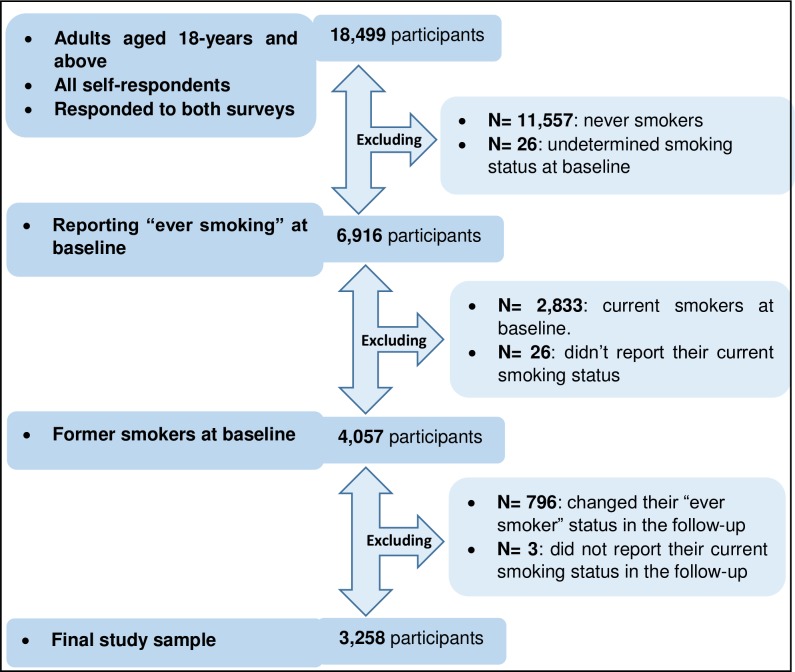
Out of 18 499 participants who responded to the survey in 2010 and 2011, the analysis included a total sample size of 3258 ever smokers, who were living in the USA and reported quitting smoking in 2010. The survey’s respondents who never smoked or reported current smoking in 2010 were excluded from the study sample.
Primary and secondary outcome measures
Smoking relapse was defined as picking up smoking in 2011 after reporting smoking abstinence in 2010. The prevalence of relapse over the 12-month follow-up period was estimated among different subgroups. Multivariable logistic regression models were applied to determine factors associated with relapse.
Results
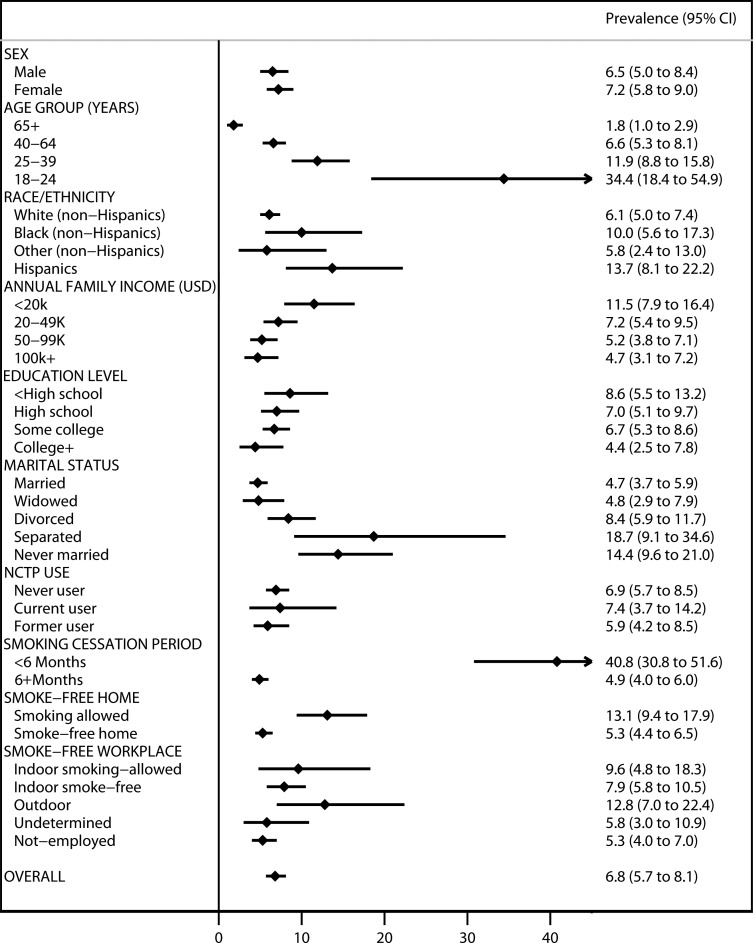
A total of 184 former smokers reported smoking relapse by 2011 (weighted prevalence 6.8%; 95% CI 5.7% to 8.1%). Prevalence and odds of relapse were higher among young people compared with elders. Former smokers living in smoke-free homes (SFHs) had 60% lower odds of relapse compared with those living in homes that allowed smoking inside (adjusted OR 0.40; 95% CI 0.25 to 0.64). Regarding race/ethnicity, only Hispanics showed significantly higher odds of relapse compared with Whites (non-Hispanics). Odds of relapse were higher among never married, widowed, divorced and separated individuals, compared with the married group. Continuous smoking cessation for 6 months or more significantly decreased odds of relapse.
Conclusions
Wider health determinants, such as race and age, but also living in SFHs showed significant associations with smoking relapse, which could inform the development of more targeted programmes to support those smokers who successfully quit, although further longitudinal studies are required to confirm our findings.
-
Subjects:
-
Source:BMJ Open. 2019; 9(11)
-
Pubmed ID:31772095
-
Pubmed Central ID:PMC6886963
-
Document Type:
-
Volume:9
-
Issue:11
-
Collection(s):
-
Main Document Checksum:urn:sha256:b0e344d7f155c3a5235e51f452c5917ba097d3eda8d2e4c4482d77b49f6ac7da
-
Download URL:
-
File Type:
 [PDF
- 1.12 MB
]
[PDF
- 1.12 MB
]
Supporting Files


File Language:
English
ON THIS PAGE

CDC STACKS serves as an archival repository of CDC-published products including
scientific findings,
journal articles, guidelines, recommendations, or other public health information authored or
co-authored by CDC or funded partners.
As a repository, CDC STACKS retains documents in their original published format to ensure public access to scientific information.
As a repository, CDC STACKS retains documents in their original published format to ensure public access to scientific information.
You May Also Like
COLLECTION
CDC Public Access