


Flying, phones and flu: Anonymized call records suggest that Keflavik International Airport introduced pandemic H1N1 into Iceland in 2009
Supporting Files
Public Domain

-
November 09 2019
-
File Language:
English
Details
-
Alternative Title:Influenza Other Respir Viruses
-
Personal Author:
-
Description:Background
Data collected by mobile devices can augment surveillance of epidemics in real time. However, methods and evidence for the integration of these data into modern surveillance systems are sparse. We linked call detail records (CDR) with an influenza‐like illness (ILI) registry and evaluated the role that Icelandic international travellers played in the introduction and propagation of influenza A/H1N1pdm09 virus in Iceland through the course of the 2009 pandemic.
Methods
This nested case‐control study compared odds of exposure to Keflavik International Airport among cases and matched controls producing longitudinal two‐week matched odds ratios (mORs) from August to December 2009. We further evaluated rates of ILI among 1st‐ and 2nd‐degree phone connections of cases compared to their matched controls.
Results
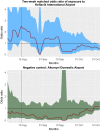
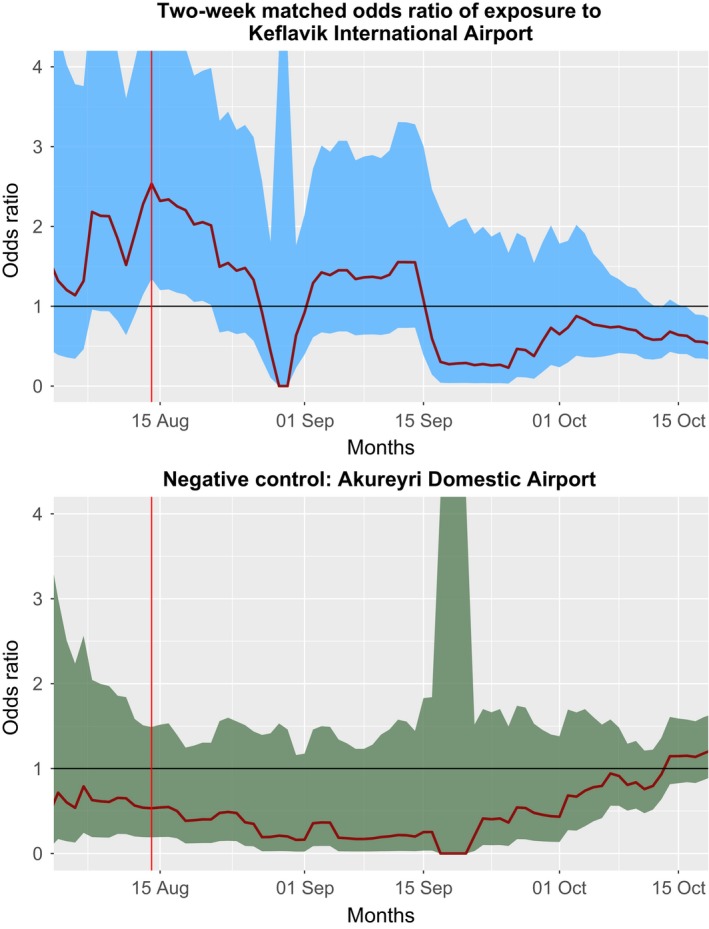
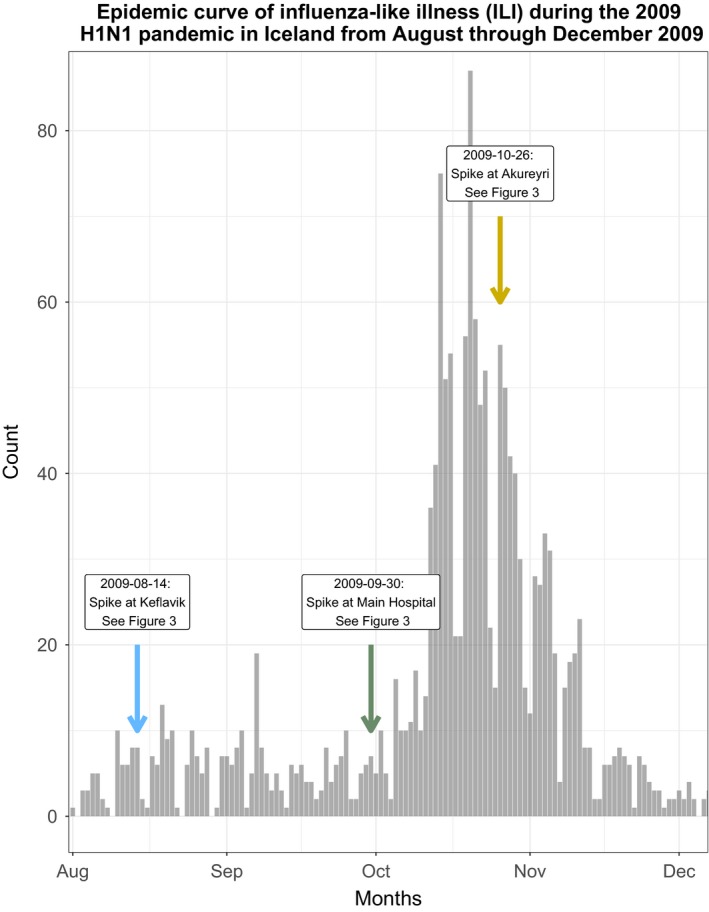
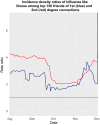
The mOR was elevated in the initial stages of the epidemic from 7 August until 21 August (mOR = 2.53; 95% confidence interval (CI) = 1.35, 4.78). During the two‐week period from 17 August through 31 August, we calculated the two‐week incidence density ratio of ILI among 1st‐degree connections to be 2.96 (95% CI: 1.43, 5.84).
Conclusions
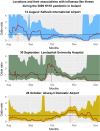
Exposure to Keflavik International Airport increased the risk of incident ILI diagnoses during the initial stages of the epidemic. Using these methods for other regions of Iceland, we evaluated the geographic spread of ILI over the course of the epidemic. Our methods were validated through similar evaluation of a domestic airport. The techniques described in this study can be used for hypothesis‐driven evaluations of locations and behaviours during an epidemic and their associations with health outcomes.
-
Subjects:
-
Source:Influenza Other Respir Viruses. 14(1):37-45
-
Pubmed ID:31705633
-
Pubmed Central ID:PMC6928030
-
Document Type:
-
Volume:14
-
Issue:1
-
Collection(s):
-
Main Document Checksum:urn:sha256:82d15bd89a6d37a005c6f58663065f264668100144bcc14c8367255023c96bc9
-
Download URL:
-
File Type:
 [PDF
- 463.26 KB
]
[PDF
- 463.26 KB
]
Supporting Files


File Language:
English
ON THIS PAGE



CDC STACKS serves as an archival repository of CDC-published products including
scientific findings,
journal articles, guidelines, recommendations, or other public health information authored or
co-authored by CDC or funded partners.
As a repository, CDC STACKS retains documents in their original published format to ensure public access to scientific information.
As a repository, CDC STACKS retains documents in their original published format to ensure public access to scientific information.
You May Also Like
COLLECTION
CDC Public Access