



Zika Virus infection and Guillain-Barré syndrome in Northeastern Mexico: A case-control study
Supporting Files
Public Domain

-
March 26 2020
File Language:
English
Details
-
Alternative Title:PLoS One
-
Personal Author:Gongora-Rivera, Fernando ; Grijalva, Israel ; Infante-Valenzuela, Adrian ; Cámara-Lemarroy, Carlos ; Garza-González, Elvira ; Paredes-Cruz, Martin ; Grajales-Muñiz, Concepción ; Guerrero-Cantera, José ; Vargas-Ramos, Ignacio ; Soares, Jesus ; Abrams, Joseph Y. ; Styczynski, Ashley R. ; Camacho-Ortiz, Adrián ; Villarino, Margarita E. ; Belay, Ermias D. ; Schonberger, Lawrence B. ; Sejvar, James J.
-
Corporate Authors:
-
Description:Background
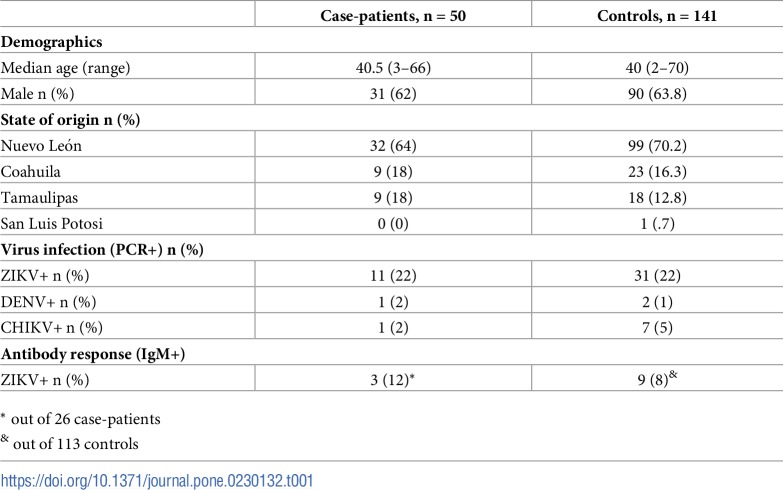
Beginning August 2017, we conducted a prospective case-control investigation in Monterrey, Mexico to assess the association between Zika virus (ZIKV) and Guillain-Barré syndrome (GBS).
Methods
For each of 50 GBS case-patients, we enrolled 2–3 afebrile controls (141 controls in total) matched by sex, age group, and presentation to same hospital within 7 days.
Results
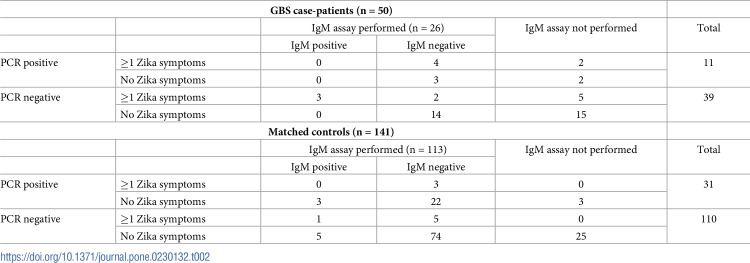
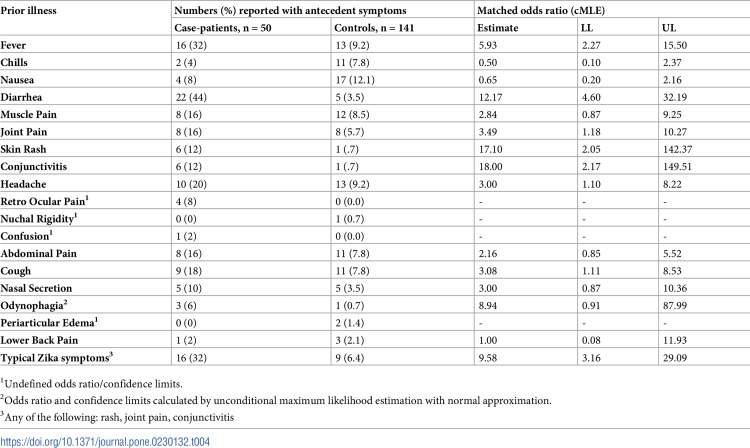
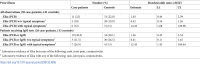
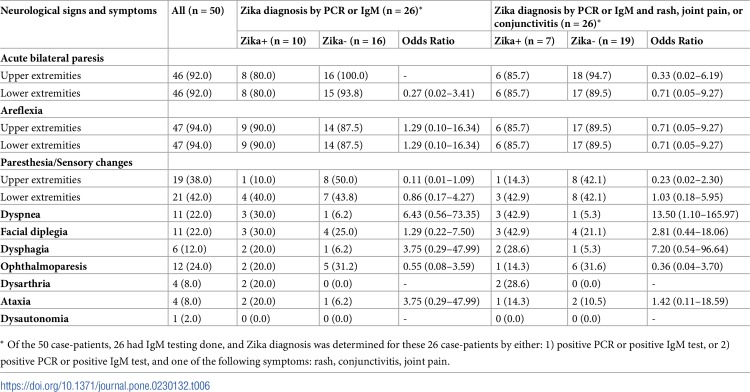
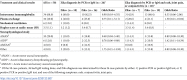
PCR results for ZIKV in blood and/or urine were available on all subjects; serum ZIKV IgM antibody for 52% of case-patients and 80% of controls. Subjects were asked about antecedent illness in the two months prior to neurological onset (for case-patients) or interview (for controls). Laboratory evidence of ZIKV infection alone (PCR+ or IgM+) was not significantly different between case-patients and controls (OR: 1.26, 95% CI: 0.45–3.54) but antecedent symptomatic ZIKV infection a typical ZIKV symptom (rash, joint pain, or conjunctivitis) plus laboratory evidence of ZIKV infection was higher among case-patients (OR: 12.45, 95% CI: 1.45–106.64). GBS case-patients with laboratory evidence of ZIKV infection were significantly more likely to have had typical ZIKV symptoms than controls with laboratory evidence of ZIKV infection (OR: 17.5, 95% CI: 3.2–96.6). This association remained significant even when only GBS case-patients who were afebrile for 5 days before onset were included in the analysis, (OR 9.57 (95% CI: 1.07 to 85.35).
Conclusions
During ZIKV epidemics, this study indicates that increases in GBS will occur primarily among those with antecedent symptomatic ZIKV. -
Subjects:
-
Source:PLoS One. 2020; 15(3)
-
Pubmed ID:32214354
-
Pubmed Central ID:PMC7098590
-
Document Type:
-
Place as Subject:
-
Volume:15
-
Issue:3
-
Download URL:
-
File Type:
 [PDF - 414.52 KB]
 -
Collection(s):
-
Main Document Checksum:urn:sha256:0d8b4a904260a703430acef925d1f7dad2541c531a2384749337546e25b52bc4
Supporting Files


File Language:
English
 Was this page helpful?
 Found an issue?






CDC STACKS serves as an archival repository of CDC-published products including
scientific findings, journal articles, guidelines, recommendations, or other public health information authored or
co-authored by CDC or funded partners.
As a repository, CDC STACKS retains documents in their original published format to ensure public access to scientific information.
As a repository, CDC STACKS retains documents in their original published format to ensure public access to scientific information.
You May Also Like
COLLECTION
CDC Public Access