



Using targeted next-generation sequencing to characterize genetic differences associated with insecticide resistance in Culex quinquefasciatus populations from the southern U.S.
Supporting Files
Public Domain

-
July 03 2019
-
File Language:
English
Details
-
Alternative Title:PLoS One
-
Personal Author:
-
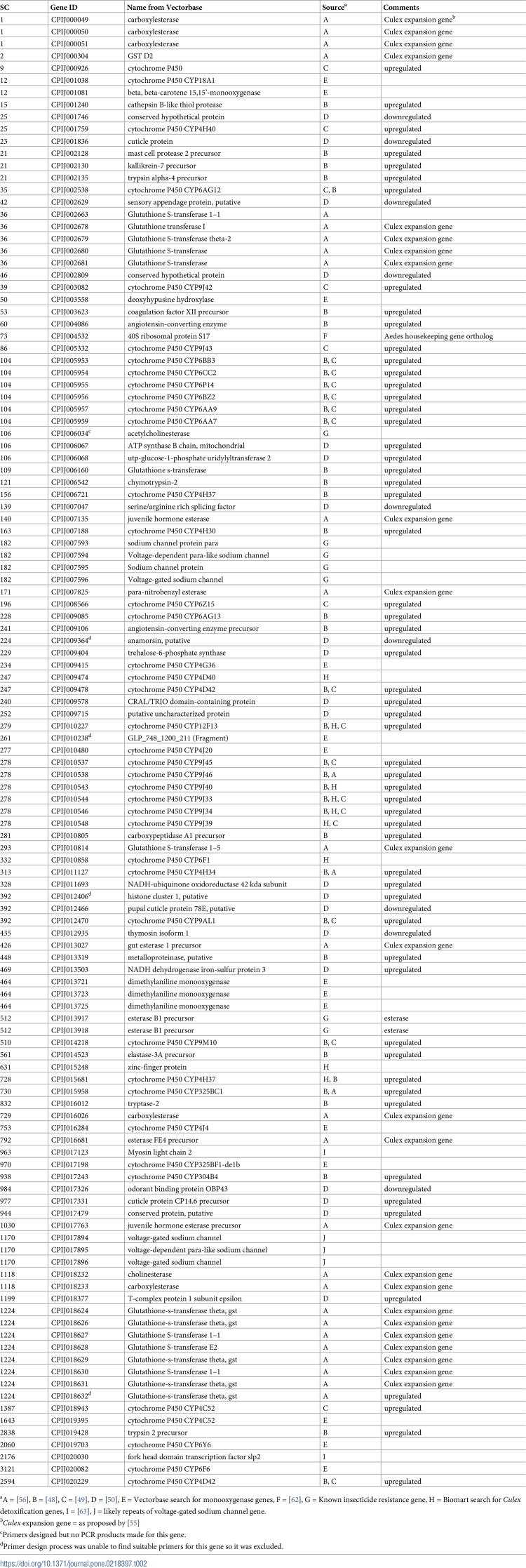
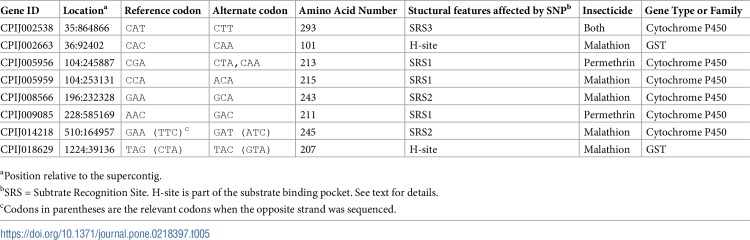
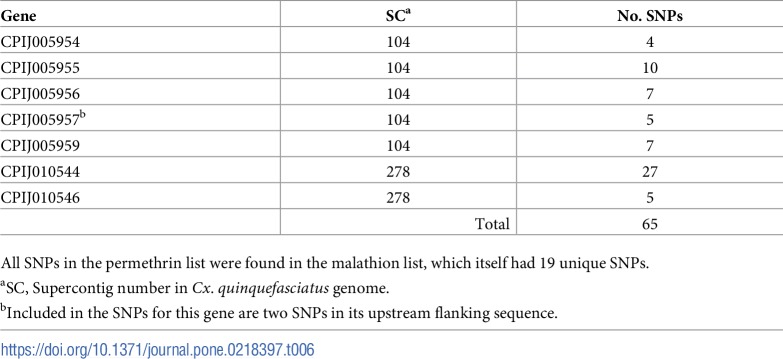
Description:Resistance to insecticides can hamper the control of mosquitoes such as Culex quinquefasciatus, known to vector arboviruses such as West Nile virus and others. The strong selective pressure exerted on a mosquito population by the use of insecticides can result in heritable genetic changes associated with resistance. We sought to characterize genetic differences between insecticide resistant and susceptible Culex quinquefasciatus mosquitoes using targeted DNA sequencing. To that end, we developed a panel of 122 genes known or hypothesized to be involved in insecticide resistance, and used an Ion Torrent PGM sequencer to sequence 125 unrelated individuals from seven populations in the southern U.S. whose resistance phenotypes to permethrin and malathion were known from previous CDC bottle bioassay testing. Data analysis consisted of discovering SNPs (Single Nucleotide Polymorphism) and genes with evidence of copy number variants (CNVs) statistically associated with resistance. Ten of the seventeen genes found to be present in higher copy numbers were experimentally validated with real-time PCR. Of those, six, including the gene with the knock-down resistance (kdr) mutation, showed evidence of a ≥ 1.5 fold increase compared to control DNA. The SNP analysis revealed 228 unique SNPs that had significant p-values for both a Fisher's Exact Test and the Cochran-Armitage Test for Trend. We calculated the population frequency for each of the 64 nonsynonymous SNPs in this group. Several genes not previously well characterized represent potential candidates for diagnostic assays when further validation is conducted.
-
Subjects:
-
Source:PLoS One. 14(7)
-
Pubmed ID:31269040
-
Pubmed Central ID:PMC6608931
-
Document Type:
-
Place as Subject:
-
Volume:14
-
Issue:7
-
Collection(s):
-
Main Document Checksum:urn:sha256:6f5b39f1c81ce12e62fbc8c6c87adc06b223875130ef05a3f0c6447d9c0ffa83
-
Download URL:
-
File Type:
 [PDF
- 2.38 MB
]
[PDF
- 2.38 MB
]
Supporting Files


File Language:
English
 Was this page helpful?
 Found an issue?











CDC STACKS serves as an archival repository of CDC-published products including
scientific findings,
journal articles, guidelines, recommendations, or other public health information authored or
co-authored by CDC or funded partners.
As a repository, CDC STACKS retains documents in their original published format to ensure public access to scientific information.
As a repository, CDC STACKS retains documents in their original published format to ensure public access to scientific information.
You May Also Like
COLLECTION
CDC Public Access