


Referral transit time between sending and first-line receiving health facilities: a geographical analysis in Tanzania
Supporting Files
Public Domain

-
August 17 2019
-
File Language:
English
Details
-
Alternative Title:BMJ Glob Health
-
Personal Author:
-
Description:Background
Timely, high-quality obstetric services are vital to reduce maternal and perinatal mortality. We spatially modelled referral pathways between sending and receiving health facilities in Kigoma Region, Tanzania, identifying communication and transportation delays to timely care and inefficient links within the referral system.
Methods
We linked sending and receiving facilities to form facility pairs, based on information from a 2016 Health Facility Assessment. We used an AccessMod cost-friction surface model, incorporating road classifications and speed limits, to estimate direct travel time between facilities in each pair. We adjusted for transportation and communications delays to create a total travel time, simulating the effects of documented barriers in this referral system.
Results
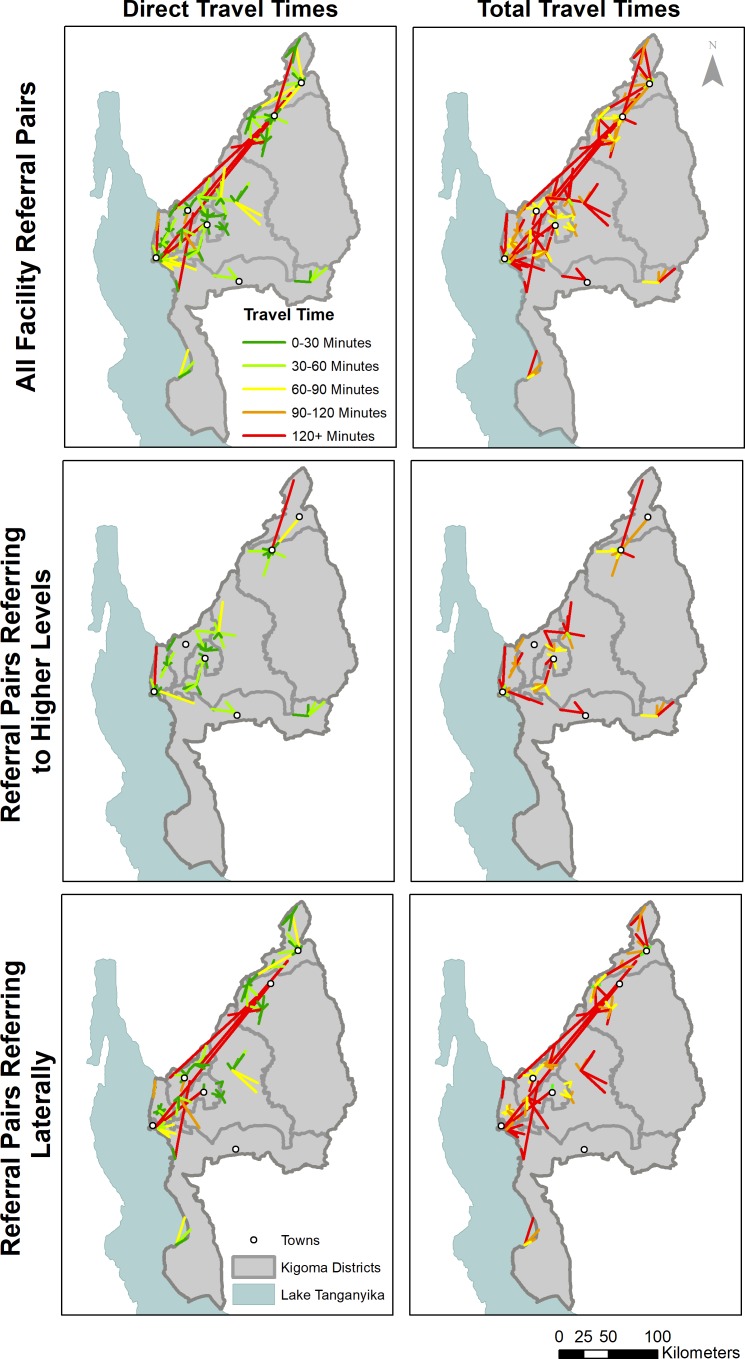
More than half of the facility pairs (57.8%) did not refer patients to facilities with higher levels of emergency obstetric care. The median direct travel time was 25.9 min (range: 4.4–356.6), while the median total time was 106.7 min (22.9–371.6) at the moderate adjustment level. Total travel times for 30.7% of facility pairs exceeded 2 hours. All facility pairs required some adjustments for transportation and communication delays, with 94.0% of facility pairs’ total times increasing.
Conclusion
Half of all referral pairs in Kigoma Region have travel time delays nearly exceeding 1 hour, and facility pairs referring to facilities providing higher levels of care also have large travel time delays. Combining cost-friction surface modelling estimates with documented transportation and communications barriers provides a more realistic assessment of the effects of inter-facility delays on referral networks, and can inform decision-making and potential solutions in referral systems within resource-constrained settings.
-
Subjects:
-
Source:BMJ Glob Health. 2019; 4(Suppl 5)
-
Pubmed ID:31478017
-
Pubmed Central ID:PMC6703299
-
Document Type:
-
Volume:4
-
Collection(s):
-
Main Document Checksum:urn:sha256:b581dd124e3e12a69597ed021fcbd5c1188552b3fe5f0c1eee52d05c52eec2d1
-
Download URL:
-
File Type:
 [PDF
- 1.20 MB
]
[PDF
- 1.20 MB
]
Supporting Files


File Language:
English
ON THIS PAGE

CDC STACKS serves as an archival repository of CDC-published products including
scientific findings,
journal articles, guidelines, recommendations, or other public health information authored or
co-authored by CDC or funded partners.
As a repository, CDC STACKS retains documents in their original published format to ensure public access to scientific information.
As a repository, CDC STACKS retains documents in their original published format to ensure public access to scientific information.
You May Also Like
COLLECTION
CDC Public Access