


Behavioral Flexibility in alcohol drinking monkeys: the morning after
Supporting Files

-
February 18 2020
-
File Language:
English
Details
-
Alternative Title:Alcohol Clin Exp Res
-
Personal Author:
-
Description:Background.
Heavy alcohol drinking has aspects of inflexible behavior. This study addressed the consequences of chronic alcohol drinking on cognitive and sensory-motor domains of behavioral flexibility in rhesus monkeys.
Methods.
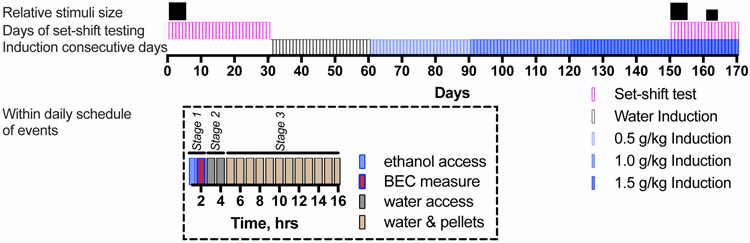
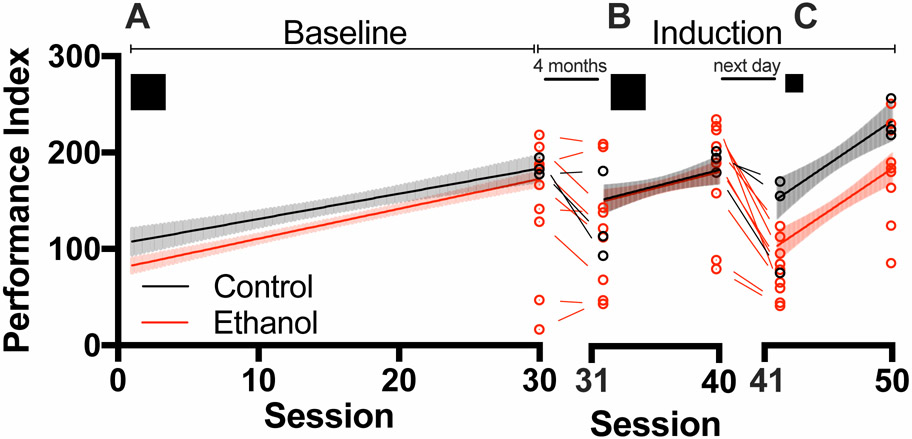
Behavioral flexibility was assessed in 12 monkeys (n=9, ethanol drinkers) with a set-shifting visual discrimination procedure before alcohol self-administration and while maintaining consumption of 1.5g/kg/day ethanol. Task performance was assessed the morning after ~18 hours of drinking 1.5g/kg, and 1 hour before the next day’s drinking session began. The first 10 set-shifting sessions had the original (pre-ethanol) test parameters and were used to determine retention of pre-ethanol performance. Then an effect of sensory-motor challenge (60% reduction in the size of the discriminative stimuli) on performance was assessed during 10 additional sessions.
Results.
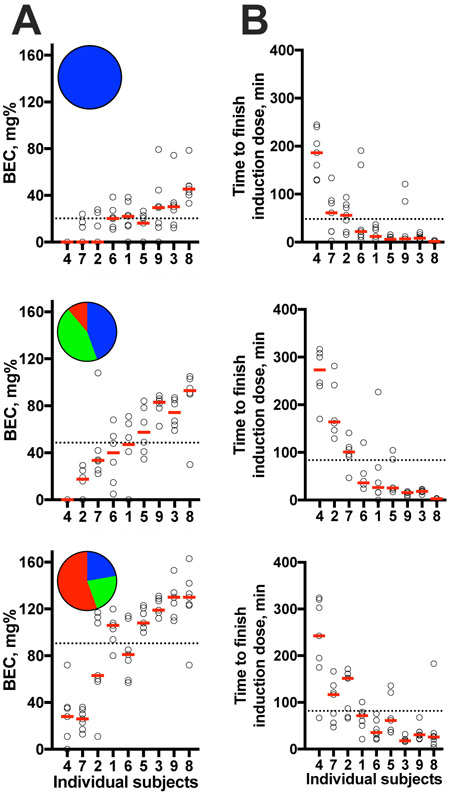
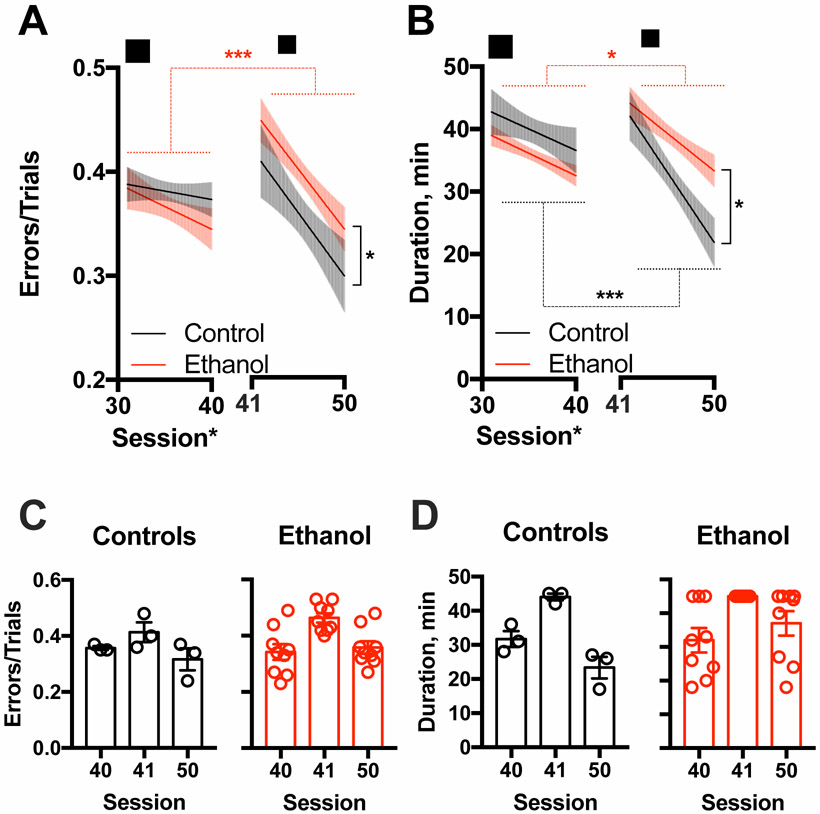
There were no average group-dependent differences in the performance between control and ethanol groups at the pre-ethanol time-point. The daily consumption of 1.5g/kg/day produced binge alcohol intakes in 7 out of 9 monkeys (BEC ≥ 80mg/dl). Chronic daily intakes of 1.5g/kg had no effect on retention of the task in the sober state. However, when challenged with a reduction in the size of the stimuli, daily 1.5g/kg ethanol resulted in a decrement in performance due to an increase in the number of errors.
Conclusions.
Rhesus monkeys consuming 1.5g/kg alcohol daily perform equally as well as control monkeys in retention of a well-learned cognitive task. However, this pattern of daily alcohol intake robustly decreased the ability to flexibly adjust behavior when confronted with novel changes to perceptual stimuli.
-
Subjects:
-
Source:Alcohol Clin Exp Res. 44(3):729-737
-
Pubmed ID:31984521
-
Pubmed Central ID:PMC7236888
-
Document Type:
-
Funding:
-
Volume:44
-
Issue:3
-
Collection(s):
-
Main Document Checksum:urn:sha256:bf91fa54dbe7b438c4c5477d55a9e1670af75fd28baf00dd63c3a714ee1dfe5a
-
Download URL:
-
File Type:
 [PDF
- 526.24 KB
]
[PDF
- 526.24 KB
]
Supporting Files


File Language:
English
ON THIS PAGE


CDC STACKS serves as an archival repository of CDC-published products including
scientific findings,
journal articles, guidelines, recommendations, or other public health information authored or
co-authored by CDC or funded partners.
As a repository, CDC STACKS retains documents in their original published format to ensure public access to scientific information.
As a repository, CDC STACKS retains documents in their original published format to ensure public access to scientific information.
You May Also Like
COLLECTION
CDC Public Access