


Community-Based Participatory Research at Jacksonville Florida Superfund Ash Site: Toxicology Training to Improve the Knowledge of the Lay Community
Supporting Files

-
5 2019
-
File Language:
English
Details
-
Alternative Title:Fla Public Health Rev
-
Personal Author:
-
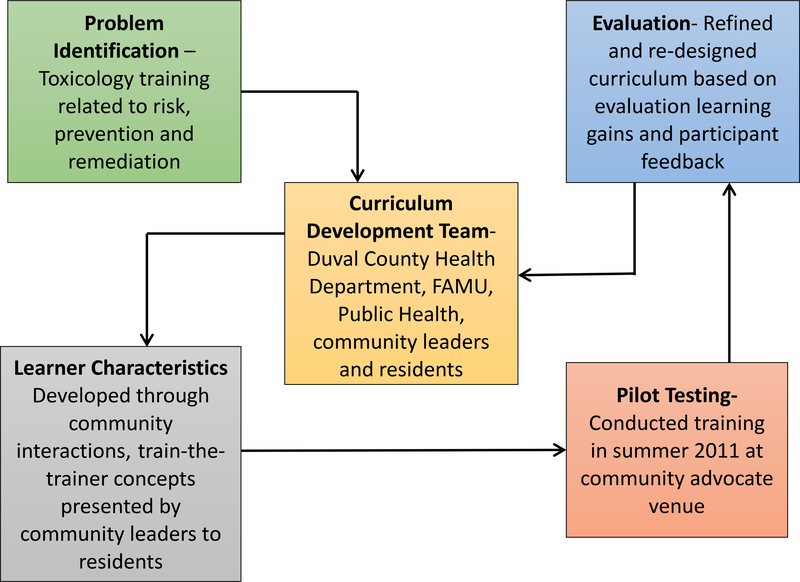
Description:Until the late 1960's, Jacksonville, Florida incinerated its solid waste with the resultant ash deposited in landfills or used to fill flood-prone areas. These filled areas were later developed into parks, school sites and residential areas. Lead in soil at these sites was the major toxicant of concern and driver of clean-up actions. During the period of assessment of lead-levels in soil, there were no established lines of communication between the City and residents of affected neighborhoods resulting in mistrust in the community. To address communication issues, a community-based, culturally sensitive Community Environmental Toxicology Curriculum (CETC) and a short video were developed for community stakeholders to inform them of risks, health effects, remediation processes and preventive measures. Pre-and post-tests were developed to measure knowledge gained from the toxicology training. Learning gains averaged 47% and 24% for the community leaders and residents respectively. Most participants strongly agreed that the community toxicology curriculum was a useful tool for promoting awareness of environmental risks in their community and addressing the gap in trust between residents and agencies involved in site remediation.
-
Subjects:
-
Source:Fla Public Health Rev. 15(1-7):61-74
-
Pubmed ID:32337512
-
Pubmed Central ID:PMC7181972
-
Document Type:
-
Funding:
-
Volume:15
-
Collection(s):
-
Main Document Checksum:urn:sha256:3cfbf7752014a4d99deb9fa188b192e7c11bf1a42c7a0d27262d5487dbe6fec0
-
Download URL:
-
File Type:
 [PDF
- 1.29 MB
]
[PDF
- 1.29 MB
]
Supporting Files


File Language:
English
ON THIS PAGE


CDC STACKS serves as an archival repository of CDC-published products including
scientific findings,
journal articles, guidelines, recommendations, or other public health information authored or
co-authored by CDC or funded partners.
As a repository, CDC STACKS retains documents in their original published format to ensure public access to scientific information.
As a repository, CDC STACKS retains documents in their original published format to ensure public access to scientific information.
You May Also Like
COLLECTION
CDC Public Access