


Gender and Parity in Statistical Prediction of Anterior Carry Hand-Loads from Inertial Sensor Data
Supporting Files

-
Nov 20 2019
-
File Language:
English
Details
-
Alternative Title:Proc Hum Factors Ergon Soc Annu Meet
-
Personal Author:
-
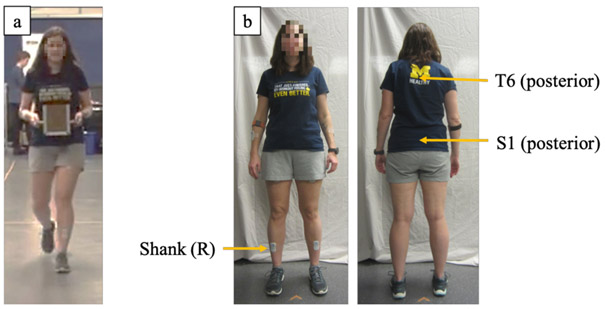
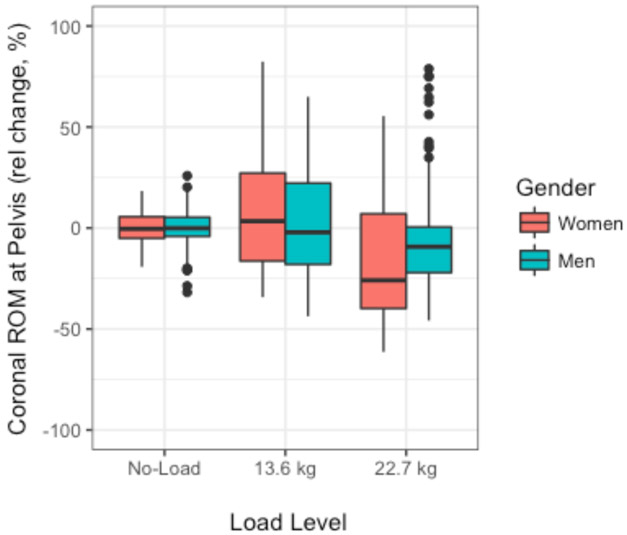
Description:The objective of this study was to examine potential gender effects on the performance of a statistical algorithm for predicting hand-load levels that uses body-worn inertial sensor data. Torso and pelvic kinematic data was obtained from 11 men and 11 women in a laboratory experiment while they carried anterior hand-loads of 13.6 kg, and 22.7 kg, and during unloaded walking. Nine kinematic variables expressed as relative changes from unloaded gait were calculated and used as predictors in a statistical classification model predicting load-level (no-load, 13.6 kg, and 22.7 kg). To compare effects of gender on prediction accuracy, prediction models were built using both, gender-balanced gait data and gender-specific data (i.e., separate models for men and women) and evaluated using hold-out validation techniques. The gender-balanced model correctly classified load levels with an accuracy of 74.2% and 80.0% for men and women, respectively. The gender-specific models had accuracies of 68.3% and 85.0% for men and women, respectively. Findings indicated a lack of classification parity across gender, and possibly across other types of personal attributes such as age, ethnicity, and health condition. While preliminary, this study hopes to draw attention to challenges in algorithmic bias, parity and fairness, particularly as machine learning techniques gain popularity in ergonomics practice.
-
Subjects:
-
Source:Proc Hum Factors Ergon Soc Annu Meet. 63(1)
-
Pubmed ID:32322144
-
Pubmed Central ID:PMC7176367
-
Document Type:
-
Funding:
-
Volume:63
-
Issue:1
-
Collection(s):
-
Main Document Checksum:urn:sha256:91b261627cc94e07828dda621e91fd83c7e58227ad73398c8f32520a6f7a7099
-
Download URL:
-
File Type:
 [PDF
- 230.70 KB
]
[PDF
- 230.70 KB
]
Supporting Files


File Language:
English
ON THIS PAGE

CDC STACKS serves as an archival repository of CDC-published products including
scientific findings,
journal articles, guidelines, recommendations, or other public health information authored or
co-authored by CDC or funded partners.
As a repository, CDC STACKS retains documents in their original published format to ensure public access to scientific information.
As a repository, CDC STACKS retains documents in their original published format to ensure public access to scientific information.
You May Also Like
COLLECTION
CDC Public Access